

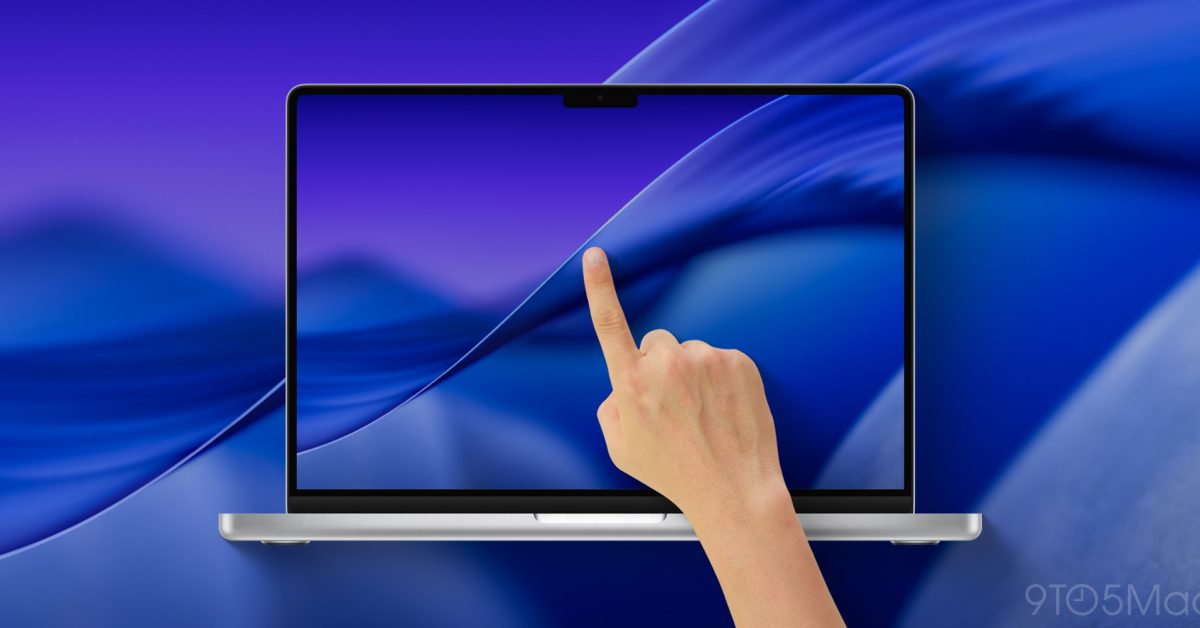
Key facts
- Apple is reportedly aiming to announce its first touchscreen MacBook Pro as early as October 27 and release it as early as November 6.
- The laptop is expected to be a redesigned MacBook Pro with a Tandem OLED display, a smaller Dynamic Island, and no Face ID.
- Touch input may be supported by macOS 27 features, including Sidecar touch support, pull-to-refresh gestures, and larger menu bar controls.
- New software optimizations could serve up context-sensitive menus around a user’s finger and adapt controls based on past interactions.
- The first model is expected to use M5 Pro and M5 Max chips, not the M6 generation, with a base M7 model possibly arriving next spring.
- Design changes may include a slightly thinner chassis and a significantly lighter build.
- A retail store reset on the evening of November 5 into November 6 has fueled expectations of a launch that Friday.
Apple’s long-awaited move into touchscreen laptops may be closer than many observers expected. According to the latest industry reports, the company could announce its first touchscreen MacBook Pro as early as October 27 and release it as early as November 6. If the timing holds, the launch would mark a major shift for a company that has spent more than a decade arguing that touch input belongs on iPhones and iPads rather than on a vertical notebook display.
The rumor mill has converged on a redesigned MacBook Pro rather than a low-cost MacBook. The machine is expected to combine a Tandem OLED panel, a smaller Dynamic Island, touch-optimized software, and high-end Apple silicon. It may also arrive in a chassis that is slightly thinner and significantly lighter than the current 14-inch and 16-inch MacBook Pro models.
None of this is official. Apple has not confirmed a touchscreen Mac, an October announcement, or a November release. Still, the volume and consistency of the reports, along with clues reportedly found in macOS 27, suggest that the first touchscreen MacBook is no longer a distant concept. It is being treated inside the rumor cycle as a near-term product.
A touchscreen Mac after years of resistance
For years, Apple’s public position was that touchscreens on laptops created ergonomic problems. Reaching across a keyboard to tap a vertical display can be uncomfortable, and it can leave fingerprints on a screen that users expect to stay clean. That argument helped Apple keep the Mac and iPad on separate paths: the Mac remained a pointer-and-keyboard platform, while the iPad became the company’s touch-first computer.
The market has changed, however. Windows laptops with touchscreens are common, and many premium notebooks now support stylus input as well as finger gestures. Apple’s own iPad Pro has become a powerful productivity device with a Tandem OLED display and accessories that turn it into a laptop-like tool. A touchscreen MacBook Pro would not necessarily replace the iPad, but it would blur the line between Apple’s two computing platforms more than ever before.
Apple has also been gradually preparing macOS for touch. Reports point to macOS 27 including Touch Support in Sidecar, pull-to-refresh behavior, and slightly larger menu bar items. Those features could be small pieces of a larger interface strategy. Sidecar, which lets an iPad act as a second display for a Mac, could become more useful if touch input is recognized more directly. Pull-to-refresh is a gesture familiar from iOS and iPadOS. Larger menu bar targets would make sense on a screen that users can tap.
OLED display and a smaller Dynamic Island
The most visible change is expected to be the display. The redesigned MacBook Pro is rumored to use a Tandem OLED panel, similar to the technology used in the iPad Pro. Tandem OLED stacks two OLED layers, which can deliver higher brightness, strong contrast, and more vibrant colors than a single-layer OLED panel. It can also help improve longevity by reducing the stress on individual OLED materials.
For a touchscreen laptop, OLED has another advantage: it can be thinner and more responsive than some older panel technologies. Apple has already described Tandem OLED as one of the best mobile displays on the market, and bringing it to the MacBook Pro would give the notebook a clear visual upgrade over the current mini-LED models.
Reports also suggest that the new MacBook Pro will include a Dynamic Island, though it will reportedly be smaller than the version on the iPhone. The cutout would house the camera and possibly other sensors, but it is not expected to support Face ID. That leaves Touch ID as the likely biometric authentication method, continuing the current MacBook Pro approach. A smaller Dynamic Island could make the notch less intrusive while still giving macOS a place to display status information and background activity.
Software built for fingers, not just clicks
Hardware is only half of the touchscreen equation. The bigger challenge is software. macOS was designed around a mouse and trackpad, with small controls and menus that assume a precise pointer. Adding touch without adapting the interface would produce a laptop that can be tapped but not truly used by touch.
Reports say Apple is developing special optimizations for the first touchscreen MacBook Pro. One described behavior is a new type of menu that appears around the user’s finger when they touch a button or control. Instead of forcing the user to move to a menu elsewhere on the screen, the interface would bring relevant options closer to the point of contact. The system could also display the most appropriate set of controls based on a person’s previous interactions.
Another reported change involves the menu bar. If a user taps an item at the top of the screen, the set of controls is expected to enlarge so that it is easier to select with a finger. That sounds like a simple tweak, but it addresses a fundamental problem: menu bar items are designed for a cursor, not a fingertip. Enlarging them on demand would preserve the desktop layout while making touch input more practical.
These optimizations would not turn macOS into iPadOS. They would likely be layered on top of the existing interface, allowing users to switch between pointer, keyboard, and touch. That hybrid approach makes sense for a MacBook Pro, which is used for professional workflows that depend on precision. Touch would be an additional input method, not a replacement for the trackpad.
M5 Pro and M5 Max chips, with M7 later
The first touchscreen MacBook Pro is expected to use M5 Pro and M5 Max chips. Earlier reporting had suggested that the redesigned model might debut with M6 Pro and M6 Max silicon, but those plans reportedly changed. Apple is said to be skipping that generation in the MacBook Pro to accelerate the M7, which means the first version of the redesigned laptop may not be the first Mac to use 2nm chips.
That decision would make sense for a couple of reasons. A major redesign with a new display, new touch hardware, and a new chassis already introduces plenty of engineering risk. Using a familiar chip family could help Apple manage production and performance expectations. A later M7 model could then deliver a more dramatic silicon upgrade alongside the mature version of the new design.
Reports also suggest that there will not be a base model version of the redesigned MacBook Pro at launch. A base model with an M7 chip could arrive as early as next spring. That would leave the first wave focused on high-end buyers, which fits the MacBook Pro positioning. The touchscreen feature is likely to be expensive, and Apple may want to pair it with premium chips and displays rather than a lower-cost configuration.
A slightly thinner and significantly lighter chassis
Design changes are another part of the rumor. The new MacBook Pro is expected to be slightly slimmer than the current model, though the exact difference is unclear. More significantly, reports suggest that the laptop will be significantly lighter thanks to re-engineering of internal components.
The current 14-inch and 16-inch MacBook Pro models are powerful but relatively chunky compared with some older designs. They gained thickness and weight to accommodate larger batteries, advanced cooling, and a wide range of ports. A lighter version would be welcome for users who carry their laptop every day, but Apple will have to balance weight savings against thermal performance. A thinner chassis can reduce airflow and make it harder to cool high-end M5 Pro and M5 Max chips.
If Apple can deliver a meaningfully lighter MacBook Pro without compromising sustained performance, it would address one of the most common complaints about the current lineup. The move would also fit the broader trend toward more portable professional laptops. A touchscreen display could add weight and complexity, so any savings in the chassis and internal layout would be especially important.
Release timing and the retail reset
The launch window is the most concrete part of the rumor. Apple is reportedly aiming to announce the new MacBook Pro as early as October 27 and release it as early as November 6. A retail store reset is said to be planned for the evening of Thursday, November 5, into Friday, November 6. Such resets typically involve new signage and products being placed on store tables, which would align with a Friday launch.
The timing would also fit a busy stretch of Apple releases. Reports describe a four-week run that could include the iPhone Duo, HomePod mini 2, the new MacBook Pro, and HomeView with Apple TV 4K. At the time of the report, no other Apple release was scheduled for November 6, making the MacBook Pro the logical candidate for that date.
For buyers, the key question is whether the first touchscreen MacBook Pro will be worth waiting for or whether it will be a first-generation product with the usual trade-offs. The combination of a new display, new touch input, a redesigned chassis, and high-end chips suggests a substantial overhaul. It also suggests a high price. The first model may appeal most to professionals who want the latest display technology and are willing to pay for a new interaction model.
The larger significance is strategic. A touchscreen MacBook Pro would signal that Apple is willing to rethink the Mac’s input paradigm after years of separation from the iPad. It would also put pressure on software developers to consider touch alongside pointer and keyboard controls. If Apple gets the software right, the result could be a more flexible professional laptop rather than a Mac with a gimmick. If it does not, the touchscreen could remain a secondary feature that most users ignore. The reported November 6 date will be the first real test.
Source: 9to5Mac News