

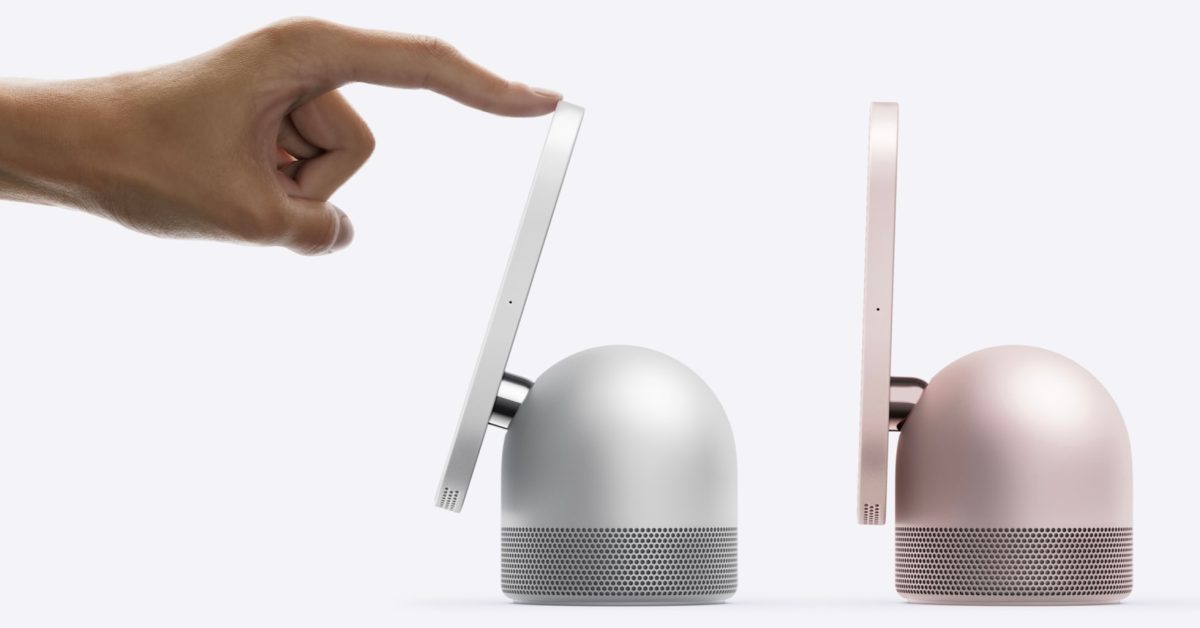
Apple has only just begun selling its first smart home display, but the company is already said to be preparing a much more ambitious follow-up that swaps a fixed screen for a motorized robotic arm. According to industry reporting, the upgraded model could arrive as soon as next year, bringing a larger panel, full rotation, and a price tag well above the $299 entry-level unit.
The base HomeView is a tabletop display positioned as a hub for smart home controls, video calls, and glanceable information. It finally reached shelves after a lengthy development cycle marked by repeated delays tied to the company's broader effort to rebuild its voice assistant on a more capable, AI-driven foundation. Those setbacks pushed the product back more than once and, in the process, appear to have reshaped the roadmap governing what comes next.
A first-generation product with a known limitation
The most common complaint about the launch model concerns how it handles a room with more than one person in it. Because the display sits on a fixed stand, anyone who wants to see the screen while on a video call or while following a recipe has to physically reach over and reposition the whole device. In a kitchen where several people are moving around, or in a living room where the seating arrangement changes through the evening, that small friction adds up quickly.
That limitation is not an accident of design so much as a consequence of cost and complexity. Motors, sensors, and the software that ties them together add meaningful expense to a product that was already positioned as an affordable entry point into the smart home. The reported second model exists precisely to serve buyers who find the manual adjustment irritating enough to pay for a solution.
A robotic arm, a larger screen, and a new price tier
Details of the more capable version have begun to surface through supply chain and software leaks. The device carries an internal codename, J595, and is described as looking broadly similar to the current HomeView in silhouette, though noticeably larger. The display is said to grow from roughly 7 inches to about 9 inches, giving the interface more room for widgets, video calls, and control panels.
The defining addition is a motorized arm mounted at the rear of the display. Unlike the slight tilt adjustment found on many competing smart displays, this mechanism is reported to swivel a full 360 degrees, allowing the screen to face any direction in a room. The arm is expected to raise and lower the panel as well, so it can be angled toward a standing adult or dropped lower for someone seated on a couch or at a table.
Critically, the robotic model is not expected to replace the $299 HomeView. It is described as a premium addition to the lineup, sitting above the existing product rather than superseding it, which means buyers should not expect the same price point. Premium smart displays with motorized components have historically landed well above the entry tier, and a robotic mechanism plus a larger panel would push costs upward on both the bill of materials and the assembly side.
Voice recognition decides where the screen points
The most interesting part of the reported design is not the hardware but the software that drives it. The display is said to use voice recognition to determine who is speaking and then automatically rotate toward that person. The behavior has been compared to the Center Stage feature found on some recent Apple computers and tablets, which uses a wide-angle camera and machine learning to keep people framed during video calls, except that the mechanism here moves the entire screen rather than digitally cropping a image.
That distinction matters. Center Stage is a computational trick; it reframes a shot without any moving parts. A robotic arm has to translate a decision about who is talking into physical motion that is smooth, quiet, and safe. Getting that right requires accurate speaker identification in rooms with background noise, multiple voices, and reflective surfaces, plus motor control that avoids jerky movement or overshooting the target.
If it works well, the effect could be genuinely useful rather than gimmicky. A display that turns to face the person asking about the weather, or that keeps a caller centered while they walk around the kitchen, solves a real problem that every fixed smart display shares. It also opens the door to more expressive interactions, such as small nods or gestures that signal the assistant is listening.
A robotics program years in the making
The device is not an isolated experiment. Apple has been investigating robotic form factors for the better part of a decade, with teams exploring everything from autonomous mobile assistants to tabletop arms that could follow a user around a room. Much of that work has stayed behind closed doors, surfacing only through patent filings and occasional supply chain chatter about prototype hardware.
The J595 project appears to be the first of those efforts to reach a concrete release window. Reports place a launch in 2027 or 2028, with a possibility that the timeline slips into 2028 depending on how development progresses. That schedule suggests the hardware is at a relatively advanced stage, though the software stack, particularly the speaker-tracking and motion-planning layers, likely remains the biggest variable.
Rivals have tried this before, with mixed results
Apple is not the first company to imagine a smart display that follows its owner. Amazon has iterated on its Echo Show line for years, adding motorized pan-and-tilt cameras to some models, and its discontinued desktop robot combined a rolling base with a screen on a pivoting arm before being shut down. Google's Nest Hub line has stayed deliberately static. Several startup attempts at social robots with expressive movement, including one of the best-known consumer robot launches of the past decade, failed to find a mainstream audience.
Those failures share common threads: the hardware was expensive, the movement felt like a novelty after a few weeks, and the underlying assistant was not reliable enough to justify the cost. Apple's bet is that improved voice recognition, tighter integration with its own ecosystem, and a more polished mechanical design can avoid the same fate. The fact that the company is positioning the device as an optional upgrade rather than the default model is a hedge against exactly that risk.
The practical hurdles
A moving screen introduces questions that a stationary one never raises. Motor durability becomes a warranty concern, particularly in households with children or pets who may grab at the display. Power delivery has to accommodate a mechanism that rotates continuously, which typically means slip rings or careful cable routing. And the device needs to fail gracefully, defaulting to a fixed position if the arm jams or a sensor is blocked.
Privacy is the other open question. Continuous audio processing for speaker identification means the device must decide, moment to moment, whose voice it is hearing. How much of that processing happens on-device, what gets retained, and how users can audit or disable the feature will all shape how the product is received, especially in markets with strict data protection rules.
Developer access is another unknown. If third-party apps can command the arm, the device could become a genuinely new platform, with cooking apps that turn toward the stove or fitness apps that angle the screen during a workout. If the movement stays locked to first-party features, the appeal narrows considerably.
For now, the reported timeline places the robotic HomeView roughly two to three years out, with the entry-level model already on sale and drawing the early scrutiny that will inform the premium version. Buyers weighing a purchase in the interim face a familiar calculation: settle for the fixed screen now, or wait for the version that turns to look at them.
Source: 9to5Mac News