

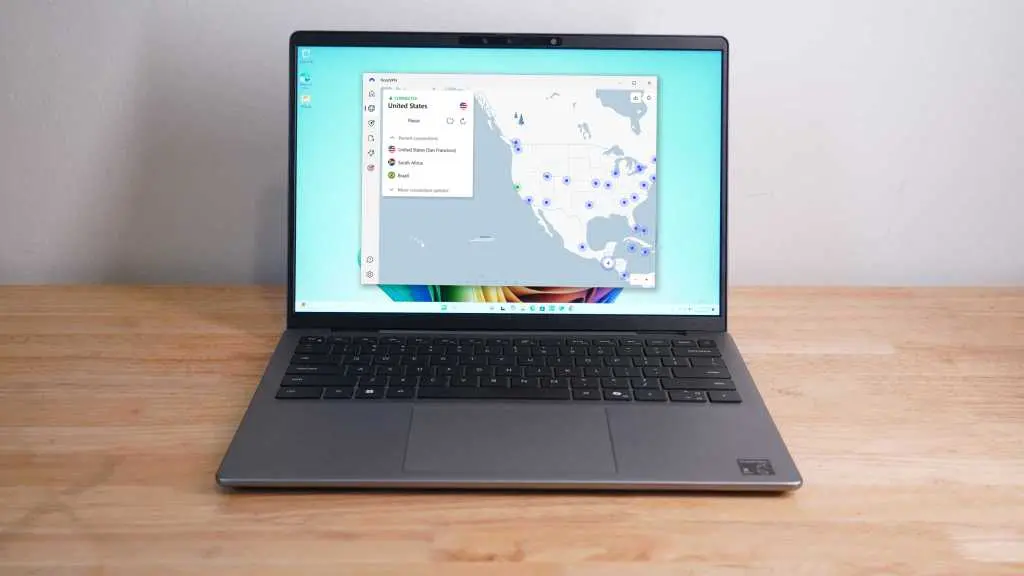
A VPN, or virtual private network, is one of the easiest and most effective ways to improve your online privacy and security. Whether you are protecting yourself on public Wi-Fi, hiding your IP address from trackers, or accessing region-locked content while traveling, a VPN adds an important layer of protection by encrypting your internet traffic. The problem is that there are hundreds of VPNs competing for your attention, and separating the genuinely good services from the mediocre ones can be overwhelming.
This guide saves you time by highlighting the best VPNs for every use case. We have tested and reviewed a wide range of products to narrow down the field. Below you will find the best overall VPN, the fastest service, the best free option, and the best choices for privacy, streaming, and travel. Each pick delivers on essential standards such as trustworthy privacy practices, strong connection speeds, reliable streaming access, and a large, well-distributed server network. We also explain how to choose a VPN and answer common questions so you can decide with confidence.
At a glance
- Best VPN overall: NordVPN - from $3.39 a month for a two-year plan.
- Best VPN runner-up: ExpressVPN - from $2.79 a month with strong streaming support.
- Best cheap VPN: Surfshark - from $1.88 a month with unlimited devices.
- Best cheap VPN runner-up: Private Internet Access - from $2.19 a month with a huge server network.
- Best free VPN: Proton VPN - free plan with generous data allowances.
- Best VPN for privacy: Mullvad - a flat $5.26 a month with anonymous accounts.
- Best VPN for travelers: CyberGhost - from $2.19 a month with 11,500+ servers worldwide.
NordVPN - Best VPN overall
Pros
- Tons of VPN configuration options
- Outstanding speeds
- Included antivirus and password manager
Cons
- Expensive
NordVPN is our top pick because it balances every factor that matters: speed, privacy, security, features, and ease of use. It is the most full-featured service on the market, with tools that appeal to power users as well as an intuitive app that beginners can master quickly. The service undergoes regular independent audits and uses RAM-only diskless servers, giving privacy-conscious users strong assurance that their data will remain anonymous.
Speeds are one of NordVPN's biggest strengths. In testing, the service averaged 72 percent of base internet speed across all servers, making it the fastest VPN in our evaluation. It also has an extensive server network, and it can unblock all major streaming services. The desktop app includes Tor over VPN, multi-hop connections, Meshnet file-sharing, ad and malware blocking, plus a password manager and link checker.
The main drawback is price. NordVPN can be more expensive than many competitors even when you factor in long-term discounts. Still, you get what you pay for, and the combination of performance and features makes it worth the cost for most people.
ExpressVPN - Best VPN runner-up
Pros
- Excellent speeds
- Unblocks all streaming services
- Great security and privacy practices
Cons
- More expensive than other VPNs
- Light on extra security features
ExpressVPN is a great option for everyone. Beginners can easily download the software, pick a server, and connect. Advanced users can take advantage of split-tunneling, protocol optimization, a kill switch, and other controls. The service also has one of the most expansive device support networks available, working across practically any platform and allowing up to 14 simultaneous connections depending on your subscription tier.
There is no shortage of speed either. ExpressVPN consistently delivers excellent download and upload rates, and it has a proven record of unblocking streaming services around the world. The company maintains a strict no-logs policy and regularly brings in third-party auditors to validate its privacy credentials.
Its only real issue is value compared to NordVPN. ExpressVPN is slightly more expensive and does not come with as many advanced extras. However, it is an easy recommendation for anyone who wants a simple, reliable, and highly capable VPN.
Surfshark - Best cheap VPN
Pros
- Unlimited simultaneous device connections
- Tons of extra features
- Low price on long-term plans
Cons
- Expensive month-to-month plans
- Large portion of global servers are virtual
Surfshark is one of those VPNs that does everything well. It has blazing-fast speeds, a robust feature set, and excellent privacy credentials thanks to its no-logs policy and multiple independent audits. Subscribers get standard VPN features plus dynamic multi-hop connections, identity protection alerts, and antivirus or malware protection.
The best thing about Surfshark is the price. A two-year plan works out to just over $2 per month, which is almost unheard of for a premium VPN with this feature set. Monthly plans are expensive, but anyone willing to commit to a longer subscription can save a substantial amount of money.
It is worth noting that Surfshark is based in the Netherlands. The country has strong privacy laws, but it is part of the 14 Eyes Data Sharing Alliance, meaning the government could potentially request user data. The company's independently verified no-logs policy makes this less of a concern, but privacy-focused users should still be aware before committing.
Private Internet Access - Best cheap VPN runner-up
Pros
- Multiple independently verified no-log audits
- Unlimited simultaneous device connections
- Vast server network
Cons
- App is a little clunky
- Speeds are fairly pedestrian
Private Internet Access, commonly known as PIA, has been around for years and continues to improve. The latest version of PIA remains a great choice for budget-minded users, especially because of its low subscription price and extensive customization options. It has one of the least expensive plans among top VPNs, both monthly and long-term.
The service offers unlimited device connections and an enormous server network. It claims to have over 35,000 available servers, though it offers fewer than 100 country locations. PIA has also passed multiple independent no-log audits, proving that user privacy is a priority.
The interface is somewhat outdated, and speeds are not the fastest we have seen. But neither issue takes away from the overall value. Power users who like to fine-tune every aspect of their VPN connection will find PIA especially appealing.
Proton VPN - Best free VPN
Pros
- Excellent privacy and transparency
- Strong catalog of security features
- Unrivaled free plan
- Good connection speeds
Cons
- Premium plans aren't the cheapest
- Not all features available across apps
Proton VPN is the best free VPN because it offers a genuinely useful free tier without ads. Many free VPNs include ridiculous limitations or annoy you with promotions. Proton VPN does neither. The free version allows one device connection and gives access to servers in multiple countries. In testing, speeds were very good even on the free tier, ranking among the top 10 VPNs overall.
There are no monthly data limits on Proton's free servers, making it an excellent option for streaming or regular browsing. Just be aware that free servers are not guaranteed to work with every streaming service. The service is from the same company behind Proton Mail, a privacy-focused email provider, so it fits neatly into a broader privacy ecosystem.
The premium plan is not the cheapest on this list, but it adds more server locations and features. If you are on a tight budget, start with the free version. It is so good that many people will never need to upgrade.
Mullvad - Best VPN for privacy
Pros
- Exceptional privacy protections
- Strong security features
- Fast connection speeds
- Transparent and trustworthy company practices
Cons
- Weak streaming support
- Relatively small server network
- Lacks extra features
Mullvad is the undisputed king of privacy and anonymity. It does not ask for your email address, name, or any other identifying information. Instead, it assigns a random account number that acts as your login. You can pay with credit cards or PayPal, and you can even mail cash to keep your identity completely private.
The service has a strict no-logs policy and does not collect identifying metadata from your usage. That policy has been confirmed by multiple independent security audits. Mullvad is also fast, ranking among the top five VPNs for speed in our testing.
It is built with one goal in mind: protecting your privacy, even if that means leaving out extra features. Streaming support is weak, and the server network is smaller than those of competitors. But for privacy-focused users, Mullvad is the gold standard.
CyberGhost - Best VPN for travelers
Pros
- Enormous global server network
- Independently verified no-log policy
- Generous 45-day money-back guarantee
Cons
- Server speeds can be hit-or-miss
- Lacks extra security features offered by competitors
CyberGhost is the best VPN for travelers because it offers variety and wide coverage. It has more than 11,500 servers in more than 100 countries, giving users plenty of options no matter where they are in the world. Unlike some competitors, these servers are not concentrated only in the United States or Europe.
The service includes optimized servers for gaming, streaming, and torrenting. It also operates special secure physical 'NoSpy' servers housed in its home offices in Romania. CyberGhost has a well-designed Windows app that is intuitive and easy to navigate, although it lacks some power-user features like multi-hop and IP rotation.
In testing, some servers were faster than others. European servers tended to be excellent, while Asian servers were slower. Overall, speeds are still good enough for web browsing and streaming. The 45-day money-back guarantee gives you plenty of time to decide if it is right for you.
Other VPNs we liked
Many VPNs rise above the rest even if they do not make the main list. These are strong options in their own right:
- PrivadoVPN: A strong overall service with a standout free version that is second only to Proton VPN. The server network is smaller and extra features are limited.
- Windscribe Pro: Great security with a Windows client and browser extension that work together to block ads and keep browsing private. It has a decent free version but suffers from a wonky interface and small server network.
- Hide.me: A well-rounded service with excellent configurable settings. Power users will enjoy the options, but speeds can be inconsistent and the Windows app can feel tricky.
- IPVanish: This U.S.-based VPN delivers decent speeds, a large global server network, and privacy promises backed by independent audits. It struggles with streaming services and the monthly price is high.
- Norton VPN: A simple and effective VPN from a trusted security company. It has a clean interface and recently added several useful upgrades, but it only offers yearly pricing and the server network is still small.
Can I get a better VPN deal?
VPN prices change often. The prices shown here are baseline prices, but they may not reflect the lowest promotional discount. When shopping, compare long-term plans against renewal pricing to avoid surprises.
Special deals appear throughout the year. Sales events such as Amazon Prime Day and Black Friday often bring steep discounts on popular VPN services. If you can wait for one of these events, you can often save a significant amount on a quality VPN.
How we test VPNs
We judge VPNs on server network, connection speeds, privacy protections, ease of use, additional features, and cost. Speed tests are kept as simple as possible by averaging connections between different global locations for each VPN and comparing them to a baseline internet speed.
We also thoroughly research and analyze the privacy policies and histories of each VPN. Any discrepancies or data collection issues are noted. Finally, we compare the value of each service based on price and features to the industry average, helping you understand what you get for your money.
How to choose the best VPN
The first thing to look for is a solid server network. Any VPN with at least 1,000 servers across more than 30 country locations is likely worth considering. Next, look at speed. Since you usually cannot test a VPN without paying, check reviews that provide relative average connection speeds.
You should also research a VPN's privacy protections. Does it have a no-logs policy? Has it undergone independent audits? Where is the company based? These factors help determine whether the VPN is transparent about data collection and whether it may be subject to government data-sharing requirements.
Finally, review pricing. Monthly plans can be expensive, but many top VPNs become much more affordable with long-term subscriptions. Decide how long you need the service and choose a plan that fits your budget.
VPN features you should care about
Do not be seduced by a long list of extra features. Most people get real value from only a handful of VPN extras. Here are the ones to focus on.
Kill switch
A kill switch automatically blocks internet access if your VPN disconnects unexpectedly. This prevents your online activities from accidentally being exposed.
Split tunneling
Split tunneling lets you designate specific types of traffic to go through the VPN while other content, such as games, stays on your normal connection. This avoids bottlenecks that can affect performance.
Multi-hop
Multi-hop sends your traffic through two or more VPN servers instead of just one. Each server re-encrypts the data, making it much harder for anyone to trace your activity.
Protocols
A VPN protocol is the set of rules that governs how traffic moves from your device to the web. Popular options include OpenVPN, WireGuard, IKEv2, and PPTP. WireGuard is often the best choice for most users because it is open source, fast, and continually audited for security weaknesses.
Best VPN FAQ
What is the best VPN?
NordVPN is our pick for the best VPN. It has the fastest speeds, a large server network, and the most extensive feature set. No other VPN currently provides as much value or as many features.
What is the best cheap VPN?
Surfshark is our pick for the best cheap VPN. It has great speeds, a robust feature set, and excellent privacy credentials. Long-term plans cost only a few dollars per month, making it unbeatable for budget-minded users.
What is a VPN?
A VPN creates a secure tunnel between your device and the internet. It routes your web traffic through a selected server, making it appear as though you are browsing from that server's location. The encrypted tunnel prevents third parties such as your ISP from seeing your online activities.
Can I be tracked with a VPN?
A VPN reduces exposure and keeps your ISP from seeing your traffic, but it does not stop site-level tracking or logged-in identity. If you sign into a website, your identity is still revealed to that website. VPNs are a privacy tool, not an invisibility cloak.
Will a VPN protect me on public Wi-Fi?
Yes, a VPN helps protect you on public Wi-Fi by encrypting your data and masking your IP address. This makes it much harder for hackers to intercept sensitive information like passwords or credit card details. Still, a VPN cannot make your device completely secure, so good security habits are also important.
Will a VPN slow down my internet?
Most VPNs cause a moderate speed decrease because your traffic is rerouted and encrypted before reaching its destination. The amount of latency depends on the server location. Connecting to a nearby server generally produces a smaller slowdown, while a server on the other side of the world can have a bigger impact. Modern VPNs are usually fast enough that most users will not notice a difference.
Source: PCWorld News