

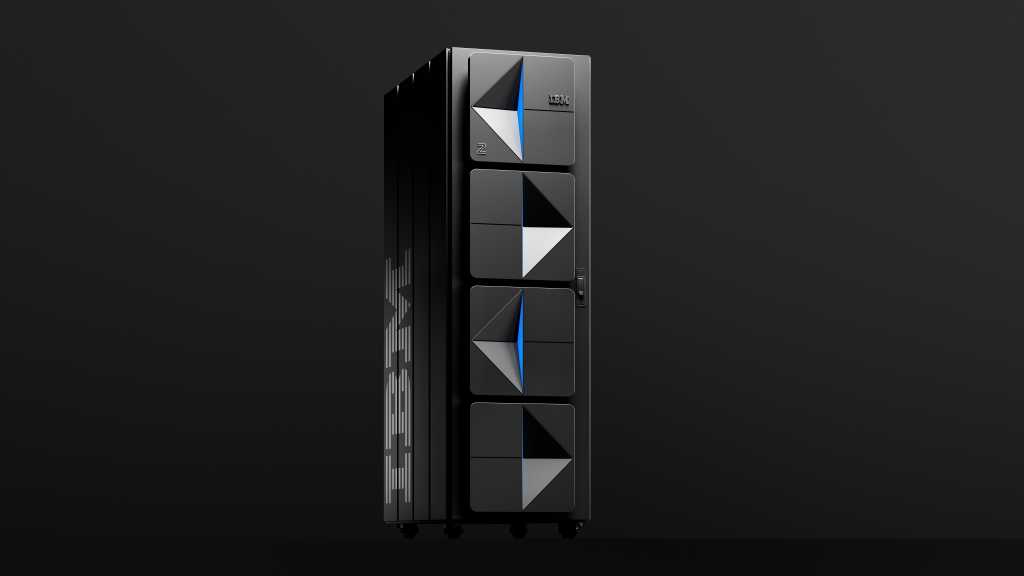
IBM is expanding the networking capabilities of its mainframe platforms as enterprises rethink how AI, hybrid cloud and distributed systems fit together. The company’s strategy for IBM Z and LinuxONE is not to isolate the mainframe as a specialized processing silo, but to make it a deeply integrated participant in modern data center networks. That means supporting conventional Ethernet and IP, adding remote direct memory access options, improving bandwidth and latency, and making it easier to connect with cloud environments, storage systems, distributed servers and AI infrastructure.
The mainframe has evolved from an era when it operated as a networking island. Modern IBM Z systems are designed for standard Ethernet and IP, while also using specialized technologies for low-latency and high-throughput communications. IBM’s current portfolio reflects that shift: it combines on-chip I/O acceleration, higher-speed Ethernet, converged adapters, security segmentation and management tools intended to reduce operational friction.
Key facts
- IBM’s mainframe networking strategy focuses on deep integration with hybrid infrastructure, including cloud, distributed systems, storage and AI platforms.
- An on-chip Data Processing Unit integrated with the Telum II processor offloads I/O work from IBM Z cores, replacing many custom ASICs and improving performance, latency, power use and port density.
- IBM has added a 100GbE adapter with two 100GbE ports and QSFP SR optics that plugs directly into the Central Processor Complex drawer, eliminating the need for an external I/O drawer for high-speed connectivity.
- The Network Express converged adapter, introduced with the z17 family, combines OSA Ethernet, RoCE/RDMA and Coupling Express 3 Long Reach functions on one physical adapter, with support for 10G to 25G speeds.
- Enhanced Queued Direct I/O, or EQDIO, redesigns the Ethernet data path to take advantage of on-chip I/O processing for higher throughput and lower latency.
- IBM’s zSecure Detection package adds threat monitoring, network insights, AI-driven access anomaly detection, automated response and automated network micro-segmentation for z/OS.
- New management tools include IO Topology Visualization and Infrastructure as Code through IBM Infrastructure Manager and Terraform, with support for Ansible playbooks.
- IBM positions the mainframe as an AI platform that can run models and analytics close to high-volume, sensitive transactional data, reducing unnecessary data movement and strengthening governance.
A mainframe built for hybrid networks
IBM’s networking roadmap is shaped by a simple reality: mainframes no longer live alone. Large organizations run transactional workloads on IBM Z, Linux workloads on LinuxONE and IBM Z, and a growing mix of analytics, cloud services and AI applications across distributed infrastructure. The mainframe must exchange data with all of those environments without forcing customers to build a separate networking universe around it.
That is why IBM has emphasized standard Ethernet and IP while continuing to invest in specialized capabilities for demanding workloads. The goal is to improve bandwidth, latency and I/O capacity while making it easier for the mainframe to connect with cloud environments, distributed systems, storage and AI infrastructure. In practice, this means the platform must support both conventional enterprise networking and high-performance communications such as RDMA.
The shift has been gradual. Earlier generations of mainframe networking relied heavily on specialized adapters and custom components. Over time, IBM moved toward more open networking standards and consolidated functions onto fewer adapters. The latest changes continue that consolidation while moving more intelligence into the main processor complex itself.
On-chip DPU takes I/O off the core
One of the most significant changes is the use of a Data Processing Unit, or DPU, to handle I/O processing. The DPU architecture is integrated with the Telum II processor architecture that underpins current IBM Z systems. It includes four processing clusters, eight programmable microcontrollers per cluster, an I/O accelerator that coordinates the clusters and manages I/O subsystems, and a dedicated request manager. Together, those components are designed to handle large I/O workloads without consuming main processor cycles.
Offloading I/O is not new for IBM. Previous generations used custom ASICs on I/O cards to handle similar functions. But moving the function onto the main processor chip changes the economics and the technical trade-offs. Customers still avoid spending Z core cycles on the overhead of I/O functions, but the on-chip DPU offers better performance, latency and throughput. It also removes many of the older ASICs from the system, which can save power.
The consolidation has a physical benefit as well. Removing ASICs from I/O cards allowed IBM to move to high-port-density cards for protocols such as Fibre Channel and FICON. That reduces the number of cards required, which can reduce I/O drawer counts and even the number of Z racks or frames in certain configurations. For data centers where floor space, power and cooling are constrained, those changes matter.
There is also a development-speed argument. IBM previously released its I/O ASICs about once every 10 years. Those components required large additional investment, and the company would build technical debt in the I/O space between generations. By pulling that functionality into the main processor chip, which gets a new version with every mainframe generation, IBM can innovate on a faster cadence and deliver new technology to clients more quickly.
100GbE and workload consolidation
Another upgrade is the addition of a 100GbE Ethernet adapter for IBM Z and IBM LinuxONE systems. The adapter features two 100GbE ports with QSFP SR optics that plug directly into the Central Processor Complex drawer. That eliminates the need for external I/O drawers for high-speed network connectivity, simplifying the physical design and reducing cabling complexity.
The 100GbE option is particularly important for LinuxONE, where IBM encourages customers to consolidate hundreds or thousands of Linux virtual machines onto a single mainframe. That consolidation turns what might otherwise be a sprawling collection of distributed servers into a centralized network server. But it also raises the stakes for network throughput and redundancy.
IBM executives have argued that IBM Z and LinuxONE are I/O-heavy platforms compared with typical 1U servers. To handle critical workloads with resiliency, the systems need to move large amounts of data in and out at speed, with redundancy at every layer. A platform with that much redundancy is not as bandwidth-constrained as a small server with one or two network interface cards.
The 100GbE adapter was driven largely by clients running Linux on the platform. Those customers wanted to connect into the portions of their organization’s hybrid cloud environment that would allow them to compete for more workloads. Without 100GbE, some said they were blocked from consolidating additional Linux workloads onto LinuxONE. IBM delivered the adapter to remove that blocker.
The consolidation story also has a sustainability dimension. Moving workloads from thousands of x86 cores to a few hundred Linux cores on LinuxONE can reduce energy use and physical footprint. One large financial institution cited by IBM migrated sprawling x86 installations to a small number of LinuxONE servers and reported better performance, security and sustainability savings. Other customers have looked at that example and want to repeat it with as many Linux workloads as possible.
Converged adapters and EQDIO
IBM also introduced the Network Express converged adapter with the z17 family rollout in 2025. The adapter merges two previously separate networking architectures—OSA Ethernet and RDMA over Converged Ethernet—onto the same physical adapter. It also supports the Coupling Express 3 Long Reach function. The adapter can support 10G to 25G transmission speeds and link with single-mode and multi-mode fiber. The coupling function includes a two-port Ethernet-based, long-distance coupling card for tying together remote operations.
Converged adapters enable further physical I/O consolidation and give customers more flexibility with less hardware. That can mean less of a hardware configuration burden and potentially fewer network connections to manage. Instead of maintaining separate adapters for different functions, customers can use a shared physical infrastructure for conventional IP networking and high-performance RDMA.
Network Express also uses Enhanced Queued Direct I/O, or EQDIO, to speed Ethernet traffic. The original QDIO technology was designed for the Ethernet speeds and I/O architecture of earlier mainframe generations. EQDIO redesigns that path to take advantage of the z17’s on-chip I/O processing and to handle much higher-throughput, lower-latency Ethernet traffic more efficiently.
Taken together, these enhancements move the mainframe away from multiple specialized adapters and toward a converged Ethernet-based I/O architecture. In that model, conventional IP networking and high-performance RDMA share the same physical infrastructure, reducing complexity while preserving the performance characteristics that mainframe workloads require.
Security and segmentation
As the mainframe becomes a more standard participant in enterprise networks, security becomes more demanding. Segmenting and securing the network around the mainframe is an area that mainframe shops need to pay more attention to. In the past, some businesses conducted a security penetration test on a mainframe-connected network perhaps once every 12 months. That cadence is no longer strategic for many organizations. Patching also needs to keep pace with a faster threat environment.
IBM has responded with the zSecure Detection package, which combines threat monitoring, network insights, AI-driven access anomaly detection and automated response for z/OS. The package includes automated network micro-segmentation capabilities that generate customized segmentation policies based on observed networking behavior. Those policies can help organizations reduce unnecessary connectivity, limit opportunities for lateral movement and strengthen security controls across critical environments.
The security message fits the broader networking strategy. A mainframe that connects to cloud services, distributed systems and AI infrastructure has more paths in and out. Micro-segmentation and automated policy generation can help customers manage that expanded attack surface without manually defining every rule.
AI and the mainframe
As AI spreads across technology environments, IBM sees a continuing role for the mainframe. Enterprise AI will rarely operate on one platform alone. Models, applications and data will be distributed across mainframes, cloud platforms, accelerators and other infrastructure. The mainframe’s differentiated role is its ability to apply AI close to highly sensitive, high-volume transactional data already on the platform.
That proximity can reduce unnecessary data movement while supporting faster decisions and stronger data governance. Instead of extracting large volumes of transactional data to a separate AI environment, organizations can run analytics and models closer to the source. The mainframe can remain a significant AI platform through a combination of on-platform AI capabilities, high-speed networking and interoperability with the wider AI ecosystem.
Beyond the network: visualization and infrastructure as code
IBM is also addressing management complexity that has little to do with packet throughput but much to do with operational efficiency. The IO Topology Visualization tool creates a graphical map of how an IBM Z system’s I/O infrastructure is physically and logically connected. It shows connections among systems, adapters, fabrics, switches and endpoints. The tool is part of IBM’s Infrastructure Management for Z and LinuxONE package.
Customers had long built those diagrams by hand in tools such as PowerPoint or Visio, showing the end-to-end mainframe, network, storage and all the links between. The work was manual, painful and time-consuming for experienced team members, and it was error-prone. Yet the diagrams are used for planning new devices, troubleshooting and showing resiliency status to leadership. IBM’s first release of the visualization tool automates that work, with more features planned.
The second management advance is Infrastructure as Code through IBM Infrastructure Manager and IBM Terraform. Configuring mainframe infrastructure gives users very granular control, but it also requires specialized skills. IBM Infrastructure Management for IBM Z and LinuxONE recently became generally available. The modern interface pairs with IBM Terraform to let users apply Infrastructure as Code on the platform for the first time.
Infrastructure as Code is common in distributed computing, and new graduates often enter the workforce with IaC skills. That makes their time to proficiency on the mainframe platform shorter than learning bespoke tools from scratch. The approach allows configuration of I/O resources and logical partitions while working with industry-standard automation such as Ansible playbooks. IBM said this can make environments repeatable, allowing identical setups to be created in hours rather than weeks or months.
Source: Network World News