

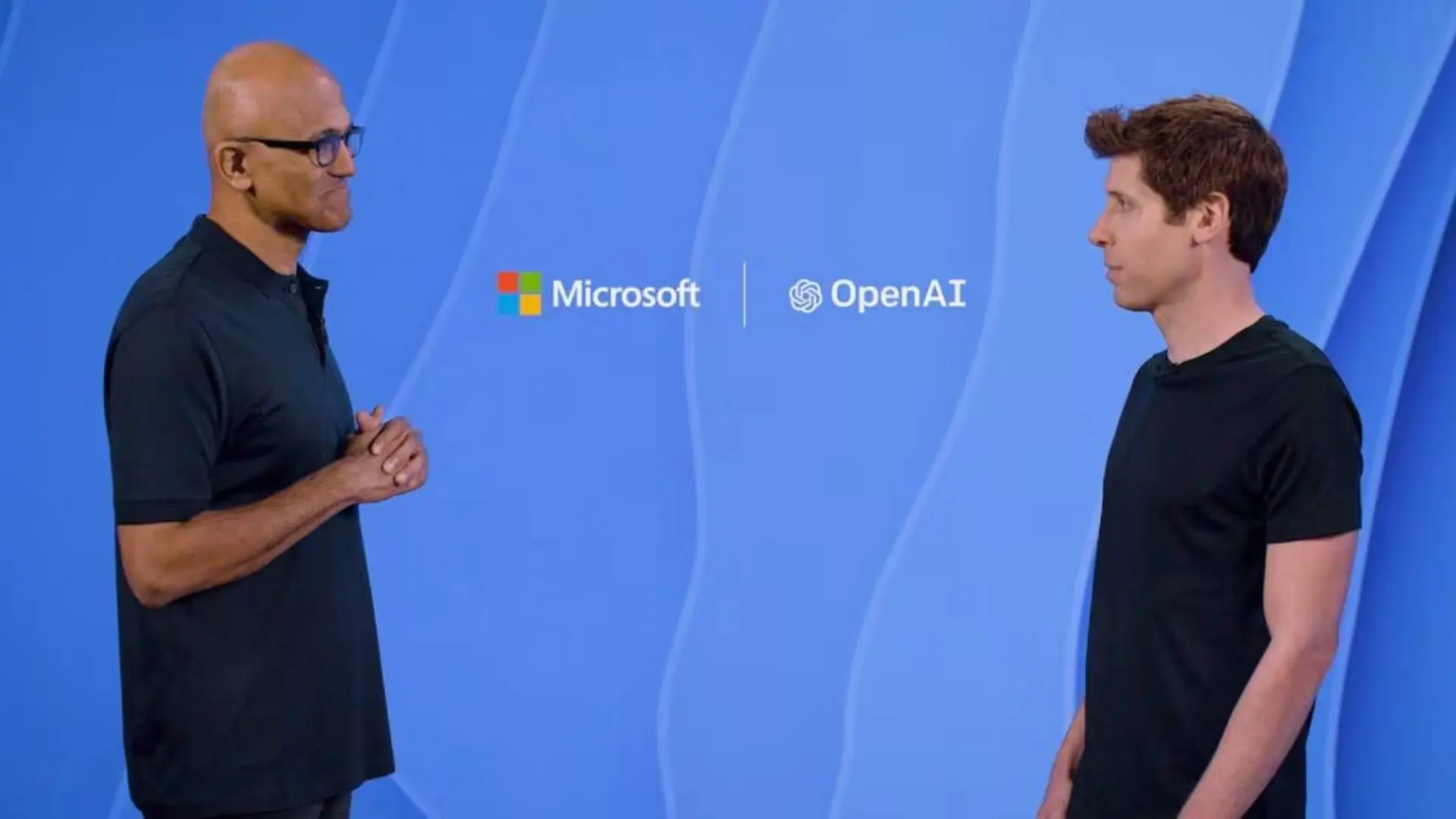
Microsoft has long positioned itself as a dominant force in artificial intelligence, largely through its multi-billion-dollar partnership with OpenAI. However, a new regulatory filing reveals a startling statistic: around 70% of Microsoft's AI revenue is concentrated entirely on OpenAI. This level of dependency is not just notable—it is potentially unhealthy for a company of Microsoft's scale and ambition.
The disclosure, buried deep in Microsoft's latest financial filings, paints a picture of a tech giant whose AI ambitions are almost inextricably tied to the success of one partner. While the partnership has yielded tremendous results—including the integration of OpenAI's models into Azure, Windows, and Office—the lopsided revenue share raises questions about diversification, risk management, and the long-term trajectory of Microsoft's AI business.
The Numbers Behind the Dependency
According to the filing, the vast majority of Microsoft's AI revenue—estimated at around 70%—flows from its collaboration with OpenAI. This includes revenue generated from OpenAI's use of Azure as its primary cloud provider, as well as resold OpenAI models through Microsoft's own enterprise platforms. The exact dollar figure was not disclosed, but analysts estimate that Microsoft's AI-related revenue has grown to billions of dollars annually, with a substantial chunk attributable to OpenAI.
This concentration is striking when compared to Microsoft's overall revenue portfolio. The company generates income from a wide range of products and services, including Office, Windows, LinkedIn, and gaming. Yet within the AI segment, which Microsoft has heavily promoted as a key growth driver, OpenAI stands alone as the dominant contributor. This creates a single point of failure that could have outsized consequences if the partnership were to sour or if OpenAI's technology were to face a major setback.
Why Microsoft Took the Bet
Microsoft's deep entanglement with OpenAI was a calculated gamble. In 2019, Microsoft invested $1 billion in OpenAI, followed by a reported $10 billion investment in 2023. These investments were not just financial—they were strategic. Microsoft needed a leader in generative AI to compete with Google, Amazon, and other tech giants. OpenAI, with its GPT series and ChatGPT product, provided that leadership. By embedding OpenAI's models across its ecosystem, Microsoft quickly transformed from a laggard into a frontrunner in the AI race.
The partnership also gave Microsoft a unique advantage: OpenAI committed to using Azure as its exclusive cloud provider. That meant every API call made by millions of developers and enterprises using OpenAI's models generated revenue for Microsoft's cloud business. It was a symbiotic relationship—OpenAI got the computing power it needed, and Microsoft got a steady stream of customers who had to sign up for Azure to access the most advanced AI models available.
The Risks of Over-Reliance
Dependence on a single partner is a classic business risk. For Microsoft, the risks are multifaceted. First, if OpenAI were to pivot to another cloud provider—something that is technically possible as the contract evolves—Microsoft could lose a significant chunk of its AI revenue overnight. Second, if OpenAI's models were to lose competitive ground to alternatives like Google's Gemini, Anthropic's Claude, or Meta's Llama, the demand for Microsoft's AI services would likely diminish.
There is also the question of governance. OpenAI's unusual corporate structure—a capped-profit parent company governed by a nonprofit board—has already led to internal turmoil. The highly publicized ouster and reinstatement of CEO Sam Altman in late 2023 sent shockwaves through the tech industry. Microsoft, despite being OpenAI's largest investor, had limited influence over that board decision. The episode highlighted how fragile the partnership can be when control lies outside Microsoft's hands.
Another concern is regulatory scrutiny. Antitrust regulators in the United States, the European Union, and the United Kingdom have begun examining the close ties between Microsoft and OpenAI. In early 2024, the EU announced it was reviewing the partnership to determine whether it amounted to a de facto merger. U.S. regulators have also expressed interest in how the deal shapes competition in cloud computing and AI. If regulators decide that the relationship is anti-competitive, they could impose conditions that alter the financial dynamics between the two companies.
Diversification Efforts Cut Both Ways
Microsoft has not been idle in diversifying its AI portfolio. The company has invested in other AI startups, such as Mistral AI and G42, and has developed its own AI models, including the Phi family of small language models. It has also built AI features into its own products, like Copilot for Windows and GitHub Copilot, which do not solely rely on OpenAI models. However, these efforts are still nascent compared to the well-established revenue stream from OpenAI.
Interestingly, Microsoft's strategy of using multiple AI providers could lead to internal competition. If Microsoft begins promoting its own models more heavily, it might inadvertently cannibalize the revenue it generates from reselling OpenAI's technology. On the other hand, maintaining a multi-model approach gives Microsoft flexibility and reduces its dependence on a single technology provider. Striking the right balance is a delicate act that Microsoft's leadership continues to manage.
How This Compares to Other Tech Giants
Dependence on a single third-party supplier is not uncommon in the tech industry, but the scale of Microsoft's exposure is unusual. Google and Amazon, for instance, both have their own in-house AI teams and do not rely on a single partner for the bulk of their AI revenue. Apple has been slower to embrace generative AI, but it is developing its own chips and models. Only Microsoft has staked such a large portion of its AI future on a single external company.
The situation is reminiscent of Microsoft's earlier partnership with Intel. For decades, Microsoft Windows ran primarily on Intel processors, and the two companies formed the so-called 'Wintel' alliance. That relationship was highly successful, but it also created vulnerabilities. When the mobile computing era arrived, Microsoft and Intel were both slow to adapt, and they lost significant market share to ARM-based chips and touch-first devices. The OpenAI partnership carries a similar risk—what works today may not be the winning formula tomorrow.
The Optimistic View
Some analysts argue that the concentration is less risky than it appears. They point out that Microsoft's relationship with OpenAI is deeply contractual and both parties are incentivized to maintain it. OpenAI needs Microsoft's Azure cloud infrastructure to operate at scale, and Microsoft needs OpenAI's models to stay competitive. The two companies are bound in a mutual dependency, which could actually make the partnership more resilient than a one-sided reliance.
Furthermore, the AI market is still in its early stages. Even if Microsoft's current AI revenue is heavily tilted toward OpenAI, that revenue is growing quickly. The absolute size of the pie is expanding, and Microsoft's ability to capture that growth is what matters. Investors seem willing to tolerate the concentration risk as long as the growth continues. Microsoft's stock price has remained strong, and the company has consistently beaten earnings expectations, largely thanks to its AI offerings.
There is also the possibility that Microsoft's own AI efforts will eventually reduce the revenue share from OpenAI. The company has invested heavily in research and development, and its Phi models have become surprisingly capable for their size. As Microsoft develops more of its own foundational models, it could shift revenue away from OpenAI without necessarily severing the partnership. This would allow Microsoft to maintain a hedge while still benefiting from OpenAI's innovations.
The Path Forward for Microsoft
Looking ahead, Microsoft will need to carefully manage its relationship with OpenAI while building out alternative revenue streams. The company is already doing this through a combination of in-house AI development and strategic investments. But the 70% concentration figure is a clear warning that one bad break could significantly impact Microsoft's AI ambitions. Whether the company can successfully navigate this situation remains to be seen, but the scrutiny placed on this dependency by analysts, regulators, and industry observers is well warranted.
For now, Microsoft appears committed to its partnership with OpenAI. The company's leadership has repeatedly emphasized the strategic importance of the deal, and there are no signs that the relationship is in jeopardy. Yet the underlying fragility cannot be ignored. A healthy AI business should be built on a diversified foundation, not a single pillar. Microsoft's next few years will reveal whether it can achieve that balance or whether its stubborn dependence on OpenAI becomes a cautionary tale in the annals of tech corporate strategy.
Source: Windows Central News