

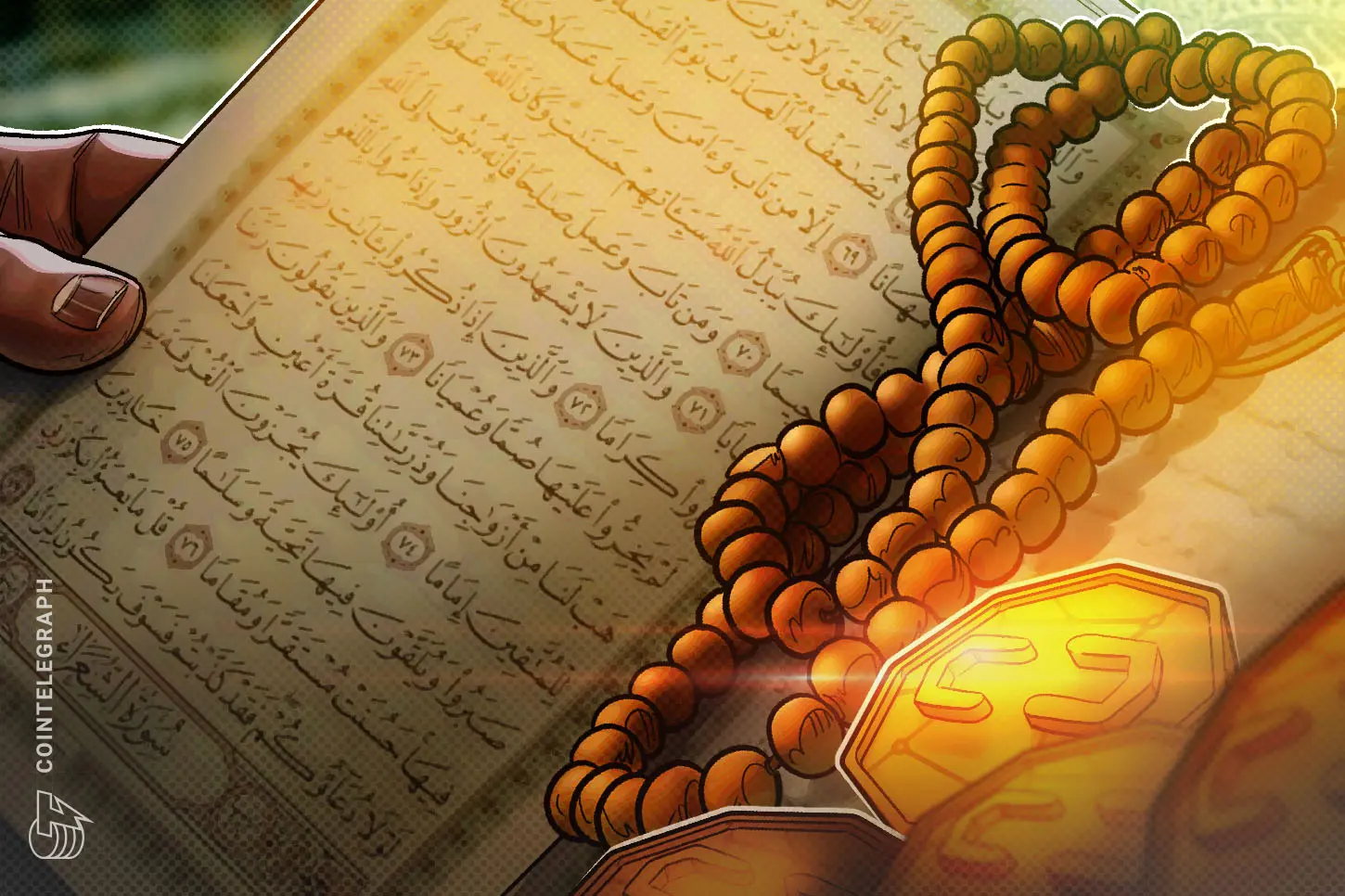
Pakistan's top cryptocurrency regulator, Bilal bin Saqib, chairman of the Pakistan Virtual Assets Regulatory Authority (PVARA), has publicly called for continued dialogue on the treatment of digital assets under Islamic law after meeting a prominent Islamic scholar who endorsed a ruling against using cryptocurrencies for purchases.
The discussion comes as Pakistan takes significant steps toward building a regulated crypto market, with the PVARA beginning to license virtual asset service providers (VASPs). However, religious rulings carry enormous weight in the country, where over 96% of the population identifies as Muslim, and the compatibility of digital assets with Shariah law remains a contentious issue.
Meeting with Mufti Taqi Usmani
In a recent social media post, Saqib described a meeting with Mufti Taqi Usmani, one of the most influential Islamic scholars in the world, particularly in the field of Islamic finance. The discussion covered blockchain technology, digital assets, stablecoins, and tokenized real-world assets (RWAs), as well as the need to protect Pakistanis from fraud, exploitation, and financial harm.
Saqib wrote that the different categories of digital assets merit “careful technical assessment alongside rigorous Shariah examination, rather than being viewed through a single lens.” He did not directly challenge the scholar's ruling but instead emphasized the need for ongoing conversation between regulators, religious scholars, and industry participants.
The meeting followed the issuance of an Islamic legal ruling (fatwa) by Jamia Darul Uloom Karachi, a prominent Islamic seminary. According to Pakistani newspaper Dawn, Usmani and five other scholars signed the fatwa on Friday. The ruling stated that purchases made with cryptocurrencies, including stablecoins such as USDT, are not permitted under Islamic law because digital tokens do not qualify as recognized property or wealth under their interpretation of Shariah.
Pakistan's evolving crypto regulatory landscape
The timing of this religious ruling is particularly significant because Pakistan has been moving toward embracing digital assets rather than banning them outright. On April 15, the State Bank of Pakistan (SBP) issued a circular allowing banks to open accounts for VASPs licensed by PVARA, effectively ending an eight-year restriction on regulated financial institutions dealing with cryptocurrency-related businesses.
This policy shift followed the passage of the country's Virtual Assets Act 2026 in March, which established PVARA as the statutory body responsible for licensing and oversight of virtual asset activities. The law marked a turning point for Pakistan's crypto industry, which had operated in a legal gray area for years. Prior to this, the SBP had issued warnings against cryptocurrency trading, and banks were prohibited from facilitating crypto transactions.
Under the new framework, PVARA is tasked with developing a comprehensive regulatory regime that balances innovation with consumer protection and financial stability. The authority has already begun accepting license applications from VASPs, signaling a clear intention to create a regulated market rather than drive crypto activity underground.
The weight of religious rulings in Pakistan
The fatwa from Jamia Darul Uloom Karachi carries significant weight in Pakistan, where Islamic law influences many aspects of daily life and commercial transactions. Mufti Taqi Usmani, a former judge of the Federal Shariat Court of Pakistan, is a towering figure in Islamic finance. He has served as chairman of the Shariah board of numerous Islamic banks and financial institutions, and his opinions shape Islamic finance practices globally.
The ruling's focus on stablecoins is particularly noteworthy, as stablecoins like USDT are often promoted as Shariah-compliant because they are pegged to fiat currencies. However, the scholars argued that digital tokens lack physical existence and tangible value, making them unsuitable as a medium of exchange under Islamic principles of property (maal). Islamic law requires that property be tangible, owned, and capable of being delivered. Because cryptocurrencies are purely digital and often volatile, they fail to meet these criteria in the eyes of many scholars.
It is important to note that not all Islamic scholars agree on the permissibility of cryptocurrencies. Some institutions, such as the Shariah Advisory Council of the Central Bank of Malaysia, have issued rulings that certain cryptocurrencies can be permissible if they meet specific criteria. This lack of consensus creates challenges for regulators and businesses trying to navigate both legal and religious requirements.
Broader context: Crypto in Islamic finance
The debate over cryptocurrencies in Islamic finance is not unique to Pakistan. In recent years, several Muslim-majority countries have taken different approaches. The United Arab Emirates has actively courted crypto businesses, with Dubai's Virtual Assets Regulatory Authority (VARA) providing licenses and oversight. Saudi Arabia has taken a more cautious stance, with its central bank warning against cryptocurrency trading but allowing limited experiments with blockchain technology.
Indonesia, the world's most populous Muslim-majority country, has legalized cryptocurrency trading as a commodity but has not yet recognized it as a medium of exchange. Iran has embraced cryptocurrency mining as a way to bypass economic sanctions but has imposed strict controls on trading and usage.
The Islamic finance market is estimated to be worth trillions of dollars, and several fintech companies are developing Shariah-compliant digital assets. For example, the PUSD stablecoin, deployed on the ADI Chain, is targeting the Islamic finance market with a product designed to comply with Shariah principles. These initiatives highlight the potential for blockchain technology to serve the Islamic economy, but they also underscore the need for clear religious guidance.
Saqib's call for nuanced examination
In his post following the meeting, Saqib stressed that blockchain and digital assets encompass a broad spectrum of technologies and use cases. He stated: “I shared that blockchain, digital assets, stablecoins, and tokenized real-world assets represent a broad spectrum of technologies and use cases.” This suggests that a one-size-fits-all ruling may not be appropriate, and that different types of digital assets could be evaluated separately.
Saqib's approach reflects a pragmatic view: instead of rejecting the fatwa outright, he is inviting scholars to engage with the technology in greater depth. This dialog is crucial because many Islamic scholars are not familiar with the intricacies of blockchain technology, such as the difference between a speculative cryptocurrency like Dogecoin and a stablecoin backed by real-world assets like gold or fiat currency.
The regulator also emphasized the importance of protecting Pakistanis from fraud and financial harm. Cryptocurrency scams have plagued the country, with several high-profile Ponzi schemes causing significant losses. A regulated crypto market, Saqib argues, would provide better consumer protection than an unregulated one, even if religious concerns remain.
Potential paths forward
The tension between Pakistan's regulatory ambitions and religious objections will likely shape the country's crypto landscape for years to come. Several possible outcomes exist. First, regulators may work with scholars to develop Shariah-compliant crypto products, such as asset-backed stablecoins or tokens representing ownership in real-world assets. These products could be exempted from the fatwa if they meet the criteria of Islamic property law.
Second, the government may choose to restrict crypto payments but allow trading and investment, similar to the approach in Indonesia. This would align with the fatwa's prohibition on using crypto as a medium of exchange while permitting it as an asset class.
Third, continued dialog could lead to a more nuanced fatwa that distinguishes between different types of digital assets. Saudi Arabia's Islamic Jurisprudence Council, for example, has issued opinions that differentiate between cryptocurrencies used for speculation and those with underlying assets.
Fourth, Pakistan could follow the example of Malaysia, where a central bank subsidiary developed a Shariah-compliant blockchain platform for trade finance, demonstrating that the technology itself is not inherently un-Islamic.
The outcome will depend on how effectively regulators and industry advocates can educate religious scholars about the technical and economic aspects of digital assets. Saqib's willingness to engage with scholars is a positive sign, but the path to full acceptance remains uncertain.
As Pakistan moves forward with its regulatory framework, the views of influential scholars like Mufti Taqi Usmani will continue to shape public opinion and adoption. The PVARA chairman's call for continued dialogue is an acknowledgment that regulatory approval alone is not enough; religious acceptance is equally important for a country where faith plays a central role in daily life.
The debate in Pakistan echoes a global conversation about the intersection of religion and finance. While some scholars see cryptocurrencies as an inherently speculative and harmful innovation, others recognize their potential for financial inclusion, especially in countries with limited access to traditional banking. The challenge for Pakistan will be to find a balance that respects religious sensitivities while allowing innovation to flourish.
Source: Cointelegraph News