
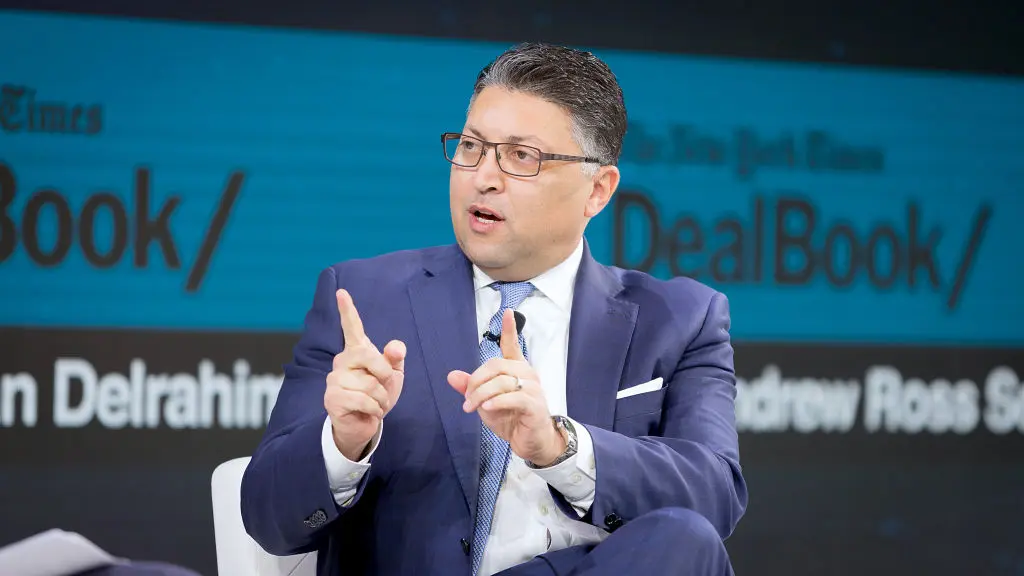
Paramount Skydance has formally accused Netflix of waging a coordinated campaign to undermine its proposed acquisition of Warner Bros. Discovery (WBD). In a letter sent to the U.S. Department of Justice’s Antitrust Division, Paramount’s chief legal officer, Makan Delrahim, alleged that Netflix is engaging in a “scorched-earth campaign” to sway regulators and other stakeholders against the transaction. The letter, dated June 5 and first reported by Politico, marks the latest escalation in a battle that highlights the intense competitive pressures reshaping the streaming and entertainment industry.
Delrahim, a former assistant attorney general for the Antitrust Division, wrote that Netflix’s “panic-level response” to the merger demonstrates how seriously the streaming giant views Paramount as a scaled competitor. He argued that Netflix is attempting to “poison” the regulatory process by spreading misleading narratives about the deal’s impact on content production and labor. The letter was specifically addressed to Jared A. Hughes, acting section chief of the Media, Entertainment, and Communications Section, and A. Maya Kahn, a trial attorney for the Antitrust Division.
The Letter to the DOJ
The Paramount letter is a direct response to a March letter from The International Brotherhood of Teamsters, which represents 1.3 million workers. The Teamsters had urged the DOJ to block the Paramount-WBD merger unless substantial safeguards were implemented to protect domestic production and jobs. In his rebuttal, Delrahim claimed that the merger would actually increase work opportunities for labor unions, including the Teamsters. He stated that the combined company would produce more films and series, benefiting a wide range of professionals from writers and directors to drivers, location scouts, caterers, and animal handlers.
Delrahim pointed to the increase in content production after Paramount merged with Skydance in 2025, noting that 20 shows had been purchased or renewed and that theatrical output would nearly double in 2026 compared to 2025. He wrote, “More films and series in production means more call sheets, more location days, more transportation, casting, and catering work.” This optimistic view stands in contrast to Paramount’s own earlier financial disclosures, which indicated that the combined entity would cut content spending by less than 10 percent.
Contradictions and Concerns
Despite Delrahim’s assurances, Paramount’s January SEC filing revealed a different picture. The filing explicitly stated that the merged Paramount-WBD expects to save over $6 billion by reducing duplicative operations in back-office, finance, corporate, legal, technology, infrastructure, and real estate. While the filing claimed that no spending cuts would come from film or TV studios, it did not rule out reductions in production staffing. Additionally, the combined company would carry a staggering $79 billion in debt, raising questions about long-term financial sustainability.
Paramount CEO David Ellison has publicly committed to releasing at least 30 feature films annually, each with a 45-day theatrical window. However, critics argue that such promises may be difficult to keep amid massive debt obligations and the need to streamline operations. The Teamsters had cited the precedent of Disney’s 2019 acquisition of 21st Century Fox, which led to eliminated production units, significant job losses, and canceled projects. In his letter, Delrahim dismissed this comparison, arguing that Disney’s post-acquisition struggles were caused by its earlier shift in film release strategy and the COVID-19 pandemic, not the merger itself.
The Antisemitism Accusation
Delrahim’s letter also took a controversial turn by suggesting that some opposition to the merger stems from antisemitic views. In an interview with the Los Angeles Times, he accused unnamed individuals in Washington, D.C., of using the merger as a pretext to push hateful ideology. “Let’s be honest,” Delrahim stated. “There’s a lot of fear-mongering, particularly from people in Washington, D.C. They are running a political campaign. Some of these people are trying to inflict harm on this transaction really because of their own antisemitic views.” He expressed confidence that regulators would see through such tactics.
This accusation has drawn criticism from observers who view it as a diversion from legitimate antitrust and labor concerns. The Teamsters have not commented on Delrahim’s claims, and Paramount declined to provide further details about the alleged antisemitic campaigns. The lack of specific evidence or named parties has raised eyebrows, with some legal experts questioning the appropriateness of injecting such rhetoric into a regulatory proceeding.
Netflix’s Denial
Netflix quickly dismissed Paramount’s allegations as baseless. In a statement reported by Politico, a Netflix spokesperson called the accusations “absurd” and reiterated that the streaming service had walked away from its own potential acquisition of Paramount months ago. “We walked away from this deal months ago and remain focused on our own business, not theirs,” the spokesperson said. “Ultimately, it’s up to the regulators to approve this deal and determine if it is in the best interest of the industry and all concerned.”
The clarification underscores the high stakes of the proposed merger. Consolidation in the entertainment industry has accelerated over the past decade, with major players like Disney, Comcast, and Warner Bros. Discovery seeking scale to compete with Netflix’s global subscriber base and content budget. However, regulators have become increasingly wary of such deals, particularly under the Biden administration, which has pursued a more aggressive antitrust enforcement agenda. The DOJ’s review of the Paramount-WBD merger is expected to examine not only competitive effects but also labor impact and overall market concentration.
Broader Implications for Streaming and Labor
The Paramount-WBD merger is seen as a critical test for the future of the streaming industry. If approved, the combined entity would become the second-largest media company in the United States by revenue, controlling assets ranging from CBS and Paramount Pictures to HBO, CNN, and Warner Bros. Studios. Such scale could allow the new company to negotiate better terms with advertisers, content creators, and distributors, but it might also lead to reduced competition and higher prices for consumers.
Labor unions, including the Teamsters and various guilds representing writers, actors, and technical workers, have expressed deep concern about consolidation trends. The Disney-Fox merger resulted in thousands of job losses and the cancellation of dozens of projects, and many fear a similar outcome from the Paramount-WBD combination. Although Delrahim promised that no production jobs would be cut, the earlier SEC filing’s mention of “cost savings” from “duplicative operations” suggests that some layoffs are inevitable, particularly in back-office and administrative roles.
Analysts have also pointed to the broader context of streaming profitability. After a period of massive spending on original content, many streaming services are now prioritizing profitability over subscriber growth. Paramount’s own streaming service, Paramount+, has struggled to break even, while Netflix has maintained a strong position with a focus on cash flow. The WBD merger is partly aimed at achieving cost synergies that could make Paramount+ more competitive, but the mountain of debt remains a formidable obstacle.
In his letter, Delrahim attempted to reframe the narrative by highlighting the growth in theatrical releases since 2019. He claimed that Disney increased its content spend from $5 billion in 2019 to $24 billion expected in 2026, citing a 2019 SEC filing. However, critics note that the 2019 filing actually reported $7.1 billion in film and TV production costs plus $10.5 billion in television program licenses, totaling $17.6 billion in 2019. Many analysts estimate Disney’s total content spend in 2019 was closer to $28 billion, meaning the 2026 projection of $24 billion would represent a decline, not a rise. This discrepancy has fueled skepticism about the reliability of Delrahim’s claims.
The regulatory review process is expected to take months, with the DOJ likely to interview industry participants, labor representatives, and competitors. Paramount’s accusation against Netflix adds a new layer of complexity, but it remains to be seen whether the DOJ will treat it as a serious concern or a negotiating tactic. As the streaming wars continue to evolve, the outcome of this merger could set a precedent for future consolidation in an industry already dominated by a handful of giants.
Source: Ars Technica News