

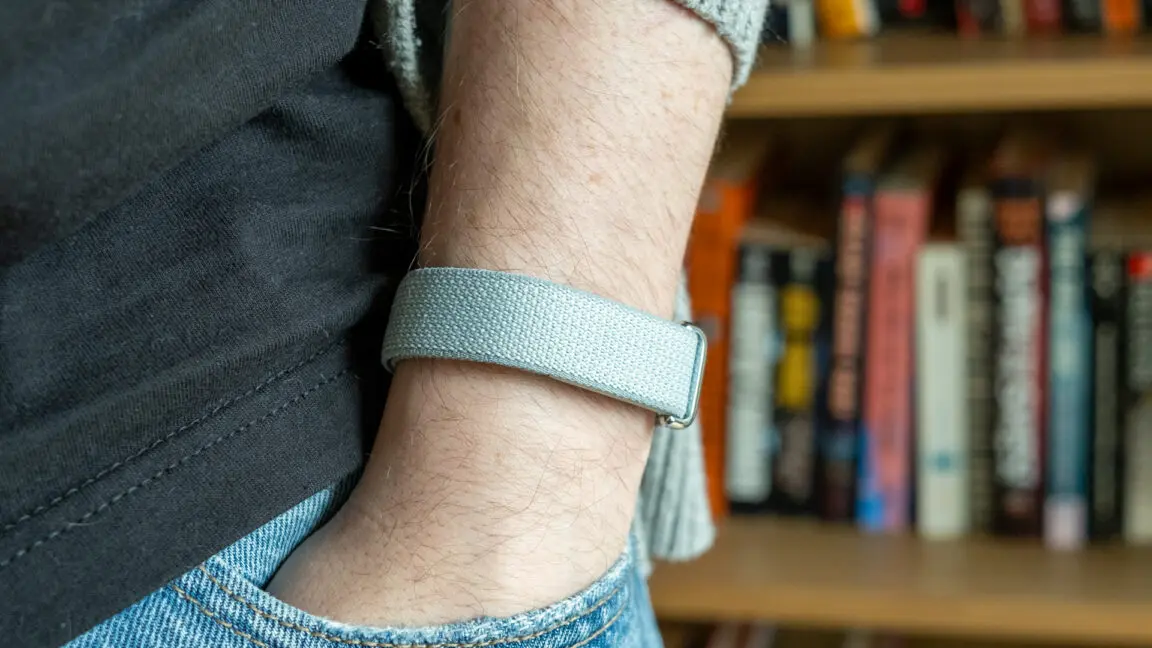
The Fitbit Air is a return to the basics of fitness tracking, offering a tiny sensor puck that you can wear without the distractions of a screen. Priced at $100, it strips away all the complexity of modern smartwatches, focusing solely on health monitoring. But Google, which acquired Fitbit in 2021, has infused this device with its generative AI ambitions, creating a mixed experience that might not appeal to everyone.
Unlike traditional trackers with a display, the Air has no screen, buttons, or speaker. The only indicator is a small LED on the side that shows battery level when double-tapped. This minimalism means you'll need to rely entirely on the Google Health app for any feedback or data. The device communicates wirelessly via Bluetooth, but it cannot receive phone notifications or show the time. For those who find smartwatches overwhelming, this is a welcome change, but it also means you must have your phone nearby to check stats during workouts.
Design and Comfort
The Fitbit Air's design is remarkably simple. The puck itself is about the size of a standard watch sensor cluster, and it snaps into a band loop. The standard Performance Band is made of a smooth polyester yarn with a Velcro closure and a metal loop. It's comfortable and durable, though it can absorb moisture, making it less ideal for intense exercise. A silicone Active Band is available for $35, which better hides the puck and is more suited for swimming. There's also a premium $50 Elevated band made of polyurethane. While the Air is lightweight and comfortable enough to wear during sleep, the cost of extra bands is steep relative to the device price.
The tracker itself has no buttons, so all interactions are done through the app. The vibration motor is only used for alarms and cannot sync with phone notifications. This is a deliberate choice for a device that aims to minimize distraction. The Air is water-resistant to 50 meters, so you can wear it while swimming, but you'll need the silicone band to keep it secure.
Sensors and Tracking Accuracy
Despite its simplicity, the Air packs most of the sensors found on high-end smartwatches, including an optical heart rate monitor, a pulse oximeter for blood oxygen, and a skin temperature sensor. It lacks an electrocardiogram (ECG) feature, which is a common omission in this price range. The data collected is fed into the Google Health app, where it generates metrics like readiness score, sleep stages, and daily activity logs. In testing, the sleep tracking accurately detected sleep and wake times, and the smart alarm functioned well. The readiness score often matched subjective feelings of energy and fatigue.
The auto-workout detection is fairly reliable, but since there's no screen, you need to pull out your phone to see live progress. The app also logs exercises based on heart rate and movement patterns. For casual users, the accuracy is more than sufficient, but serious athletes might find the lack of GPS (the Air relies on phone GPS) and real-time metrics limiting.
The Google Health App and the AI Coach
The revamped Google Health app replaces the old Fitbit interface. It's clean and offers most expected features, though long-time Fitbit users will miss some customization options and features like blood pressure tracking and custom meal creation. Google has promised updates to address these concerns. The app's main differentiator is the Health Coach, an AI powered by Gemini that provides personalized summaries, suggestions, and motivational messages. This is part of Google Health Premium, which costs $10/month or $100/year. The Air comes with three months of Premium for free.
The Health Coach is designed to be conversational and supportive. It can provide rundowns of your activity, sleep, and readiness, and it can incorporate user-provided context, such as travel or illness, into its analysis. It also cites its sources, which is helpful. However, the AI often produces verbose, overly enthusiastic responses. For example, after a good night's sleep, it might say, "You crushed your sleep goals! Keep up the amazing work!" — a tone that can feel grating over time. More concerning are occasional hallucinations: the AI might invent a workout based on a brief spike in heart rate or claim data doesn't exist when it's right there in another tab.
Google clearly wants the AI front and center, but for many users, it adds little value. The summaries often just restate what the graphs already show, and the constant encouragement becomes noise. The AI cannot replace a human coach or provide deep insights without extensive manual logging of food and activities. Free users actually get a more concise, data-rich interface without the AI commentary. If you subscribe through Google One, you get the AI by default, but you can turn it off by going to Your data in Google Health > Feature Control > Google Health Coach and flipping the switch. Even then, an "Ask Coach" button remains in the app, so the AI never truly disappears.
Comparison to Other Trackers
The Fitbit Air's main competitor is the Whoop band, which also has no screen but requires a subscription starting at $200 per year. The Air, at $100 without subscription necessity, is more affordable. However, Whoop offers deeper analytics and a more sophisticated AI coach (though also subscription-based). Other screenless trackers like the Xiaomi Mi Band (which has a tiny screen) or the Amazfit Band provide more display features at lower prices. The Air stands out for its premium build quality and seamless integration with Google's ecosystem, but it lags in features compared to similarly priced devices with screens.
One notable advantage is the ability to wear the Air alongside a Pixel Watch — both devices sync data to the same app, allowing you to use the Air for sleep tracking while wearing the watch during the day. This dual-device approach is unique to Google's ecosystem. The battery life of the Air is about a week, which is standard for screenless trackers but significantly better than most smartwatches.
The bands are a weak point. The proprietary connector for Pixel Watches has been criticized, but the Air uses a simpler snap-in mechanism. However, Google's own band prices are high, and third-party options are currently scarce. Over time, this may improve as the device gains popularity.
Overall, the Fitbit Air is a solid choice for anyone who wants a minimalistic, comfortable tracker with accurate sensors and long battery life. The hardware is well-executed, and the app provides good data visualization. The AI Health Coach, however, is a divisive feature. It tries to add value but often feels like an unnecessary layer of chatty commentary. If you can ignore or disable the AI, the Air is an excellent daily companion. But for those who want a more straightforward experience, the free version of the app is actually better. As Google continues to expand its health platform, the AI may improve, but for now, it's a feature that's easy to live without.
Source: Ars Technica News