

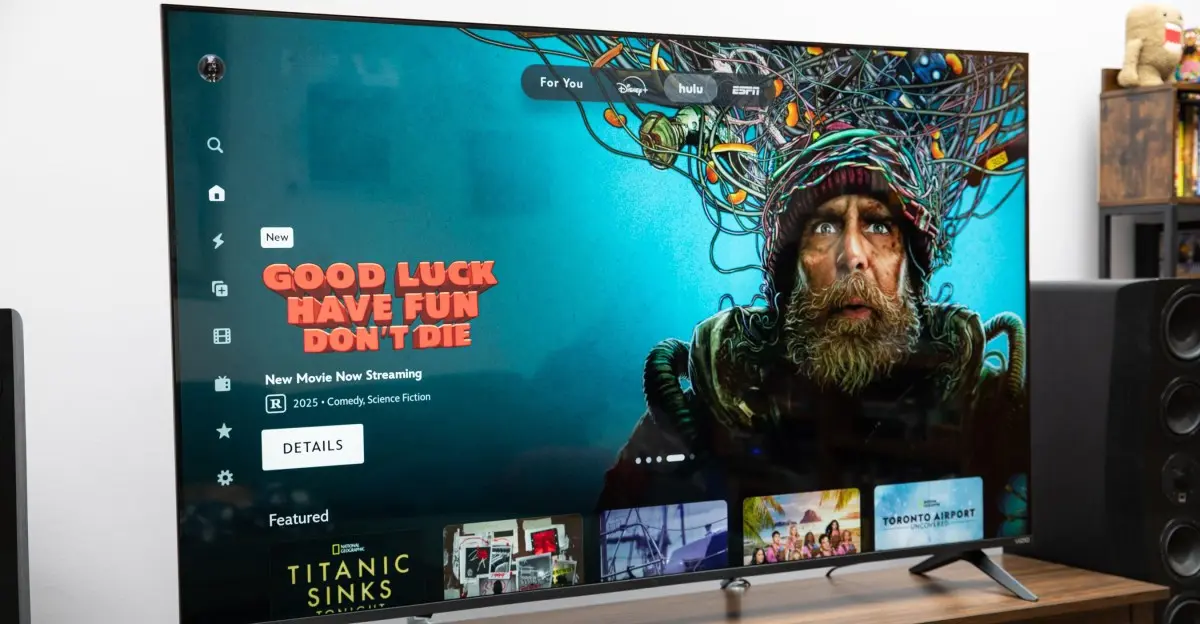
Vizio Mini LED Quantum TV – The Accidental Dumb TV
When Vizio's 65-inch Mini LED Quantum TV first hit the market, the immediate headline was the price: under $398 for a quantum-dot television, making it the cheapest such model available. Quantum dots allow for higher brightness and more accurate color, so a budget-friendly option seemed like a strong comeback for Vizio after its acquisition by Walmart in 2024. But as testing progressed, a different narrative emerged: this TV might be the best modern dumb TV money can buy – and it happened entirely by accident.
The appeal is not just the price or the display technology, but the ability to use the television without the smart operating system. While Walmart purchased Vizio primarily for its advertising business, hoping to leverage viewing data for targeted ads, the Mini LED Quantum actually allows users to skip the OS entirely. During initial setup, you can decline accounts, data sharing, and Wi-Fi – effectively turning the television into a traditional, non-connected screen with three HDMI ports. This feature is surprisingly rare among current smart TVs, which typically force you to accept some data collection before you can even access inputs.
Specs and Build Quality
The Vizio Mini LED Quantum is available in sizes from 43 inches up to 85 inches, with the 65-inch model reviewed here costing $398 at Walmart. It uses a Mini LED backlight with quantum-dot enhancement, supporting Dolby Vision, HDR10+, HDR10, and HLG. The panel is IPS rather than VA, which means viewing angles are wide but black levels are not as deep as on more expensive TVs. Peak brightness reaches around 936 nits in SDR (Calibrated mode) and 579 nits in HDR with small highlights – excellent for a budget set.
Connections are limited: three HDMI 2.0 ports (one with eARC), a USB 2.0 port, an optical audio output, and an ATSC 1.0 tuner. There is no HDMI 2.1, so gaming is capped at 4K/60Hz or 1080p/120Hz on the 65-inch and larger models. The build is all plastic, with feet that have only one height position and a cable management channel that can handle just one cable each. The remote is small and functional but feels cheap. The built-in speakers are loud but lack clarity – a common issue even among premium televisions.
Performance and Image Quality
In everyday use, the Vizio Mini LED Quantum delivers a pleasing picture. Calibrated and Calibrated Dark modes are the most accurate, though both lean slightly blue. With good room lighting, the image remains bright and vibrant. Motion can show some blur with fast-moving content, such as sports or action scenes, but it is not distracting for most viewers. The main downsides are a reflective screen and visible blooming around bright objects in dark scenes, due to the IPS panel and limited local dimming zones.
For its price point, the TV handles SDR and HDR content well. Watching World Cup matches via an over-the-air antenna or streaming shows from an Apple TV looked natural and engaging. Despite being a budget model, the quantum-dot color gamut makes a noticeable difference in vibrancy compared to standard LED televisions. If you are not a videophile, this TV will likely exceed expectations.
The Dumb TV Setup
The standout feature of the Vizio Mini LED Quantum is the ability to completely bypass the smart platform. During initial setup, you are asked to sign in to a Walmart account. Choosing “skip” leads to a warning that you will miss out on payments, subscriptions, and device linking. Declining the activity data policy – which lets Walmart collect all viewing information – produces a “Whoops!” screen saying you will lose access to apps like Netflix and YouTube. If you continue to decline, the TV becomes a pure display: no OS, no data sharing, and three HDMI ports waiting for external sources. You can also choose to not connect to Wi-Fi at all, which immediately switches to the last used input. This level of control is unheard of in modern smart TVs, where almost every brand requires some degree of onboarding and data acceptance.
Of course, using the TV without internet means missing out on firmware updates, which could be a security concern later. But for those who prioritize privacy, this is a trade-off worth making. Even if you connect an external streaming device (like a Fire TV Stick or Apple TV), Walmart can still collect data via HDMI scanning if the smart OS remains active. The only way to fully avoid tracking is to go fully dumb – no Wi-Fi and no sign-in.
Walmart's Data Collection and Privacy Concerns
Walmart's ownership of Vizio is explicitly built around advertising. The retailer sees the TV operating system as a vehicle for targeted shopping recommendations and ad placement. For example, if you watch a lot of space-themed shows, you might later see Lego sets or related products in the Walmart app. This level of integration between TV and retailer is unsettling for many consumers. Vizio was previously caught collecting viewing data without consent in 2017, and the new policy makes the data collection mandatory for smart features. However, the ability to opt out completely – something almost no other TV offers – mitigates these concerns for privacy-conscious buyers.
It is worth noting that using the smart OS occasionally triggers a screensaver that is actually a live channel from WatchFree+, which includes ads. This is not a true screensaver. If you do decide to use the OS, you can limit data collection by turning off Viewing Data in the privacy menu and unchecking personalized ads on your Vizio account page. But for maximum privacy, the dumb TV route is the safest.
Comparison to Other Budget TVs
At $398 for 65 inches, the Vizio competes directly with entry-level models from TCL, Hisense, and Amazon Fire TVs. Most of those sets have smarter operating systems that require some data sharing or at least force you to see ads on the home screen. TCL's Google TV and Hisense's VIDAA offer more streaming app integration but are not designed to function as dumb TVs. Amazon's Fire TVs are particularly aggressive with ad placement and data collection. The Vizio stands out because you can switch it off completely from any online services. Even if you later change your mind, the setup can be reversed by connecting to Wi-Fi and signing in.
Another alternative is buying a professional display or a commercial-grade monitor, but those often lack TV tuners, remote controls, and consumer-friendly features like built-in speakers. The Vizio Mini LED Quantum provides the best of both worlds: a modern, affordable TV with good picture quality that can be used entirely offline. It is essentially the closest thing to a modern “dumb” TV available at a mainstream retailer.
Future Updates and Longevity
One lingering concern is that Walmart might push a software update that forces users to accept the smart features or blocks the dumb TV workaround. Vizio has not announced any such change, but the company's history and Walmart's business model suggest they would prefer users to stay connected. If that happens, the TV would lose its main selling point. However, as of now, the Mini LED Quantum can be set up as a fully offline display – and for many, that is exactly what they want. Given the low price, even if the dumb capability is later removed, the TV still offers excellent value for its hardware.
The panel itself is solid, with good uniformity and minimal backlight bleed. The quantum dot layer ensures long life and stable color performance. With external streaming devices or a game console, the Vizio can serve as a second living room TV, a bedroom set, or a gaming monitor without any smart distractions. The lack of HDMI 2.1 may be a limitation for next-gen console users, but for 4K/60Hz content, it is perfectly adequate.
Key Facts at a Glance
- Display type: Mini LED with quantum dots – enhances brightness and color accuracy.
- Sizes: 43, 50, 55, 65, 75, 85 inches.
- HDR support: Dolby Vision, HDR10+, HDR10, HLG.
- Connections: 3x HDMI 2.0 (one eARC), USB 2.0, optical audio, ATSC 1.0 tuner.
- Audio: Dolby Atmos, DTS:X pass-through; built-in speakers are mediocre.
- Gaming: 4K/60Hz, 1080p/120Hz on 65-inch and up.
- Smart platform: Vizio OS (can be bypassed entirely – no account or Wi-Fi required).
- Price: $398 for 65-inch at Walmart (check for other sizes).
- Privacy: Full smart features require accepting activity data and Walmart account. Dumb setup avoids all data sharing.
In summary, the Vizio Mini LED Quantum is a rare find: an affordable quantum-dot television that respects your privacy if you choose to use it offline. While Walmart's data ambitions are real, the accidental loophole makes this one of the best dumb TVs on the market today. If you value privacy and want a large, attractive screen without the smart bloatware, this is the TV to buy – at least until a future update changes the game.
Source: The Verge News