

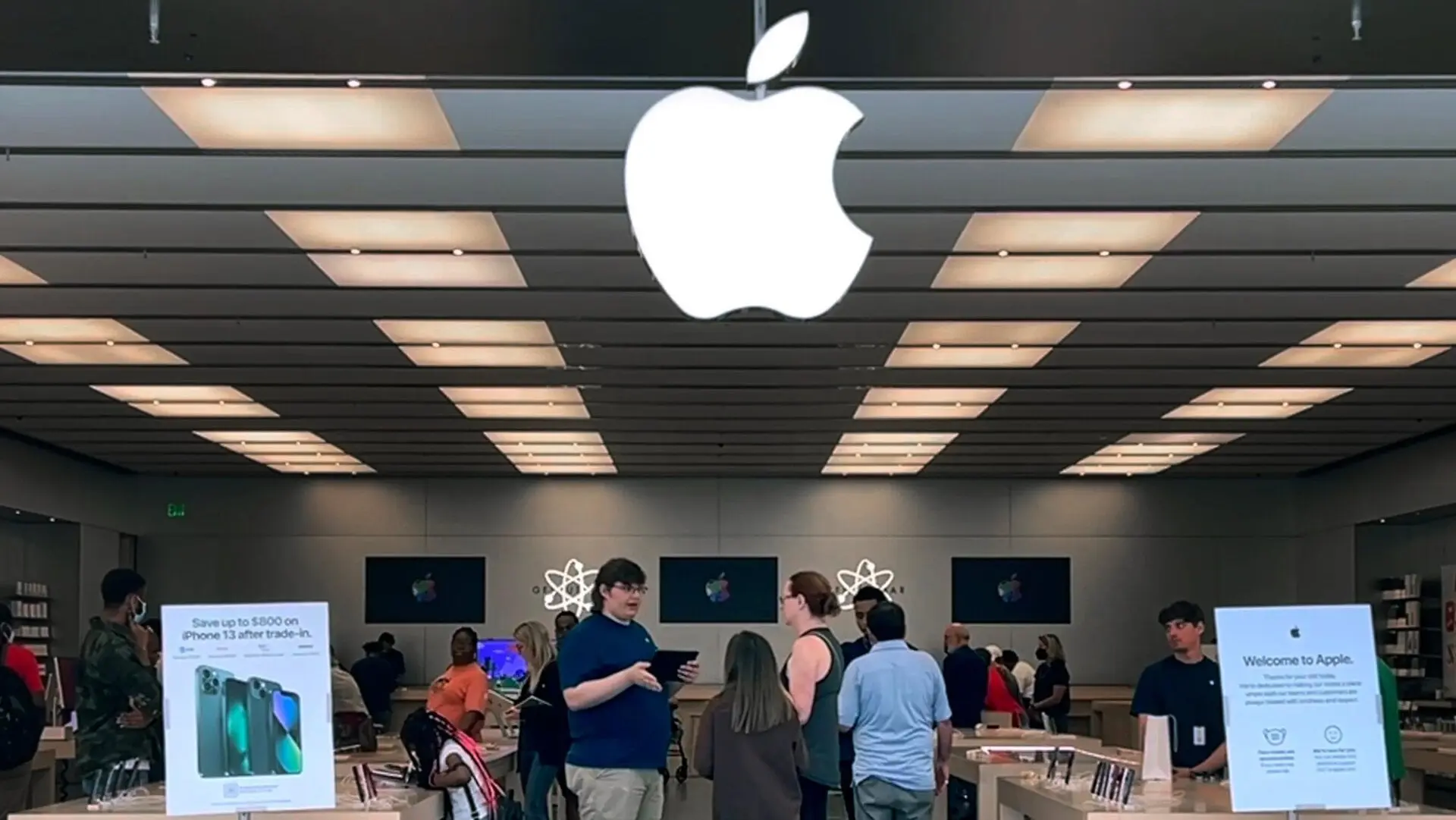
Apple is reportedly testing a new tool that records and uses artificial intelligence to summarize customer conversations at its Genius Bar, marking a significant step into real-time conversation analysis for the tech giant. The program, internally called 'Live Notes,' is currently limited to a small number of Apple Stores and is being pitched as a time-saving feature for employees, according to a report from Bloomberg's Mark Gurman. While Apple insists the system is designed purely to streamline repair documentation, the initiative has raised eyebrows among workers and privacy advocates alike, especially given the company's complicated history with data collection and employee monitoring.
The pilot works by capturing audio during a customer's interaction with a Genius Bar employee. The recording is then automatically transcribed and summarized by an AI system, with the resulting notes stored in the repair session record on the employee's work iPad. Apple claims the raw audio is not retained after transcription, and that participation is strictly opt-in for both the employee and the customer. Furthermore, managers do not have access to the transcripts or summaries, which are intended only for the employee handling the repair. These safeguards are meant to address immediate privacy concerns, but they do little to quell deeper anxieties about how such technology could evolve.
According to Gurman, some Apple Store workers have expressed unease about Live Notes, even with the current restrictions. The tool's underlying technology—recording and analyzing conversations—could easily be repurposed for performance evaluation, quality assurance, or even disciplinary actions. The fear is that what starts as a voluntary productivity aid might become mandatory tracking software, especially if corporate sees value in analyzing employee-customer interactions for metrics like efficiency, upselling success, or adherence to scripts. This is not an irrational worry, as many companies have gradually expanded monitoring systems under similar justifications.
Apple's foray into conversation recording is not its first brush with controversy over audio data. In 2019, it was revealed that Apple had been subcontracting human reviewers to listen to recordings from Siri interactions to evaluate the assistant's performance. The practice was widespread and included recordings that were inadvertently triggered by the device, capturing private conversations without user knowledge. Apple apologized publicly, stating that it 'had not been fully living up to its high ideals' and suspended the program while revising its policies. The company later introduced a system requiring explicit user opt-in for Siri recordings to be used for improvement, but the damage to its privacy reputation lingered.
The timing of the Live Notes pilot is particularly sensitive given broader industry trends. Wall Street and corporate management have shown increasing enthusiasm for tools that promise to monitor employee productivity. For instance, JPMorgan Chase recently rolled out a monitoring system that analyzes video call data, meeting schedules, and even keystroke patterns to generate reports on junior bankers' output. The bank claims the tool is for self-awareness, akin to weekly screen time summaries, but many employees view it as a surveillance mechanism that could lead to firings or performance reviews. Apple's pilot, while more limited in scope, follows a similar logic: technology that could easily shift from empowerment to enforcement.
How Live Notes Works and What It Means for Privacy
The mechanics of Live Notes are straightforward but raise complex privacy questions. When a customer walks into an Apple Store for a Genius Bar appointment, the employee can ask if they want the conversation recorded for note-taking purposes. If both agree, the session is recorded, transcribed, and summarized automatically. The summary—which highlights key issues, troubleshooting steps, and actions taken—is then saved to the repair record. The employee can review or edit the summary as needed. Apple's official stance is that this reduces the time employees spend taking notes, allowing them to focus more on the customer and the technical problem at hand.
However, the opt-in nature of the system may not be as voluntary as it sounds. Customers who decline recording might fear they are not getting the same level of service or that their repair will be less prioritized, even if that is not the case. Similarly, employees might feel pressured to consent if management implicitly favors those who use the tool or if they believe it will reflect positively on their efficiency. The power dynamics at play make genuine opt-in difficult, especially in a hierarchical retail environment where managers set performance expectations.
Moreover, Apple's history with data collection amplifies distrust. The Siri grading scandal demonstrated that even a company championing privacy as a fundamental human right—as Tim Cook did in a 2018 speech in Europe—could fall short. Cook's statements about supporting European-style privacy regulations were seen as a bold stance against companies like Google and Facebook, but Apple's own practices have sometimes contradicted that rhetoric. The Live Notes pilot could be interpreted as a step toward more pervasive data gathering, even if the current safeguards are robust.
Employee Concerns and the Surveillance Economy
The concerns among Apple Store employees are not isolated. Across the technology and retail sectors, employers are increasingly deploying software to track worker activities, from keystrokes to email sentiment to video analysis. The promise is often increased productivity and better customer service, but the reality is often stress, reduced autonomy, and a chilling effect on communication. The Live Notes pilot, despite its limited scope, fits into this larger pattern. Workers worry that once the technology is proven beneficial for productivity, the company will expand its use to monitor performance metrics—such as how many issues an employee resolves per hour, how long they spend with each customer, or whether they follow prescribed scripts.
Apple has not officially commented beyond what Gurman reported, but the company has a long-standing reputation for valuing employee privacy in other contexts. For example, Apple has resisted giving law enforcement easy access to customer data and has built strong encryption into its products. Yet, internal monitoring tools have been a part of many tech workplaces for years, and Apple is no exception. The tension between external privacy advocacy and internal surveillance practices is a common criticism of major tech firms.
The Live Notes program is still in an early test phase, which itself contributes to employee nervousness. When pilots are run with limited transparency, employees have little insight into what data is being collected, how it will be used, and what future iterations might look like. The lack of clear boundaries and the potential for scope creep are significant drivers of anxiety. In the absence of explicit guarantees that the system will never be used for performance evaluation, employees are left to speculate based on industry trends and corporate history.
Historical Context: Apple, Privacy, and AI
Apple's relationship with privacy is paradoxical. On one hand, it has built a marketing identity around protecting user data, with features like App Tracking Transparency and on-device processing for machine learning. On the other hand, it has made missteps that undermine that image. The 2019 Siri scandal was a major blow, but other incidents have surfaced over the years. For example, in 2020, a lawsuit alleged that Apple had not properly anonymized Siri recordings despite claims to the contrary. More recently, Apple has faced scrutiny over how it handles data collected by its health and fitness apps.
The Live Notes pilot also intersects with Apple's broader AI ambitions. The company is investing heavily in generative AI, with reports suggesting it will integrate large language models into future versions of iOS and macOS. A tool that summarizes conversations could be part of a larger suite of AI-powered features for retail, customer support, and possibly even consumer products. If successful, Live Notes might be rolled out to all Apple Stores and potentially adapted for online support chats or phone calls. This could create a massive dataset of customer interactions, which Apple could use to train its AI models or improve its repair processes. The privacy implications of such a dataset, even if anonymized, are significant.
The current pilot's design—where audio is not saved and summaries are only available to the employee—suggests Apple is trying to avoid the pitfalls of the Siri incident. However, critics argue that the mere existence of a recording and transcription system opens the door for later expansion. Once the infrastructure is in place, it is relatively easy to change policies to retain data for longer periods or share it with managers. The company's history of backtracking on privacy promises, such as the Siri grading revocation, does not inspire confidence that current restrictions will remain permanent.
Comparison with Industry Practices
Apple is not alone in exploring conversation recording for customer service. Many call centers have recorded calls for quality assurance for decades, but those recordings are typically explicitly disclosed and often used for training. The difference with a retail environment like the Genius Bar is the physical setting, the lack of a script, and the informal nature of the interaction. Customers may not expect their in-person conversations to be recorded, even if they are informed. The pilot also differs from typical call center practices because it uses AI to generate summaries, which could introduce errors or biases into the record.
In the broader tech industry, workplace surveillance has become nearly ubiquitous for remote workers, with companies like Microsoft and Amazon offering tools to monitor employee activity. Retail workers, however, have historically been monitored through cameras and sales metrics, not through direct conversation analysis. The Live Notes pilot could represent a bridge between these two worlds, bringing a level of surveillance to retail that was previously reserved for digital work. This raises questions about fairness, consent, and the erosion of privacy in semi-public spaces.
The Road Ahead
As Apple continues to test Live Notes, the outcome will likely depend on how employees and customers respond. If the pilot demonstrates clear benefits without generating significant pushback, it may be rolled out more widely. If privacy advocates or labor groups take issue with it, Apple may be forced to implement stronger protections or abandon the project. The company is in a delicate position, balancing its reputation as a privacy champion with its desire to innovate and improve operational efficiency.
For now, the program remains a small experiment, but its implications are large. It reflects a growing willingness among tech companies to deploy AI-powered monitoring in face-to-face settings, and it tests the boundaries of what consumers and employees will accept. Apple's handling of this pilot could set a precedent for how similar tools are introduced across the retail and service sectors in the years to come.
Source: Gizmodo News