

Introduction
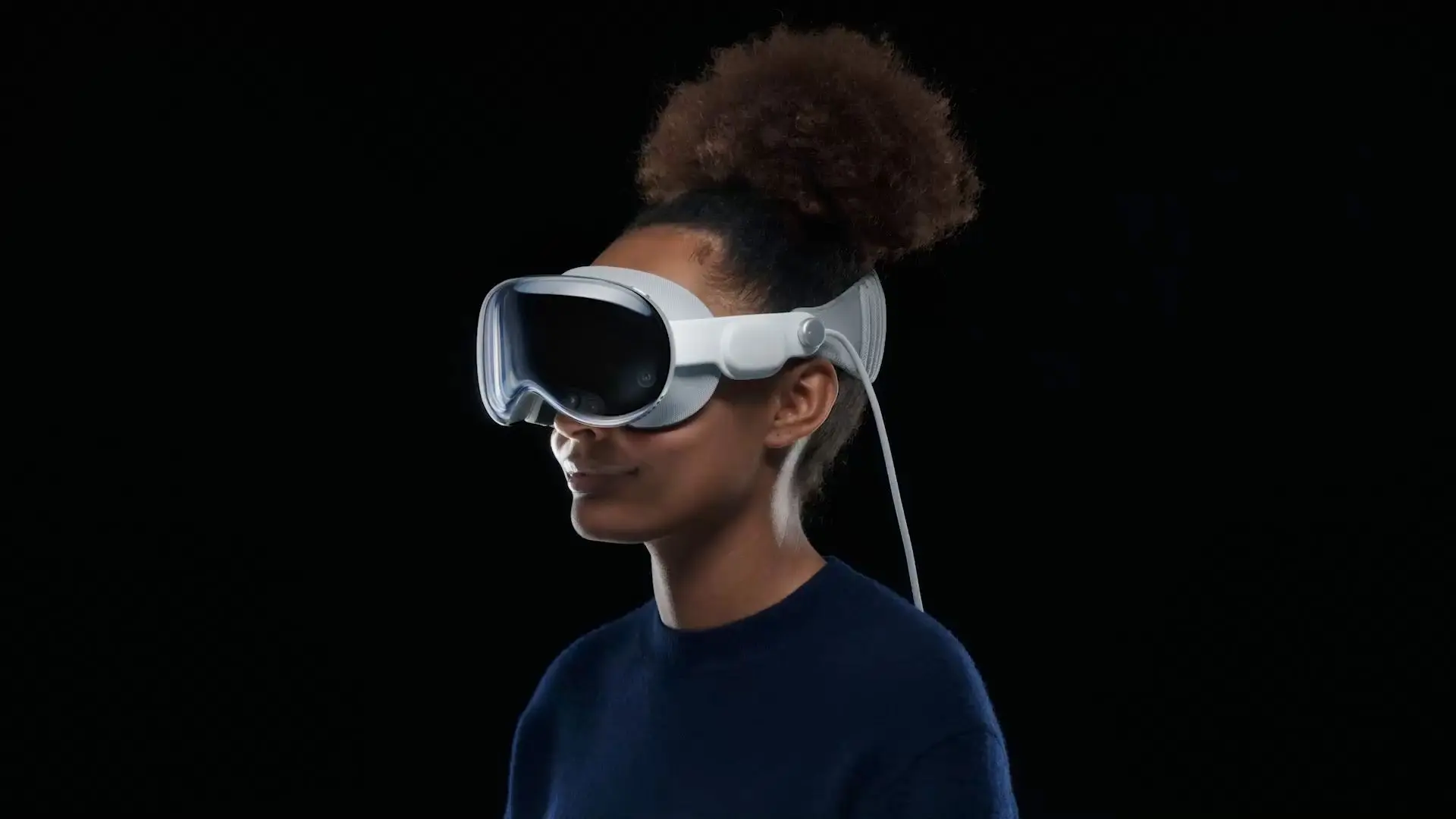
Apple Vision Pro is Apple's augmented and virtual reality headset, a major new product category launched in February 2024. Apple refers to it as a spatial computer, designed to blend digital content with the physical world. The headset features micro-OLED displays delivering over 4K resolution to each eye, a total of 23 million pixels. It operates without controllers, using eye tracking, hand gestures, and voice commands. An updated model with an M5 chip was released in October 2025, improving performance and comfort. This guide covers everything from design and specs to buying advice and future plans.
Design and Comfort
The Vision Pro resembles ski goggles, with a single piece of laminated glass fused to an aluminum alloy frame. A soft Light Seal attaches magnetically to block out light. The M5 model introduces a Dual Knit Band with two 3D-knitted straps for better weight distribution and comfort. The band includes counterweights to reduce neck strain. The headset weighs over 1.3 pounds, and while fatigue can set in, the new band significantly improves extended wear. The external battery pack connects via a braided cable and can be worn at the hip. The design supports a Digital Crown and a top button for capturing 3D photos and videos.
Display and EyeSight
Two custom micro-OLED displays provide over 4K resolution per eye, totaling 23 million pixels. The M5 chip enables rendering 10 percent more pixels for crisper text and details, along with support for up to 120Hz refresh rates for smoother visuals and reduced motion blur. An external EyeSight display projects the wearer's eyes, allowing people nearby to see whether the headset is in immersive or augmented reality mode. Zeiss optical inserts are available for prescription lenses: custom prescription inserts cost $149, and readers cost $99. The inserts attach magnetically inside the headset.
Cameras and Sensors
The Vision Pro includes 12 cameras and five sensors. Two main cameras transmit over a billion pixels per second to depict the real world. Others handle head and hand tracking, and real-time 3D mapping. Infrared flood illuminators improve hand tracking in low light. Four infrared cameras and LEDs inside the headset enable precise eye tracking for navigation. The system also includes a LiDAR depth sensor for spatial mapping. A 3D camera captures spatial photos and videos with depth, and EyeSight clearly indicates when recording is active. Optic ID uses iris scanning for authentication, similar to Face ID.
Audio and Connectivity
Speakers built into the headset's straps provide spatial audio, adapting sound to the room's acoustics. Six microphones support calls, video, and voice commands. The Vision Pro pairs with AirPods including USB-C AirPods Pro 2 and AirPods Pro 3 for 20-bit, 48 kHz lossless audio with low latency. Connectivity includes Wi-Fi 6 (2.4GHz and 5GHz) but not Wi-Fi 6E. Bluetooth is supported for keyboards, mice, trackpads, and game controllers.
Processors and RAM
The M5 chip features a 10-core CPU (6 efficiency, 4 performance) and a 10-core GPU with third-generation ray tracing and dynamic caching. An enhanced 16-core Neural Engine accelerates AI tasks up to 50 percent. Unified memory bandwidth reaches 153GB/s, improving multitasking and on-device AI. The R1 chip processes camera and sensor data to stream images within 12 milliseconds. The Vision Pro includes 16GB of RAM and storage options of 256GB, 512GB, or 1TB.
Battery Life
The external battery pack provides up to 3 hours of video playback or 2.5 hours of general use, an improvement over the M2 model. Additional battery packs can extend usage, and the headset can be plugged into a power adapter for unlimited use. The battery pack is worn at the hip and connects via a braided cable.
visionOS Features
visionOS, the operating system, uses a three-dimensional interface with apps positioned anywhere in virtual space. Users control it with eye gaze and hand gestures. The system supports iPhone and iPad apps as well as dedicated Vision Pro apps. Mac integration allows the headset to serve as a private 4K display via Mac Virtual Display. visionOS 26 introduced persistent widgets, improved Personas, spatial scenes in photos, and Travel Mode. visionOS 27, expected in September, includes generative AI Siri (Siri AI), Visual Intelligence, Image Playground, and an immersive web experience. It also adds curved windows, extra-small widgets, and faster startup and Wi-Fi connectivity.
How to Buy
The M5 Vision Pro is available from Apple's online store and retail locations in 13 countries including the US, UK, Canada, China, and Japan. Pricing starts at $3,700 for 256GB storage. The purchase process includes a Face ID scan for fitting the Light Seal and headband. Zeiss reading lenses cost $99, and custom prescription lenses cost $149 (requires a valid prescription). The box includes the Dual Knit Band, Light Seal, two cushion sizes, a cover, polishing cloth, battery pack, USB-C cable, and power adapter. No trade-in option exists for the M2 model.
Reviews
Reviewers praised the Dual Knit Band for improving comfort during extended use, reducing face and neck strain. The M5 chip delivers smoother performance with faster Persona generation and less lag. The 10 percent pixel boost and 120Hz refresh rate make visuals sharper and more fluid, though the difference is not dramatic. The headset's ability to work with a Mac as a large external display is a highlight. However, the high price and limited app ecosystem remain concerns.
Medical Warnings
Apple advises consulting a healthcare professional before use if you have conditions such as heart conditions, migraines, chronic headaches, dizziness, vertigo, eye or vision issues, psychological conditions, inner ear conditions, dry eyes, skin allergies, seizures, or balance problems. The headset may also interfere with cardiac pacemakers, hearing aids, and defibrillators. Pregnant individuals should use caution due to increased nausea risk.
Future Plans
Apple is reportedly pausing development on a next-generation Vision Pro to focus on smart glasses. These glasses, expected in late 2026 or 2027, will lack a display initially but include speakers, microphones, and a camera for AI features. A cheaper enclosed headset may arrive around 2028-2029. Long-term, Apple is researching AR glasses that could connect to a Mac or iPhone, and even contact lenses for invisible computing in the 2030s. Health-related features are also being tested, including using the headset to detect mental health issues and eye swelling related to heart failure.
Source: MacRumors News