

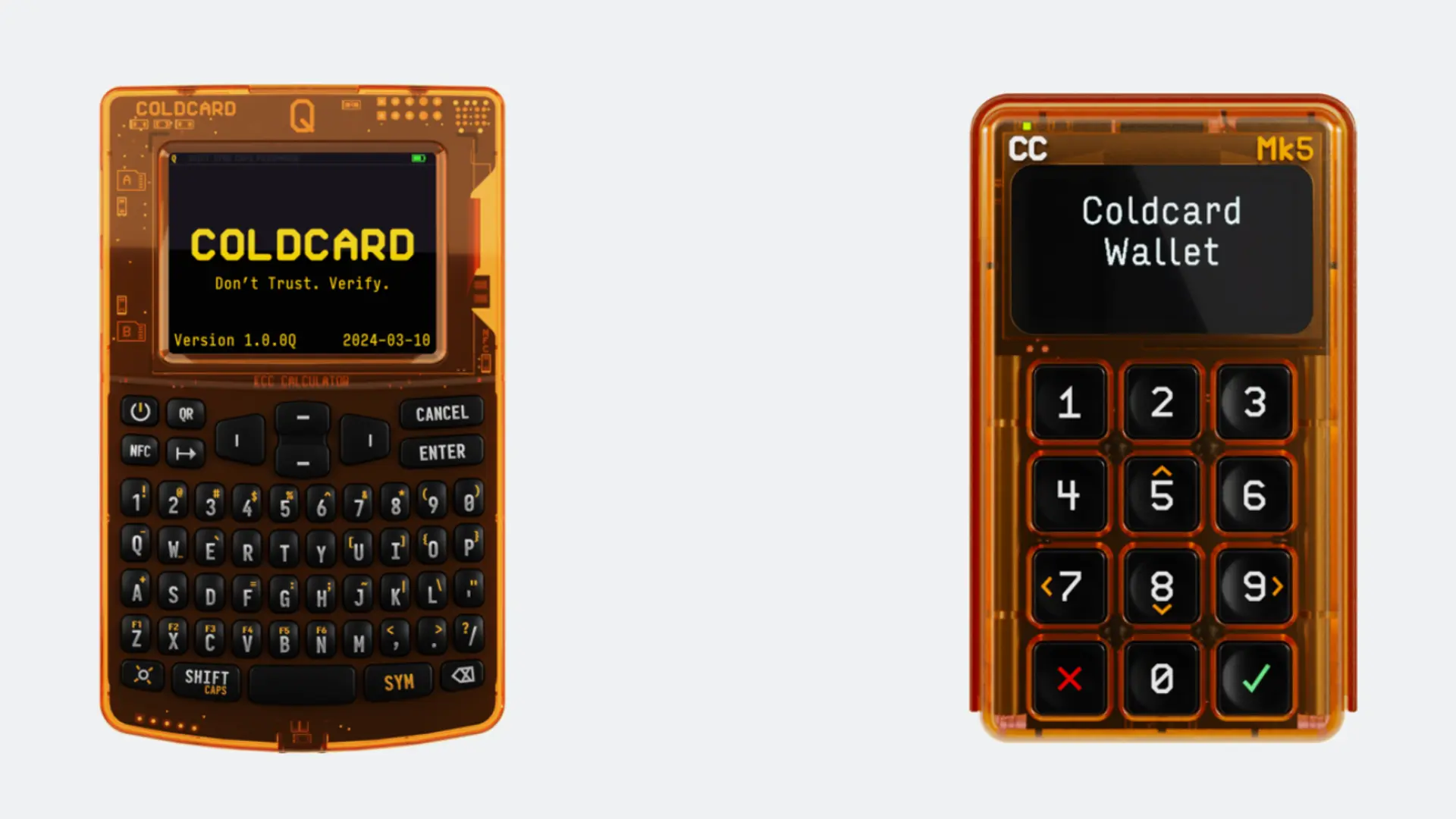
Coinkite has rolled out a critical firmware update for its Coldcard hardware wallet line, just weeks after attackers exploited a randomness flaw that led to the theft of more than $114 million in bitcoin. The company says the new firmware patches the original vulnerability and also fixes several additional bugs that were discovered during a comprehensive audit assisted by frontier AI models.
Coinkite, a leading manufacturer of bitcoin-only hardware wallets, has built a reputation for prioritizing security over convenience. Its Coldcard devices are known for their focus on air-gapped signing, encrypted backups, and advanced transaction features. The decision to issue this update is significant because the company has historically been conservative about changing its firmware without a very good reason.
A Delayed Response With an Unusual Ally
The update follows a three-week review that began after the theft came to light. Coinkite initially took the affected firmware offline and warned users not to generate new seeds on vulnerable devices. While the investigation focused on the randomness flaw, the company also used AI tools to inspect the entire codebase. That decision paid off, as the AI-driven review uncovered multiple critical issues in areas unrelated to the original exploit.
Specifically, the new firmware addresses problems in transaction approval logic, USB data handling, and firmware validation. These are not theoretical concerns; each could potentially be used by an attacker to interfere with the signing process or trick the device into approving a malicious transaction. The fact that they were found in the same audit is a testament to the breadth of testing required for high-security products.
Understanding the Randomness Flaw
At the heart of the incident is a fundamental requirement of bitcoin security: private keys must be generated with a truly unpredictable source of randomness. If the entropy is weak, an attacker can narrow the range of possible keys and eventually brute-force the wallet. In this case, the flawed randomness created a hidden weakness in the key generation process, allowing attackers to identify and drain vulnerable wallets.
Such vulnerabilities are especially dangerous because they can silently compromise users for years. A key generated with low entropy looks normal, and transactions sign normally, until someone else is able to derive the same key. In the event that attackers scanned the bitcoin blockchain for addresses with known weak-key signatures, they could systematically empty hundreds of wallets.
This is not the first time randomness has failed in bitcoin history. Early bitcoin software was sometimes vulnerable to weak random number generation, and mobile wallets suffered from poorly seeded randomness. Over time, the industry learned to use more robust sources of entropy, but the Coldcard case demonstrates that even dedicated hardware can fall short.
Why Physical Randomness Matters
Coinkite's response is to eliminate reliance on internal randomness for seed generation as much as possible. The updated firmware will require users to generate new seeds using physical entropy sources, such as dice rolls or coin flips. This approach, sometimes called coin-toss entropy, provides a measurable and user-controlled source of randomness that can be mixed with device entropy.
Physical entropy has a long history in bitcoin. Many early hardware wallet users used dice or playing cards to create seed phrases. With the new Coldcard firmware, manual entropy is no longer optional. Users will need to input a series of dice rolls or coin flips to create a seed, ensuring that even if the internal random number generator is compromised, an attacker would still need to know the physical inputs.
No Substitute for a Fresh Wallet
The company is warning that simply installing the update does not make a compromised wallet safe. If a seed phrase was generated on a vulnerable device, the private keys may already be in the hands of attackers. The only secure path is to generate a brand-new seed using the updated firmware and then transfer all bitcoin to new addresses associated with that seed. Old addresses should never be reused, and the old seed should be discarded securely.
This is a painful process for users, but it is the only way to ensure that the attacker cannot follow the funds. Coinkite has published step-by-step instructions and strongly encourages users to migrate carefully, especially if they hold significant balances.
AI in the Bitcoin Security Stack
The CoinKite incident is a prominent example of a broader trend: AI-assisted auditing is becoming a first-class citizen in the bitcoin ecosystem. Several open-source projects, including BTCPay Server, have begun integrating machine learning models into their review workflows. Major exchanges are also using AI to scan for vulnerabilities in their own systems, and the volunteer Bitcoin Red Team has reported that AI reviews are uncovering critical bugs at a much higher rate than manual audits.
The appeal is clear. Traditional code audits rely on human experts who may be costly and limited in bandwidth. AI models can process entire codebases quickly, identify suspicious patterns, and simulate attack paths. They can run continuously, which is especially important in an ecosystem where new dependencies and features are constantly being added.
But AI is not a silver bullet. Models can produce false positives, and they are only as good as their training data and the prompts they are given. Human auditors are still essential to interpret results, validate exploitability, and design sophisticated attacks. The industry is moving toward a hybrid model in which AI amplifies the capabilities of human security experts.
Lessons for Bitcoin Users
This incident is a reminder that hardware wallets are not immune to flaws. They are far safer than software wallets in most threat models, but they depend on a chain of trust that includes the factory, the firmware, and the user's own handling. Even a single weak random number generator can undermine everything.
Users should treat any security incident as an opportunity to revisit their own setup. Are you using a seed generated by the device manually, or did the device auto-generate it? Do you have a secure backup? Could your device have been tampered with before you received it? These questions are uncomfortable, but they are essential for self-custody.
The $114 million theft is among the largest bitcoin security losses in history. It likely could have been prevented with stricter standards for randomness and more extensive testing before release. That the bug was found because of an AI-assisted audit suggests that similar hidden flaws may exist in other products, perhaps in the wild right now.
What Comes Next
Coinkite is not the only company thinking about post-quantum threats and advanced hardware attacks, but its decision to mandate physical entropy is a bold step. It might inspire other hardware wallet manufacturers to follow suit. In the long term, the entire industry could move toward using tamper-resistant secure elements that take care of entropy generation internally, but with the caveat that no digital source of entropy is truly perfect.
For now, Coldcard owners must update and migrate. The process may be tedious, but it is the cost of keeping funds safe in a hostile environment. Meanwhile, the bitcoin security community is likely to continue expanding the use of AI as a tool for finding the kinds of bugs that humans miss.
As AI systems become more capable, they will probably be able to audit not just firmware but also the hardware layout itself. The intersection of AI and physical security will be an exciting space to watch. But the lessons from the $114 million theft remain: randomness is king, and users must always be willing to take the extra step to protect their own assets.
Source: Coindesk News