

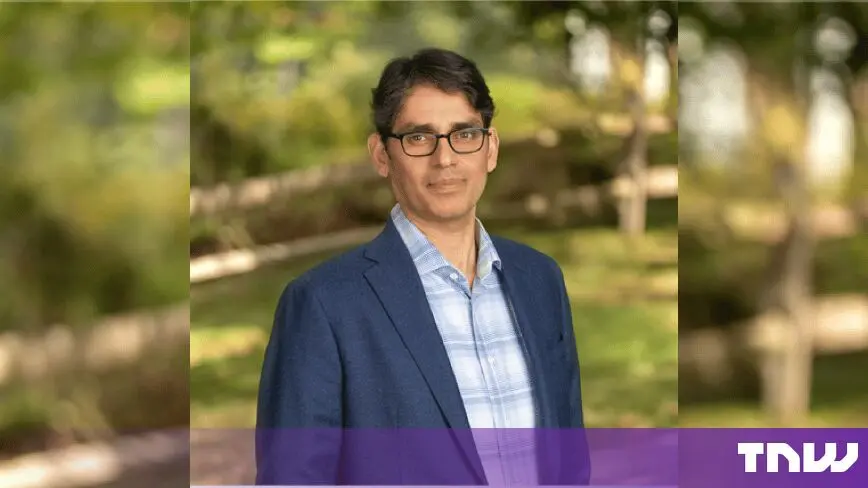
DeepMind's chief strategy officer has offered an unusually blunt answer to the question hovering over the trillion-dollar artificial intelligence buildout: the spending is a bet on machines that can improve themselves.
Jasjeet Sekhon made the remarks at a summit hosted by UC Berkeley, where he outlined why hyperscale capital expenditures are accelerating even as AI revenues remain far behind. Recursive self-improvement, or RSI, is "becoming a key component of the AI investment thesis," he said. RSI refers to artificial intelligence systems that can rewrite, refine, and upgrade themselves, producing increasingly capable successors without requiring humans in the loop.
The most striking part of Sekhon's argument was its candor. He admitted that AI revenues "don't sustain the capital expenditures we're making so far." In other words, the money is being spent on a promise rather than on today's cash flows. He argued that betting against that promise would be unwise, given that there are already "the makings of RSI." To illustrate, he offered a neat analogy: steam engines built the next steam engine.
The new north star
Sekhon's framing matters because of what it quietly replaces. For years, the technology industry justified enormous spending by pointing to artificial general intelligence, or AGI, the hypothetical ability of machines to match or exceed human cognitive abilities across a broad range of tasks. AGI was always the distant prize, the payoff that would transform data centers into engines of unprecedented value. Sekhon is effectively swapping one distant goal for another. In his telling, RSI is the new AGI: the breakthrough that turns today's infrastructure from a cost into the most valuable machines ever built.
The distinction is more than semantic. AGI promised a destination, but it did not necessarily tell investors how the journey would become financially self-sustaining. RSI promises a mechanism for continuous improvement. The idea is that an AI system capable of improving its own code, model architecture, training pipeline, and reasoning process could generate advances at a rate no human team can match. Each improvement would make the next improvement faster, creating a feedback loop that eventually leads to superhuman capabilities.
That vision is why Sekhon believes the industry's enormous capital outlays are rational. If RSI is achievable, a single self-improving system could justify decades of spending in one stroke. The hardware being deployed today, the GPUs, the data centers, the immense energy infrastructure, would become the substrate for a new form of intelligence. The cost curve would flip: instead of endless human labor driving progress, machines would do the heavy lifting.
The scale of the bet
The numbers behind Sekhon's argument are staggering. Alphabet spent $44.9bn on capital projects in a single quarter, roughly double the amount from a year earlier. The company lifted its 2026 capital expenditure guidance to as much as $205bn and has promised a "significant" increase again in 2027. Amazon, Microsoft, and Meta have offered similar projections. Combined, the largest technology companies are committing hundreds of billions of dollars to AI infrastructure before the revenue from that infrastructure has materialized in any meaningful proportion.
Sekhon compared the effort to something larger than the Apollo space program or the Manhattan Project. That comparison captures both the seriousness and the uncertainty. Apollo and Manhattan had defined engineering problems and clear endpoints. RSI is a research hypothesis with unresolved questions about safety, control, and technical feasibility. The analogy also captures the scale of national and historical ambition, but it comes with no guarantee of similar success.
Some parts of the strategy are already working. Google Cloud revenue jumped 82% in the quarter, and the backlog is above $500bn. Demand for AI services is real, and companies are committing to long-term contracts. But the bill is enormous. Alphabet posted its first-ever negative quarterly free cash flow, about $5.9bn in the red. Revenue growth is not keeping pace with capital spending, and the gap is widening.
Key facts at a glance
- Jasjeet Sekhon, chief strategy officer at Google DeepMind, says the AI capex boom is a bet on recursive self-improvement.
- He acknowledges that AI revenues do not currently sustain the capital expenditures being made.
- Alphabet spent $44.9bn on capital projects in a single quarter, roughly double a year earlier, and raised 2026 guidance to as much as $205bn.
- Google Cloud revenue grew 82% in the quarter, with a backlog above $500bn, but Alphabet posted negative quarterly free cash flow of about $5.9bn.
- Sekhon warns of an "AI air pocket" where spending continues but revenue does not materialize.
- RSI is not a shipping product; it is a research hope with technical, safety, and control questions.
A bet that may not pay
Sekhon named the risk himself. There could be an "AI air pocket," he warned, where the expenditure happens but the revenue never arrives. That is the quiet fear under every hyperscaler earnings call, now said out loud by an executive whose job is to justify the outlay. The phrase captures a scenario that every capital-intensive boom eventually faces: construction ahead of demand, followed by a sudden realization that the demand may not arrive on the promised timeline, or at all.
RSI is not a shipping product. It is a research hope with real doubts attached. The technical challenges are immense. Current models can process data, generate text, and write code, but they do not autonomously redesign their own architecture. They do not set their own research agendas or run their own experiments. They certainly do not collectively coordinate to produce a successor model with capabilities beyond what their creators can engineer. The step from assisted self-improvement to full autonomous self-enhancement is enormous, and no one has demonstrated that it is possible on the timeline executives imply, roughly 2027 to 2028.
Safety researchers have long warned that self-improving systems could become dangerous if they optimize for unintended goals. Control is a separate problem: even if RSI works, designers may not be able to verify that the system's improvements preserve alignment with human values. These are not hypothetical concerns. They are the subject of active research, but there is no consensus on how to solve them.
Competitive pressure
Rivals are already needling DeepMind over whether it has the self-improvement know-how to get there before OpenAI or Anthropic. The competitive stakes could not be higher. If RSI is the key to the next generation of AI, the first lab to achieve it would likely become the dominant force in the industry, with every other player left to license its technology or be overtaken entirely. This is why investment is accelerating rather than contracting. The risk of standing still is seen as greater than the risk of overbuilding.
The modest version of the claim is already true. Models can now generate code and, in narrow ways, help improve their own outputs. Large language models can propose code snippets that make training pipelines more efficient. They can identify errors. They can suggest improvements to prompts and workflows. But this is a far cry from the recursive self-improvement Sekhon is selling. The leap he is describing is from tools that aid human engineers to systems that act as autonomous engineers themselves, continuously rewriting their own source code and training infrastructure without human intervention.
What recursive self-improvement actually involves
Recursive self-improvement is not just an incremental upgrade to existing machine learning techniques. It implies a closed loop in which an AI model takes ownership of its own development cycle. A truly self-improving system would need to understand its own architecture, write new code, test that code, deploy successful changes, and repeat the process without human approval. It would also need to manage its own training data
Source: TNW | Google News