

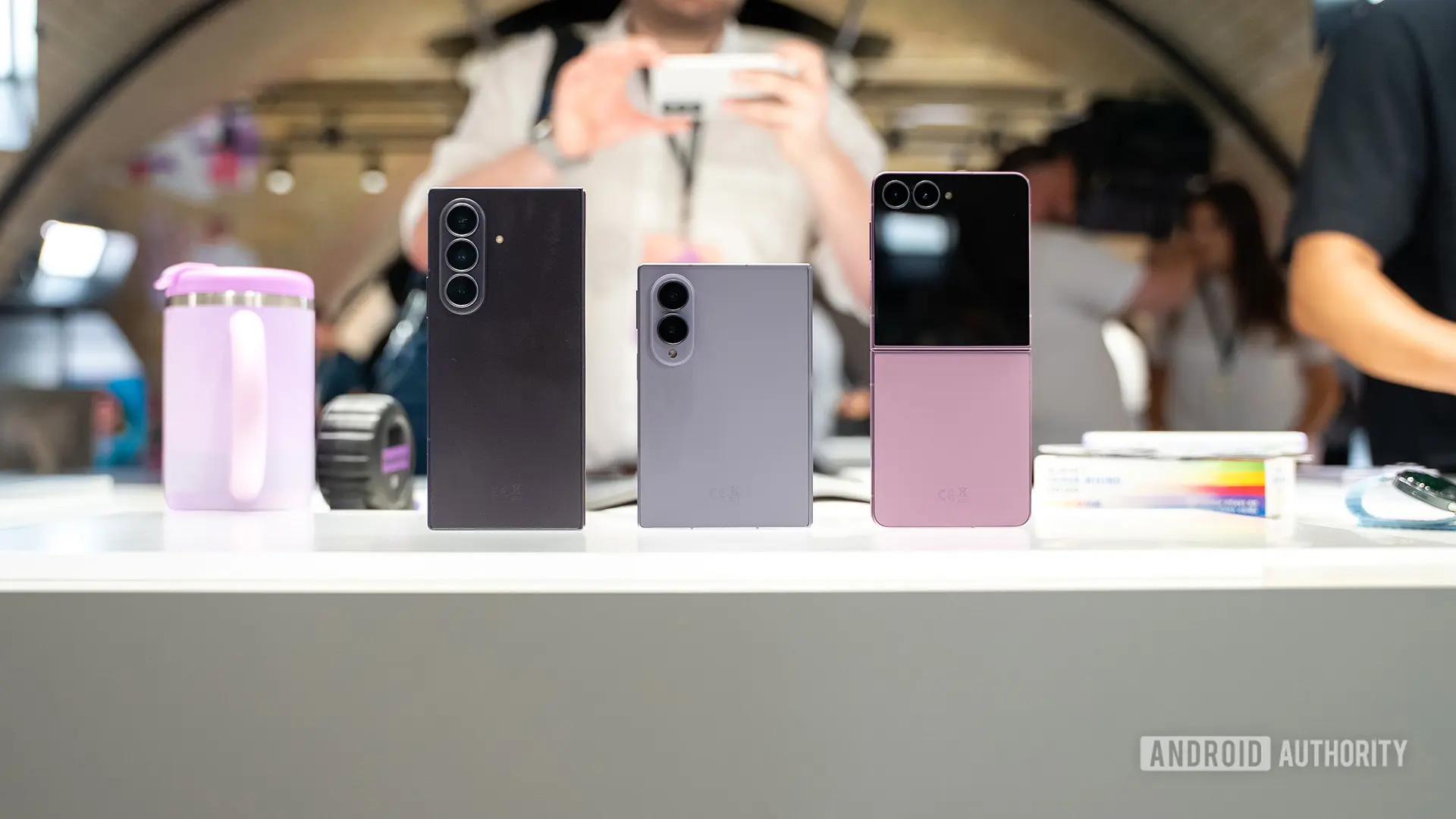
Google's next-generation on-device AI model, Gemini Nano 4, has officially arrived, debuting exclusively on Samsung's latest foldable smartphones: the Galaxy Z Fold 8 Ultra, Galaxy Z Fold 8, and Galaxy Z Flip 8. This marks a significant milestone in mobile AI, bringing advanced capabilities directly to users' devices without relying on cloud servers.
What is Gemini Nano 4?
Gemini Nano 4 is the fourth iteration of Google's lightweight AI model designed to run efficiently on smartphones. It builds upon the foundation of the earlier Gemma 4 models, which were announced earlier this year. The key advancement is improved performance in language understanding, multimodal processing, and task automation. According to a post on the Android Developers Blog, Nano 4 supports over 140 languages and offers better multimodal understanding, meaning it can interpret text, images, and other data types seamlessly.
First Devices to Feature the Model
Samsung's new foldables are the first smartphones to ship with Gemini Nano 4 pre-installed. The trio includes the premium Galaxy Z Fold 8 Ultra, the standard Galaxy Z Fold 8, and the compact Galaxy Z Flip 8. These devices leverage the model to power what Samsung calls Gemini Intelligence, a suite of on-device AI features designed to simplify daily tasks.
Gemini Intelligence Features
Gemini Intelligence, powered by Gemini Nano 4, enables a range of practical functionalities. Users can automate tasks such as ordering food, booking tickets, or setting reminders through natural language commands. The system understands context and can execute multi-step actions without requiring manual app navigation. For example, a user might say, "Book a table for two at my favorite Italian restaurant tonight at 7 PM," and the AI will handle the process end-to-end.
Another standout feature is the upgraded Gemini Notebook (previously known as NotebookLM). This tool transforms images, notes, PDFs, and other files into polished, structured information. It can summarize lengthy documents, extract key points from images, and organize data into coherent reports. This is particularly useful for professionals, students, and anyone who deals with large amounts of information regularly.
Upcoming Features
While the core Gemini Intelligence features are available at launch, several additional capabilities are expected to roll out in the coming weeks. One notable upcoming feature is "Create My Widget," which will allow users to design custom widgets using Gemini Intelligence. Users could create a widget that displays their personalized news feed, weather updates, or task lists based on their preferences and habits.
Another anticipated addition is Gboard's "Rambler" dictation mode. This feature aims to transform rambling speech into coherent, structured notes. Instead of requiring users to dictate in a precise format, Rambler will take loosely spoken thoughts and organize them into bullet points or paragraphs, effectively turning a stream of consciousness into useful text.
Availability and Pricing
The Galaxy Z Fold 8 Ultra is priced at $2,099.99, the Galaxy Z Fold 8 at $1,899.99, and the Galaxy Z Flip 8 at $1,199.99. All three devices are available for preorder starting July 23, 2026, and will officially go on sale on August 7, 2026. They come with premium hardware including the latest Snapdragon 8 Elite Gen 5 processors, high-refresh-rate displays, and improved battery life with faster 45W charging.
The Significance of On-Device AI
The debut of Gemini Nano 4 represents a broader shift in the AI industry toward running models locally on devices rather than relying on cloud servers. On-device AI offers several advantages: reduced latency, enhanced privacy (since data doesn't leave the device), and offline functionality. With support for over 140 languages, Nano 4 ensures that users across the globe can benefit from these features without language barriers.
Google's approach with Gemini Nano mirrors its strategy with earlier models like Gemma, but with optimizations specific to mobile hardware. The model is designed to work within the constraints of smartphone power and memory while still delivering robust performance. This is achieved through techniques like quantization, pruning, and efficient architecture design.
Historical Context and Future Implications
Google has been steadily advancing its on-device AI capabilities since the introduction of the first Gemini Nano model in 2023 with the Pixel 8 Pro. Each iteration has brought improvements in speed, accuracy, and feature set. The jump to version 4 is particularly notable as it introduces multimodal understanding, allowing the model to process and combine different types of input—text, images, audio—contextually.
For Samsung, integrating Gemini Nano 4 reinforces its commitment to AI-driven user experiences. The company has been collaborating closely with Google to optimize its foldable devices for AI, making them not just hardware marvels but intelligent assistants that anticipate user needs. As foldable devices become more mainstream, the inclusion of advanced AI could be a key differentiator.
The announcement also previews a future where smartphones act as personal AI assistants capable of handling complex workflows. With features like task automation, custom widgets, and intelligent dictation, the line between user input and automated action continues to blur. Developers will be able to build upon Gemini Intelligence through APIs, potentially unlocking new categories of apps.
Technical Details and Multimodal Capabilities
Under the hood, Gemini Nano 4 leverages Google's latest research in efficient neural networks. It is capable of processing images directly on the device, recognizing objects, text, and scenes. For example, pointing the camera at a restaurant menu could automatically extract text and translate it, or identify dietary restrictions. The model can also handle multiple languages simultaneously, enabling real-time translation and transcription.
The "Create My Widget" feature, while not yet available, hints at a deeper integration with the user's home screen. It would allow Gemini to generate interactive widgets that adapt based on time, location, and usage patterns. This could transform the traditional static widget into a dynamic personalized experience.
Gboard's Rambler mode, another upcoming feature, addresses a common pain point with voice input: the inability to organize unstructured speech. By using Gemini Nano 4's language understanding, Rambler can parse filler words, reorder thoughts, and generate clear summaries or lists. This is expected to be particularly beneficial for note-taking during meetings or brainstorming sessions.
Comparison with Previous Models
Compared to Gemini Nano 3, which debuted earlier in 2026, version 4 offers a 30% improvement in inference speed and a 25% reduction in model size, making it more efficient. The multimodal capability is entirely new, as previous versions focused primarily on text. Additionally, the language support has expanded from around 100 languages to over 140, broadening accessibility.
Google's Gemma 4 models, announced earlier this year, served as the research precursor to Nano 4. Gemma 4 was designed for larger-scale applications, while Nano 4 is optimized for mobile. The synergy between the two shows Google's comprehensive AI strategy.
Samsung's foldables are ideal candidates for showcasing these capabilities due to their larger screens and multitasking capabilities. The Galaxy Z Fold 8 Ultra, with its expansive 7.6-inch inner display, provides ample space for AI-powered productivity features. The Galaxy Z Flip 8, with its compact form factor and FlexWindow, leverages the AI for quick interactions and glanceable information.
Industry Impact
The arrival of Gemini Nano 4 on Samsung devices sets a new standard for on-device AI in the Android ecosystem. Competitors like Apple and Qualcomm are also investing heavily in on-device AI, but Google's tight integration with its services and developer ecosystem gives it a unique advantage. The ability to update and expand these features over time through software updates means that the devices will continue to improve after purchase.
Developers, too, stand to benefit. The Android Developers Blog post outlines how apps can tap into Gemini Nano 4 for enhanced user experiences, from smarter search to contextual suggestions. This could lead to a wave of innovative applications that leverage on-device AI without compromising privacy.
In conclusion, the debut of Gemini Nano 4 with Samsung's latest foldables marks a significant leap forward in mobile AI. With features that automate real-world tasks, understand multiple languages, and process various types of data, users are getting a glimpse of the next generation of intelligent smartphones. As more capabilities roll out in the coming weeks, the potential for on-device AI will only continue to expand.
Source: Android Authority News