

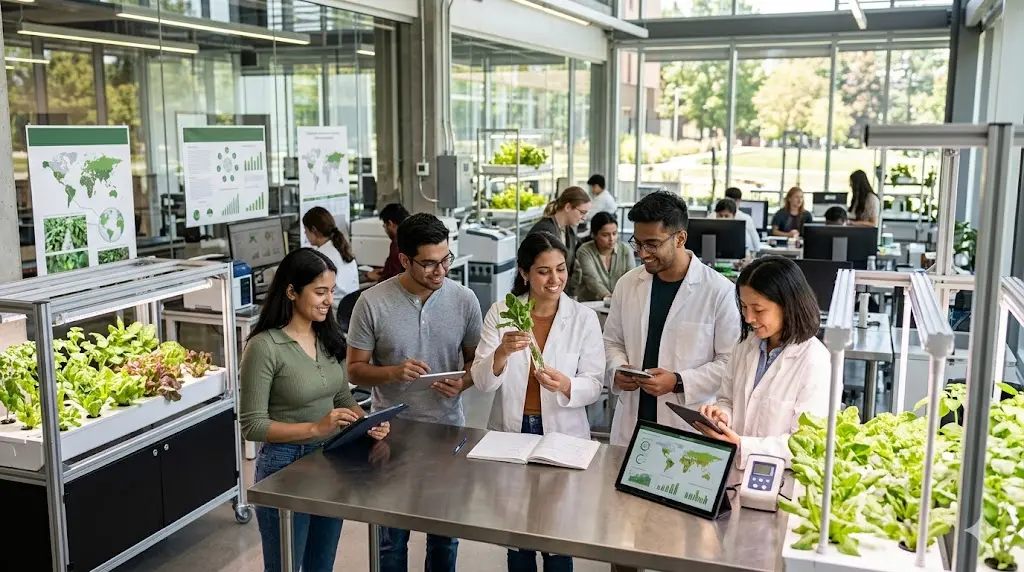
Food security in modern education systems has become one of the biggest hidden factors shaping student success worldwide. Researchers across universities, public policy institutes, and international organizations are now connecting academic performance directly to nutrition, meal accessibility, and household food stability. Students who eat consistently and nutritiously tend to focus better, participate more actively, and stay enrolled longer. That pattern keeps appearing across different countries, income levels, and age groups.
What’s interesting is how quickly the conversation has evolved. A decade ago, many schools treated food insecurity as a social welfare issue sitting outside education policy. In 2026, that mindset looks outdated. Governments and educational institutions increasingly recognize that hunger disrupts learning just as seriously as poor infrastructure or teacher shortages.
Global research on food security in modern education systems shows that consistent access to nutritious food improves academic performance, attendance, emotional well-being, and long-term educational outcomes. Schools and universities worldwide are expanding meal programs, nutrition policies, and student support systems to reduce learning disruptions caused by hunger and financial stress.
What Is Food Security in Modern Education Systems?
Food Security: The condition in which students consistently have physical, social, and economic access to nutritious, affordable, and safe food that supports healthy development and learning.
Food security inside education systems includes far more than cafeteria meals. Researchers study several connected areas:
Student access to affordable nutrition
Meal quality and dietary balance
Food affordability near campuses
Household economic stability
Emergency food assistance programs
Long-term health impacts on learning
Here’s the thing many people miss: food insecurity often stays invisible. Students don’t always openly discuss skipping meals or struggling financially. In many cases, educators only notice the academic consequences later — lower participation, fatigue, absenteeism, or declining grades.
Global education research now shows that hunger affects cognitive performance more deeply than previously assumed. A student dealing with nutritional stress may struggle with memory retention, emotional regulation, and concentration throughout the school day.
Organizations like the World Food Programme and UNICEF continue publishing studies demonstrating strong links between school meal access and improved educational outcomes across both developing and developed nations.
In my experience, this topic still doesn’t receive enough public attention because hunger tends to be discussed as a poverty issue rather than an education issue. That separation probably slows down policy improvements.
Why Food Security Matters in 2026
Food security matters more in 2026 because global economic pressure has intensified across nearly every region. Rising inflation, housing shortages, supply chain instability, climate-related agricultural disruptions, and higher education costs have created conditions where many students simply cannot maintain stable nutrition consistently.
Even middle-income families are feeling pressure now.
Modern education systems are dealing with a complicated mix of challenges:
Increasing tuition fees
Expensive urban housing
Rising transportation costs
Higher grocery prices
Growing mental health concerns
Unequal food access across regions
Research from multiple countries suggests that food insecurity among university students has climbed steadily over recent years. Some institutions report that students regularly skip meals to pay for textbooks, transportation, or rent.
That creates an educational problem with long-term consequences.
Hungry students usually experience:
Lower concentration levels
Reduced classroom engagement
Higher emotional stress
More health complications
Poorer attendance patterns
Increased dropout risk
One study from a North American university system found that students experiencing food insecurity were significantly less likely to complete their degrees on schedule. Similar trends have appeared across Australia, parts of Europe, Latin America, and South Asia.
What most people overlook is that food insecurity affects social confidence too. Students struggling financially may avoid networking events, study groups, or campus activities involving meals. Over time, that isolation can reduce educational engagement just as much as academic stress.
Expert Tip
Schools that normalize nutrition support instead of treating it like emergency charity often see much higher student participation and better long-term outcomes.
How Global Research on Food Security Has Changed
Earlier education research mostly focused on infrastructure, teacher quality, and curriculum development. Nutrition was often considered secondary.
That approach has shifted dramatically.
Modern studies increasingly treat food access as a foundational learning requirement. Researchers now analyze how nutrition influences:
Brain development
Memory function
Attendance consistency
Emotional regulation
Social participation
Graduation outcomes
What’s fascinating is how universal many findings are. Whether researchers study urban schools in Europe or rural districts in Africa, similar patterns emerge repeatedly: students learn better when reliable nutrition exists.
Still, the causes of food insecurity vary significantly by region.
In lower-income countries, food shortages may result from agricultural instability, conflict, or infrastructure problems. In wealthier countries, high living costs and economic inequality tend to play a larger role.
That distinction matters because solutions must fit local realities.
Why Student Hunger Often Goes Undetected
This might sound strange, but many food-insecure students don’t look visibly hungry.
Some skip meals quietly.
Others survive on low-cost processed food.
Some work excessive hours while balancing studies.
Others ration food privately for days at a time.
Researchers increasingly describe food insecurity as a “hidden educational barrier” because institutions often underestimate its scale.
I’ve seen surveys where universities discovered severe food insecurity rates only after anonymous reporting systems were introduced. Students were embarrassed to discuss the issue openly beforehand.
That stigma creates a major policy problem.
Students frequently avoid:
Food assistance programs
Campus support offices
Counseling services
Meal subsidy applications
Not because help isn’t available — but because they fear judgment.
Expert Tip
Anonymous digital support systems usually increase participation dramatically because students feel safer requesting help privately.
How Food Security Affects Learning Outcomes
Improved Cognitive Performance
Nutrition strongly influences brain function.
Students with reliable meal access tend to show:
Better memory retention
Faster information processing
Higher reading comprehension
Stronger concentration
Researchers studying primary school children found measurable improvements in attention span after consistent meal program implementation.
Honestly, this isn’t surprising. Most adults struggle to work effectively when hungry too.
Better Attendance Rates
School meal programs often increase attendance, especially in economically vulnerable regions.
In some communities, meals provide a direct incentive for families to keep children enrolled consistently. That’s particularly true in areas facing extreme poverty or food instability.
A school lunch may represent the most reliable daily meal available.
Reduced Behavioral Problems
Nutrition affects emotional regulation more than many educators realize.
Students experiencing chronic hunger frequently report:
Irritability
Fatigue
Anxiety
Emotional exhaustion
Several international studies have linked school nutrition programs with improved classroom behavior and reduced disciplinary incidents.
Stronger Graduation Outcomes
Long-term research increasingly suggests that food security contributes to higher graduation rates and improved educational persistence.
Students who feel physically stable generally engage more consistently with academic responsibilities.
How Universities Are Responding to Food Insecurity
Universities worldwide are experimenting with new approaches to reduce student hunger.
Some common strategies include:
Campus food pantries
Emergency grocery vouchers
Flexible meal plans
Free breakfast initiatives
Community kitchens
Nutrition education workshops
What’s interesting is that many universities initially resisted acknowledging the issue publicly. Administrators worried food insecurity statistics might damage institutional reputation.
That attitude has started changing.
Students themselves pushed much of this conversation forward through advocacy campaigns, campus surveys, and public reporting.
One realistic example comes from a metropolitan university that expanded evening cafeteria hours after discovering working students missed daytime meal access entirely. Meal participation increased significantly within months.
The solution wasn’t complicated. The institution simply listened to student schedules instead of assuming traditional systems worked for everyone.
How Climate Change Is Affecting Educational Food Security
Climate instability increasingly shapes food availability worldwide.
Extreme weather events now disrupt:
Crop production
Transportation networks
Agricultural pricing
Local food systems
Educational institutions are feeling those effects indirectly through rising meal costs and supply shortages.
In some regions, schools struggle to maintain consistent nutritional standards because food prices fluctuate unpredictably.
Researchers studying climate-related food disruptions warn that education systems may face even greater pressure over the next decade.
This creates a complicated challenge:
Schools must provide stable nutrition while food systems themselves become less stable.
Expert Tip
Educational systems investing in local agricultural partnerships often build more resilient meal programs during supply chain disruptions.
How Technology Is Changing Food Security Research
Technology is becoming central to food security analysis in education systems.
Researchers now use:
Predictive analytics
AI-assisted meal planning
Student wellness tracking
Digital voucher systems
Nutrition monitoring platforms
Some schools analyze cafeteria purchasing patterns to identify nutritional deficiencies or meal participation trends.
Others use mobile applications that allow students to request food assistance discreetly.
I’m cautiously optimistic about these systems. Technology can improve efficiency, but over-automating student welfare sometimes creates emotional distance. Human support still matters enormously.
Researchers also use large-scale data modeling to predict which communities may face future food insecurity risks based on economic or climate trends.
That predictive capability could help schools intervene earlier instead of waiting for crises.
The Surprising Connection Between Food Security and Mental Health
This section deserves more attention than it usually gets.
Food insecurity doesn’t just affect physical health. It often creates persistent emotional stress.
Students facing unstable nutrition commonly report:
Anxiety
Shame
Isolation
Depression
Sleep problems
Burnout
One student interviewed during a university research project described constantly calculating whether buying groceries would leave enough money for transportation to class.
That level of stress changes how people learn.
What most guides miss is that chronic food insecurity can slowly reduce a student’s sense of belonging. Students may avoid social interaction, campus events, or collaborative learning opportunities because food-related expenses become emotionally overwhelming.
Over time, educational engagement weakens.
How Different Countries Approach School Nutrition
Finland
Finland’s education system is often praised for universal free school meals. Students receive nutritious lunches as part of the broader educational philosophy that learning support should be accessible to everyone equally.
India
India operates one of the world’s largest school meal initiatives through government-supported programs designed to improve attendance and child nutrition simultaneously.
In many rural areas, these meals significantly increase classroom participation.
United States
American schools and universities use a mixture of federal assistance programs, subsidized meal plans, and local food initiatives. However, affordability challenges continue affecting both K-12 and higher education students.
Brazil
Brazil has integrated local agriculture into many school nutrition systems, supporting both community farmers and student meal quality.
Researchers often cite this model as an example of combining nutrition policy with regional economic development.
How to Improve Food Security in Education Systems — Step by Step
1. Measure the Problem Accurately
Schools first need reliable data.
Anonymous surveys, health assessments, and meal participation analysis help institutions understand student needs realistically.
Without accurate information, policy responses usually remain incomplete.
2. Expand Affordable Meal Access
Institutions should increase meal affordability through subsidies, grants, or flexible payment systems.
Some schools now provide emergency meal credits during financial crises or examination periods.
3. Reduce Stigma Around Food Assistance
Support systems fail when students feel embarrassed using them.
Schools need discreet access methods and inclusive communication strategies that normalize assistance services.
4. Partner With Local Food Suppliers
Local agricultural partnerships often improve food freshness while reducing transportation costs and supply instability.
This approach may also strengthen regional economies.
5. Integrate Nutrition Into Student Wellness Programs
Nutrition support works best when combined with:
Mental health services
Financial counseling
Academic support
Housing assistance
Food insecurity rarely exists in isolation.
6. Build Long-Term Funding Models
Temporary grants rarely solve systemic food insecurity.
Sustainable public investment remains essential for lasting improvement.
Expert Tip
Meal programs designed with student input usually perform far better because students help identify practical barriers administrators may overlook.
Common Mistake: Assuming Cheap Food Solves the Problem
This sounds logical at first, but it’s more complicated.
Providing low-cost food alone doesn’t always improve participation. Researchers increasingly find that meal quality, convenience, cultural relevance, and student dignity strongly affect program success.
Some students reject support programs entirely if food options feel stigmatizing or low quality.
That’s the counterintuitive part many policymakers underestimate.
A poorly designed food program may technically exist while still failing students emotionally or socially.
The Role of Community Partnerships
Community organizations increasingly support educational food security through:
Donation programs
Local farming networks
Nonprofit partnerships
Emergency food distribution
Nutrition education
Schools collaborating with local communities often create more adaptable and culturally appropriate support systems.
For example, some universities now partner with nearby grocery cooperatives to provide discounted healthy food access for students.
Those partnerships sometimes achieve better outcomes than isolated institutional programs.
Why Food Security Is Becoming a Core Education Policy Issue
Education systems used to treat food programs as supplementary support.
That perspective is changing because research keeps producing the same conclusion:
Learning cannot fully succeed without nutritional stability.
Governments now increasingly connect food security to:
Workforce development
Economic productivity
Public health outcomes
Educational equity
From what I’ve seen, this broader framing matters because it moves food security discussions beyond charity models into structural policy conversations.
That shift could influence education planning for decades.
What Future Research Will Probably Focus On
Researchers are now exploring several emerging questions:
How does digital learning affect food access?
What nutritional patterns support cognitive performance best?
How do climate disruptions reshape school meal systems?
Can AI improve nutrition planning effectively?
Which intervention models create the strongest long-term outcomes?
There’s also growing interest in understanding food insecurity among graduate students, international students, and working adult learners.
Higher education research in this area is still evolving quickly.
Expert Tips and What Actually Works
From my perspective, the most successful food security programs share several qualities.
First, they avoid making students feel like charity cases.
Second, they focus on flexibility. Modern students often balance work, commuting, caregiving, and irregular schedules.
Third, they combine food access with broader wellness support.
One university introduced meal-sharing systems where unused meal credits could transfer anonymously to students needing assistance. Participation rose sharply because students viewed the program as community support rather than public aid.
Honestly, small policy adjustments sometimes create bigger improvements than expensive new initiatives.
Expert Tip
Schools that involve students directly in nutrition planning often build stronger trust and higher participation across support programs.
People Most Asked About Global Research on Food Security in Modern Education Systems
How does food insecurity affect academic performance?
Food insecurity reduces concentration, memory retention, emotional stability, and classroom participation. Students struggling with hunger often experience lower academic consistency and higher stress levels.
Why are universities increasingly studying student hunger?
Rising living costs, tuition expenses, and inflation have increased financial pressure on students globally. Universities now recognize that food access directly influences retention and graduation outcomes.
Are school meal programs effective?
Most global research shows strong positive effects when meal programs are accessible and well-designed. Attendance, participation, and learning outcomes often improve significantly.
How does climate change impact educational food security?
Climate instability affects food production, transportation, and pricing. Schools may face rising meal costs and supply shortages as agricultural disruptions increase globally.
What role does technology play in food security programs?
Technology helps institutions monitor nutrition trends, distribute assistance discreetly, and identify at-risk students earlier through data analysis systems.
Why do some students avoid food assistance programs?
Stigma remains a major barrier. Students may fear embarrassment, judgment, or social isolation when accessing support services publicly.
Can local farming partnerships improve school nutrition?
Yes, many educational systems benefit from local agricultural partnerships because they improve meal freshness, reduce transportation costs, and support regional economies.
Is food insecurity only a problem in low-income countries?
No. Food insecurity affects students in wealthy nations too, especially in expensive urban areas where housing and tuition costs consume large portions of student budgets.
Final Thoughts
Global research on food security in modern education systems continues pointing toward the same reality: educational success depends heavily on nutritional stability. Hunger affects concentration, emotional health, attendance, and long-term academic achievement more deeply than many institutions previously understood.
As schools and universities move through 2026 and beyond, food security will probably become a central part of education policy rather than a secondary support issue. Institutions that invest seriously in student nutrition are likely to see stronger academic outcomes, healthier learning environments, and better student retention over time.
Our network platform helps startups, agencies, bloggers, and businesses improve online growth through PR distribution services and advanced local SEO services built to strengthen SEO ranking, media coverage, organic traffic, and brand visibility. With instant publishing opportunities, high authority backlinks, and trusted promotional strategies, companies can expand digital reach faster while building stronger search authority across competitive industries.