

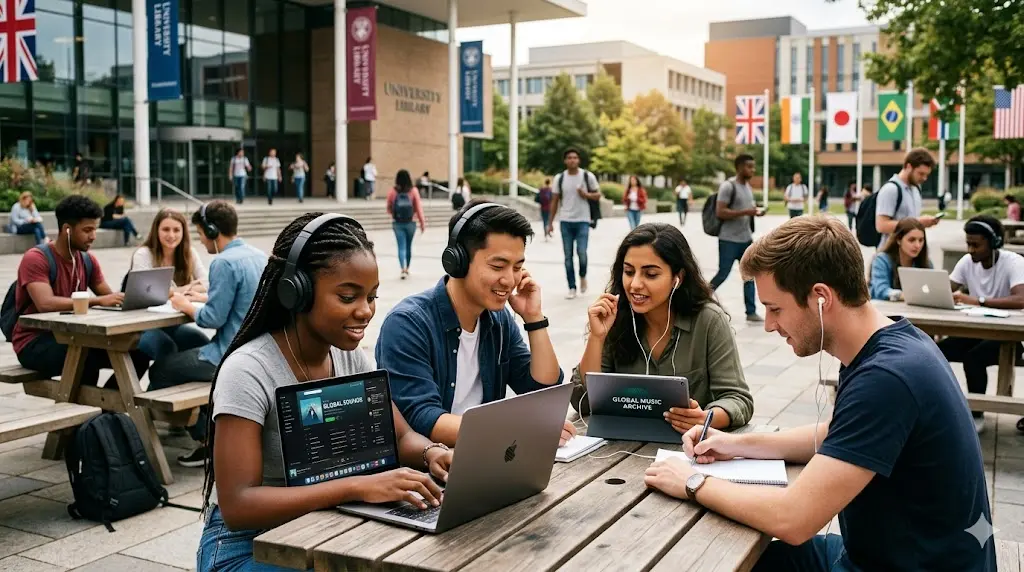
Music streaming has moved far beyond entertainment. Universities now use streaming platforms to support student learning, improve engagement, expand digital education, and even strengthen mental wellness programs. What started as a convenient way to listen to songs has become part of modern academic infrastructure across the world.
Students today expect flexible learning experiences. They want education that works on phones, laptops, tablets, and smart devices without friction. Music streaming aligns perfectly with that shift because it offers instant access, personalization, and continuous engagement. That combination is reshaping higher education faster than many institutions predicted.
Music streaming is transforming higher education worldwide by improving student engagement, supporting flexible digital learning, enhancing language acquisition, encouraging collaboration, and creating personalized educational experiences through audio-based content and streaming technology.
What Is Music Streaming in Higher Education?
Music Streaming: A digital system that allows users to access audio content online instantly without permanently downloading files.
In higher education, music streaming goes well beyond students casually listening to playlists while studying. Universities now integrate streaming into classroom teaching, online education, wellness initiatives, language learning, media production, and collaborative student projects.
Here’s the thing. Students already spend hours consuming audio content every day. Universities realized it makes more sense to adapt learning around existing digital habits rather than force students into outdated systems.
For example, professors in literature programs often create playlists connected to historical periods or literary themes. Psychology departments may use therapeutic sound sessions during exam periods. Communication students analyze streaming algorithms to understand digital consumer behavior.
That kind of integration would have sounded experimental ten years ago. Now it’s becoming fairly normal.
In my experience, institutions that embrace digital behavior instead of resisting it usually connect with students more effectively. Education feels more natural when it matches how people already interact with information daily.
Another major factor is accessibility. Students from different countries and backgrounds can instantly explore global music traditions, cultural movements, and language patterns through streaming platforms. That access creates educational opportunities that used to require expensive physical libraries or specialized media collections.
Expert Tip: Universities that combine audio learning tools with traditional teaching methods often improve student participation because different learning styles receive equal attention.
Why Music Streaming Matters in 2026
Higher education in 2026 looks dramatically different compared to pre-pandemic academic systems. Hybrid classrooms, remote learning models, and digital collaboration are no longer temporary solutions. They’re permanent parts of global education.
Music streaming fits naturally into this environment.
Students now expect on-demand access to educational resources. Streaming platforms support that expectation because audio content is portable, flexible, and easy to consume while multitasking.
What most people overlook is how streaming influences emotional learning environments too.
A student preparing for exams might use focus playlists. Another student learning a foreign language may repeatedly listen to native music patterns. Someone dealing with stress could use guided meditation audio through university wellness partnerships.
These small habits collectively reshape the educational experience.
Research institutions are also studying listening behavior to better understand productivity, concentration, and emotional responses during academic activities. Some universities even analyze how certain sound environments affect remote student engagement levels.
That’s a surprisingly big development.
Streaming has also changed expectations around personalization. Students don’t want generic experiences anymore. They expect recommendations, customized learning paths, and content aligned with personal interests.
Streaming technology already works that way naturally.
The Rise of Audio-Based Learning
Audio learning is becoming increasingly popular because students consume information differently than previous generations.
Many students:
Listen to educational podcasts while commuting
Study with instrumental playlists
Use audio summaries instead of reading lengthy materials first
Attend virtual seminars with integrated streaming tools
Learn languages through music immersion
This behavior isn’t slowing down anytime soon.
Global Access Changes Everything
A student in Brazil can instantly study jazz history from New Orleans. Someone in India can explore Korean classical fusion music. A media student in Germany can analyze African rhythm structures without needing physical archives.
Streaming platforms reduce educational barriers in ways older systems simply couldn’t match.
Honestly, that level of cultural access might be one of the most underrated educational benefits of streaming technology.
Expert Tip: Educational institutions that use culturally diverse streaming content often improve international student engagement and cross-cultural participation.
How Music Streaming Supports Student Learning
Students don’t all learn the same way. That sounds obvious, yet education systems historically relied heavily on lectures and textbooks alone.
Streaming introduces flexibility into learning experiences.
Improved Concentration and Focus
Many students use background audio to maintain concentration during study sessions.
Instrumental playlists, ambient soundscapes, and low-distraction audio environments help students stay mentally engaged for longer periods.
Interestingly, complete silence isn’t always ideal for productivity. Some learners actually focus better with controlled background stimulation.
One university pilot study reportedly found that moderate ambient audio improved concentration during remote coursework among certain student groups. Results varied, of course, but the trend was noticeable enough for educators to explore further.
Better Language Acquisition
Music helps students absorb pronunciation, rhythm, and conversational patterns naturally.
Language departments increasingly incorporate streaming into coursework because repeated listening exposure strengthens memory retention more effectively than memorization alone in many cases.
Students learning Spanish, French, Japanese, or Korean often retain phrases through songs faster than through vocabulary drills.
That emotional connection matters more than most people realize.
Enhanced Creativity in Media Programs
Media, film, and communication students now study:
Streaming algorithms
User listening behavior
Playlist psychology
Digital branding through audio
Audience engagement patterns
These are practical skills tied directly to careers in marketing, entertainment, technology, and digital production.
A modern communications graduate who understands streaming behavior has a major advantage in today’s digital economy.
Support for Mental Wellness
Student mental health remains a serious concern globally.
Many universities now provide:
Relaxation playlists
Guided meditation streams
Focus audio channels
Stress-reduction sound environments
Therapeutic audio sessions
Students often engage with these tools more comfortably than traditional wellness programs because audio feels private and non-intimidating.
That’s actually a huge psychological advantage.
How Universities Use Music Streaming Step by Step
1. Creating Academic Playlists
Professors build playlists tied directly to classroom topics.
A history instructor might create music collections connected to political movements. Literature professors may use period-specific soundtracks to deepen emotional understanding of novels.
This approach makes coursework feel more immersive instead of purely theoretical.
2. Supporting Hybrid Learning
Remote learning became common quickly, but maintaining student engagement remains difficult.
Streaming tools help recreate shared learning environments through collaborative audio sessions, virtual study rooms, and synchronized listening experiences.
Students feel less isolated when digital classrooms include interactive elements.
3. Integrating Educational Podcasts
Universities increasingly assign podcasts alongside textbooks and academic articles.
Many students absorb conversational audio explanations faster because the format feels less rigid and easier to follow.
Honestly, some students probably retain more information from a 20-minute educational discussion than from a hundred-slide lecture presentation.
4. Teaching Digital Media Analytics
Streaming platforms generate massive amounts of consumer data.
Students studying marketing, business, and media analytics examine:
User engagement patterns
Recommendation systems
Listening trends
Audience retention behavior
Subscription models
Those insights connect directly to modern business strategies.
5. Expanding Accessibility
Audio learning tools help students with visual impairments, reading difficulties, or attention-related challenges access educational material more comfortably.
Accessibility improvements are one of the strongest arguments for streaming integration in education.
And weirdly enough, accessibility innovations often improve learning experiences for everyone else too.
Expert Tip: Universities that design educational content with accessibility in mind usually improve overall student satisfaction across multiple demographics.
Why Streaming Fits Gen Z and Gen Alpha Learning Habits
Younger generations grew up with instant digital access.
They’re used to:
Personalized recommendations
On-demand content
Mobile-first experiences
Multi-format learning
Continuous connectivity
Traditional higher education systems sometimes struggle to match those expectations.
Streaming platforms already operate within that behavioral framework naturally.
Students want flexibility. They expect to pause, replay, personalize, and access information instantly.
Rigid educational systems increasingly feel disconnected from real-world digital behavior.
That doesn’t mean universities should abandon academic standards. It means learning experiences must evolve alongside technological habits.
Short-Form Learning Is Growing
Students increasingly prefer concise educational content.
Short podcast segments, focused audio summaries, and topic-based discussions often generate stronger engagement than extremely long lecture recordings.
Attention spans are changing, whether educators like it or not.
The smartest institutions adapt strategically rather than complain about it endlessly.
The Counterintuitive Problem With Music Streaming
Here’s a slightly unpopular opinion.
Unlimited streaming access can sometimes damage deep concentration.
Students constantly switch between playlists, notifications, podcasts, messaging apps, and videos. That fragmented digital behavior makes sustained focus harder over time.
Some professors report students struggling with long-form reading because their brains are conditioned for rapid content shifts.
So while streaming creates flexibility and accessibility, it also introduces distraction risks.
Balance matters.
Educational institutions need to teach digital discipline alongside digital innovation.
That’s probably one of the biggest educational challenges of this decade.
Why More Technology Isn’t Always Better
Adding endless digital tools doesn’t automatically improve education.
In fact, too many platforms often overwhelm students.
The best universities simplify technology integration instead of constantly adding new systems that nobody fully understands.
From what I’ve seen, students respond better to thoughtful digital experiences rather than flashy technology overload.
Can Music Streaming Improve Collaboration?
Absolutely.
Collaborative streaming projects are becoming increasingly common across higher education.
Students now:
Create shared research playlists
Produce podcast assignments
Analyze cultural music trends
Build audio storytelling projects
Explore sound-based social commentary
One communications program reportedly used regional music playlists to study migration patterns and cultural identity shifts among global communities.
That kind of project creates stronger participation because students interact emotionally as well as academically.
Traditional lectures alone rarely produce that level of engagement.
Audio Collaboration Encourages Participation
Some students feel uncomfortable speaking in traditional classroom discussions.
Audio projects sometimes reduce that pressure because students can participate creatively without direct public speaking anxiety.
That’s an underrated advantage of digital audio learning.
The Role of AI in Streaming-Based Education
Artificial intelligence is rapidly changing educational audio systems.
Streaming platforms already use AI recommendation engines to personalize user experiences. Educational institutions may soon adopt similar systems for academic learning.
Future educational AI tools could recommend:
Focus playlists
Subject-specific podcasts
Relaxation audio during exams
Personalized study sound environments
Language immersion content
That personalization could significantly improve student engagement.
At least from what I’ve seen, students interact more consistently with educational content when recommendations feel relevant to their interests and habits.
Privacy Concerns Still Matter
Of course, AI-driven personalization raises legitimate concerns about student privacy.
Universities must handle behavioral data responsibly and transparently.
Students deserve clear explanations about:
What data is collected
How information is used
Who accesses listening analytics
How long data is stored
Trust matters enormously in educational environments.
Expert Tip: Institutions adopting AI-powered educational systems should prioritize transparency before expanding personalized learning programs.
Real-World Examples of Streaming in Higher Education
Example 1: Language Learning Programs
A university language department introduced curated streaming playlists featuring native artists and conversational audio.
Students reportedly improved pronunciation confidence faster because they engaged with authentic speech patterns daily outside classroom hours.
The interesting part? Participation rates increased because students enjoyed the process instead of treating it like repetitive homework.
Example 2: Student Wellness Initiatives
During high-stress examination periods, one institution integrated calming audio channels and guided meditation playlists into its student wellness portal.
Usage rates reportedly exceeded traditional counseling outreach participation.
That doesn’t mean streaming replaces mental health services. It simply creates another accessible support layer.
Example 3: Media Analytics Coursework
A communications program used streaming trend analysis to teach digital audience behavior.
Students examined viral music patterns, recommendation algorithms, and consumer engagement metrics to understand modern digital marketing strategies.
Those are practical career skills employers actively value.
Why Educational Institutions Invest in Streaming Technology
Universities compete globally for students now.
Digital experience quality influences enrollment decisions more than many administrators expected.
Students increasingly evaluate:
Online learning flexibility
Multimedia integration
Accessibility tools
Mobile compatibility
Personalized learning experiences
Streaming technology supports all those priorities.
Education Is Becoming Experience-Driven
Higher education isn’t only about lectures anymore.
Students expect interactive experiences that combine:
Audio
Video
Collaboration
Personalization
Accessibility
Institutions adapting to those expectations generally position themselves more competitively.
And honestly, students paying large tuition fees expect modern systems that match contemporary digital standards.
What Most Experts Get Wrong About Streaming in Education
Many discussions focus too heavily on technology itself.
That’s the wrong perspective.
Students don’t care whether a platform uses advanced cloud architecture or complex streaming protocols. They care whether learning feels engaging, flexible, and useful.
Technology should support educational goals, not dominate them.
Here’s my hot take: universities sometimes overcomplicate digital learning because they chase trends instead of understanding student behavior.
Simple systems usually outperform overly complex ones.
A well-designed educational podcast series can create more engagement than an expensive virtual learning platform nobody enjoys using.
That’s something institutions occasionally forget.
The Future of Music Streaming in Universities
Streaming integration will probably continue expanding across higher education over the next decade.
Future developments may include:
AI-generated personalized study audio
Immersive spatial audio classrooms
Global collaborative streaming seminars
Audio-driven virtual campus environments
Real-time multilingual translation streams
Some of that sounds futuristic, but several universities are already experimenting with early versions.
The bigger trend is clear though.
Education is becoming more flexible, personalized, and digitally connected.
Streaming technology fits naturally into that evolution.
Expert Tips: What Actually Works
In my experience, the most successful universities don’t simply adopt trendy technology. They focus on making learning feel human and accessible.
That distinction matters.
Students engage more consistently when educational content feels conversational, flexible, and emotionally relevant.
One surprisingly effective strategy involves combining short-form educational podcasts with traditional coursework. Students often revisit audio explanations multiple times because they’re easier to consume during daily routines.
Another smart approach is collaborative playlist-based learning. Shared audio experiences create stronger emotional participation compared to static assignments.
And weirdly enough, slightly informal educational audio sometimes performs better than highly polished academic recordings because students connect more naturally with authentic conversation styles.
People Most Asked About Music Streaming and Higher Education
How does music streaming improve higher education?
Music streaming improves higher education by supporting flexible learning, increasing engagement, enhancing language acquisition, encouraging collaboration, and helping students access educational audio content more conveniently.
Why are universities using streaming platforms?
Universities use streaming platforms to modernize digital learning, support hybrid education, improve accessibility, and connect with modern student behavior patterns.
Can music help students study better?
For many students, instrumental or low-distraction music improves focus during study sessions. Results vary depending on personality, task complexity, and listening preferences.
Is streaming technology replacing traditional education?
No. Streaming works best as a complementary educational tool rather than a complete replacement for lectures, books, and classroom interaction.
How does streaming support mental health programs?
Many universities provide relaxation playlists, guided meditation audio, and wellness-focused streaming tools to help students manage stress and anxiety.
What role does AI play in educational streaming?
AI helps personalize learning experiences by recommending relevant educational audio, focus environments, language content, and study materials based on student behavior.
Are there risks associated with music streaming in education?
Potential risks include digital distraction, shorter attention spans, and excessive multitasking. Balanced technology use remains important.
Will streaming continue growing in higher education?
Very likely. As education becomes more digital and personalized, streaming technology will probably become even more integrated into academic systems worldwide.
Final Thoughts
Why Music Streaming Is Transforming Higher Education Worldwide ultimately comes down to changing student expectations and evolving learning behavior. Universities are recognizing that education no longer exists only inside lecture halls or textbooks.
Students want flexible, personalized, multimedia experiences that fit modern digital lifestyles. Streaming technology supports that shift through accessibility, collaboration, emotional engagement, and on-demand learning opportunities.
The institutions adapting successfully aren’t necessarily the ones with the biggest budgets. They’re usually the ones paying closest attention to how students actually learn, communicate, and consume information in real life.
For brands, agencies, startups, and education-focused businesses looking to improve online authority, media exposure, and organic traffic growth, platforms offering PR distribution services alongside SEO services can help strengthen brand visibility, increase SEO ranking, secure high authority backlinks, and support instant publishing opportunities across competitive digital markets.