

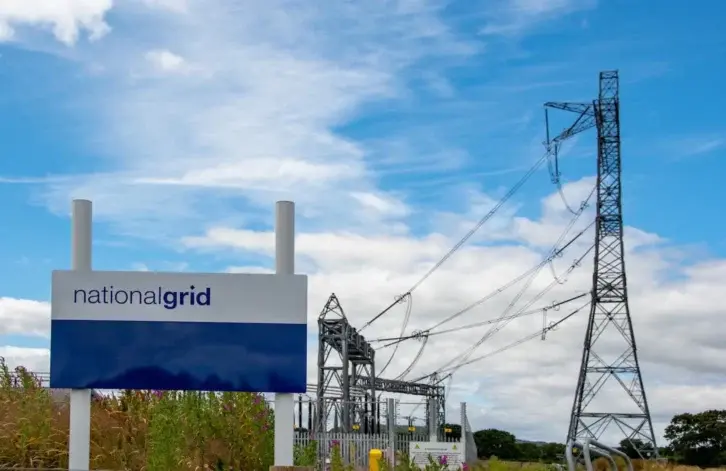
The United Kingdom's energy grid is under severe pressure as the proliferation of artificial intelligence (AI) drives an insatiable demand for computing power. Data centers, which power AI training and inference, are projected to consume up to 20% of the nation's electricity by 2030, according to recent industry estimates. This surge threatens grid stability, increases carbon emissions, and risks higher energy costs for consumers. However, technology itself offers a pathway to resolution. By leveraging advanced grid management systems, renewable energy sources, and efficiency innovations, the UK can navigate this crisis without sacrificing its climate goals.
The Scale of the AI Energy Challenge
AI's energy appetite stems from its computational intensity. Training a single large language model, such as GPT-4, can consume as much electricity as 100 households use in a year. Inference, the process of using trained models to generate responses, adds further load. In the UK, the number of data centers has grown by 40% in the last five years, with many concentrated in regions like Slough, London, and Manchester. The national grid, already aging and underinvested, struggles to keep pace. Blackouts and brownouts have become more frequent during peak demand periods, and the grid operator, National Grid ESO, has warned of potential capacity shortages by 2025.
Smart Grids: The First Line of Defense
One of the most promising technological solutions is the deployment of smart grid systems. These use real-time data from sensors, smart meters, and IoT devices to balance supply and demand dynamically. For example, AI algorithms can predict spikes in data center activity based on weather patterns, time of day, and economic indicators, then automatically reroute power from less critical areas or trigger demand response programs. Companies like Octopus Energy and EDF are already piloting such systems, offering consumers financial incentives to reduce usage during peak hours. In aggregate, these micro-adjustments can free up significant capacity for AI workloads without requiring new power plants.
Renewable Energy and Energy Storage
Pairing data centers with renewable energy sources is another critical step. Large solar farms and offshore wind turbines, such as the Dogger Bank Wind Farm, can provide clean power, but their intermittent nature requires robust storage solutions. Lithium-ion battery farms and emerging technologies like flow batteries can store excess energy generated during off-peak hours and release it when demand surges. The UK's investment in pumped hydro storage at sites like Dinorwig also plays a role. Tech giants like Google and Microsoft have committed to 24/7 carbon-free energy for their data centers, which is accelerating the adoption of such storage technologies in Britain.
Energy-Efficient AI Hardware and Software
Reducing the energy consumed by AI itself is equally important. Chip manufacturers like NVIDIA and Intel are developing specialized processors that use less power for AI workloads. The latest NVIDIA Blackwell GPU architecture, for instance, claims to deliver a 25-fold improvement in energy efficiency compared to earlier models. On the software side, techniques such as model pruning, quantization, and knowledge distillation can shrink AI models without sacrificing accuracy, slashing the computational resources needed. Open-source frameworks like TensorFlow and PyTorch now incorporate energy-aware optimization options, allowing developers to trade off speed for efficiency.
Decentralized and Edge Computing
Moving some AI processing from centralized data centers to edge devices—such as smartphones, sensors, or local servers—can also alleviate grid pressure. Edge AI reduces latency and bandwidth usage, but it also spreads energy demand across a wider geographic area, avoiding hot spots that threaten grid stability. In the UK, smart city projects in Bristol and Milton Keynes are testing edge-based AI for traffic management, waste collection, and public safety, demonstrating reduced reliance on remote data centers. Over time, a hybrid model where simple tasks run locally and complex tasks are sent to optimized facilities can significantly flatten demand curves.
Grid-Interactive Data Centers
Innovative designs are turning data centers themselves into flexible grid assets. For example, data centers can temporarily reduce their power draw during peak periods by delaying non-urgent computations or shifting to backup generators (which can run on biodiesel or hydrogen). In return, they receive financial compensation from grid operators. This model, known as demand-side response, is already being used by facilities in the UK operated by Equinix and Digital Realty. Additionally, some data centers are experimenting with 'fuel cells' that convert natural gas to electricity on-site with high efficiency, or with integrating small modular nuclear reactors (SMRs) as a clean, continuous power source.
Policy and Investment Framework
Technology alone cannot solve the crisis without supportive policy. The UK government has introduced the "AI Energy Enablement" initiative, which provides tax breaks for companies that adopt efficiency measures and mandates energy reporting for large data centers. The Climate Change Committee has also recommended that all new data centers be built with on-site renewable generation or storage. Meanwhile, the National Grid is upgrading its transmission lines and substations to handle higher loads, using AI-based predictive maintenance to minimize downtime. Private capital is flowing into grid modernization startups, such as Kraken Technologies and Upside Energy, which are developing platforms to coordinate distributed energy resources.
Real-World Success Stories
Early adopters are already seeing results. In 2024, the University of Cambridge deployed an AI-optimized microgrid that reduced its data center energy costs by 30% while maintaining performance. Telecom provider BT Group has shifted 80% of its network AI inference to edge devices, decreasing its central data center power consumption by 15%. And in North Scotland, a cluster of wind turbines now directly powers a data center owned by a local AI research lab, with surplus energy stored in hydrogen tanks. These examples demonstrate that the crisis is solvable if the right technologies are deployed at scale.
The Road Ahead
The UK energy grid's AI crisis is a reflection of rapid technological advancement outpacing infrastructure readiness. But by embracing smart grids, renewables, efficient hardware, edge computing, and grid-interactive facilities, the nation can turn a liability into an opportunity. The transition will require collaboration between tech companies, utilities, policymakers, and consumers. Investment in next-generation battery storage, advanced nuclear, and AI-driven grid management will be essential. As AI continues to evolve, so too must the systems that power it, ensuring that the UK remains a leader in both artificial intelligence and sustainable energy.
Source: Uktech News