

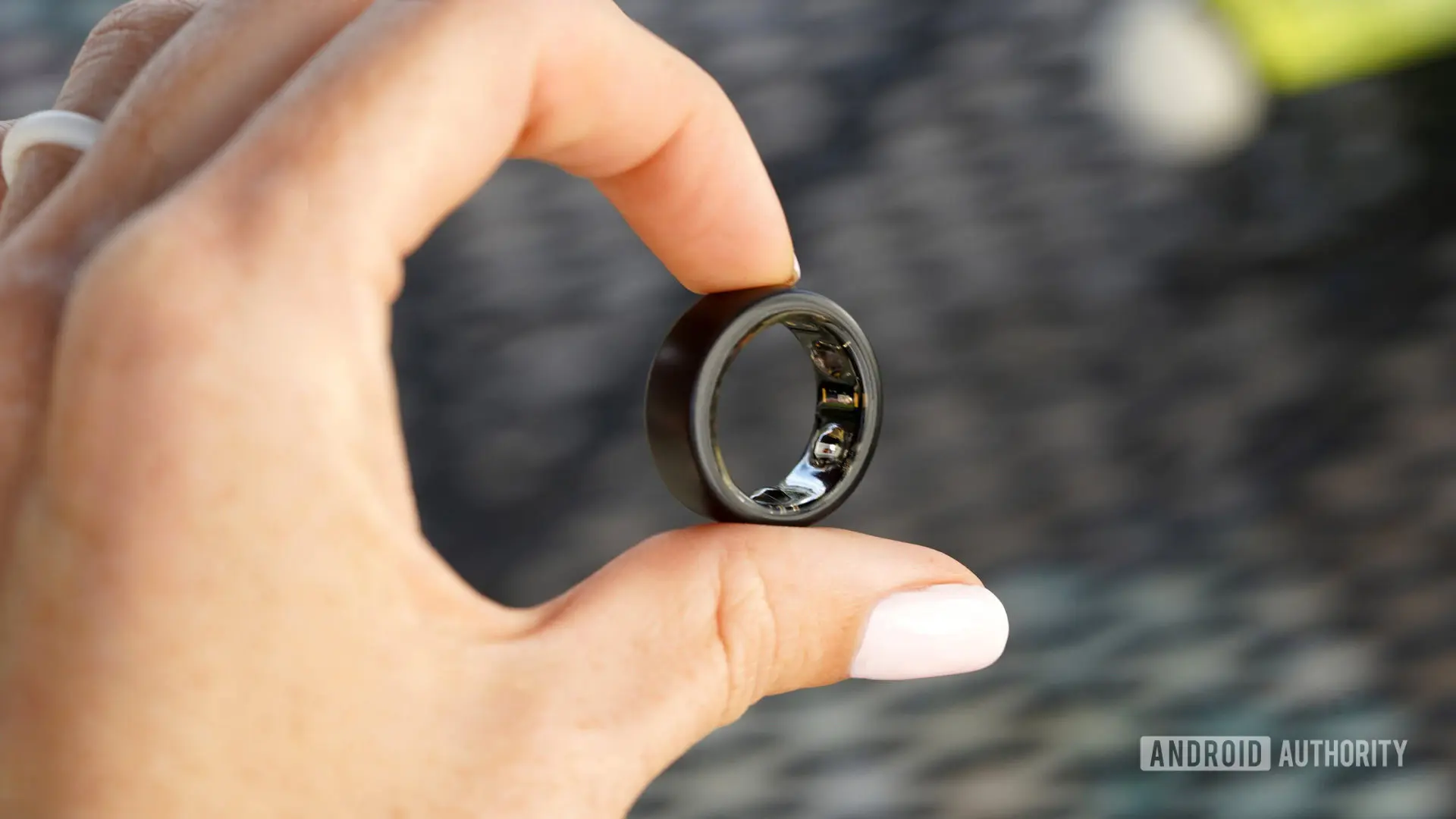
Wearable technology has long promised to deliver medical-grade health data without the need for invasive procedures. Glucose monitoring, in particular, has been a holy grail for the industry, as millions of people with diabetes require frequent blood sugar measurements. Traditional methods involve finger-prick blood tests or continuous glucose monitors (CGMs) that still require a small sensor inserted under the skin. Now, a team of scientists has published a groundbreaking study in Nature describing a smart ring that can measure glucose, lactate, and alcohol levels by analyzing the wearer's sweat. This non-invasive approach could transform how we track metabolic health.
The research, led by engineers from several universities, demonstrates a ring-shaped device that incorporates an osmotic hydrogel polymer. This material actively wicks sweat away from the skin, even when the user is not heavily perspiring. The captured sweat is then routed to microfluidic channels and sensors that detect the target biomarkers. According to the paper, the sensor readings closely correlate with those obtained from blood analysis, offering accuracy that matches or exceeds other non-invasive methods such as optical spectroscopy.
The development addresses a critical gap in current wearable tech. While smartwatches and fitness trackers excel at monitoring heart rate, steps, and sleep patterns, they cannot yet measure key blood-based metrics like glucose or lactate without external hardware. Glucose is vital for energy metabolism, and its imbalance can lead to conditions such as diabetes, hypoglycemia, or metabolic syndrome. Lactate is an indicator of exercise intensity and muscle fatigue, often used by athletes to optimize training. Alcohol level monitoring, another feature of the ring, could have applications in health and safety—for example, helping individuals track real-time blood alcohol content to avoid impaired driving.
The science behind sweat analysis
Sweat is an ideal biofluid for non-invasive monitoring because it contains a rich array of biomarkers that correlate with blood concentrations. However, challenges include the variability of sweat composition, the need to collect sufficient sample volumes, and the potential for contamination from external factors. The osmotic hydrogel polymer used in this smart ring solves one key issue: it continuously wicks moisture from the skin, creating a steady flow of sweat even at rest. In tests, the device produced reliable readings from subjects who were only moderately active or in warm environments, without requiring strenuous exercise.
The sensors employ electrochemical reactions specific to each analyte. For glucose, an enzyme-based biosensor oxidizes glucose to produce a measurable electrical current. Lactate measurement uses a similar enzymatic reaction. Alcohol detection relies on an alcohol oxidase enzyme that generates hydrogen peroxide. The ring integrates a small battery and wireless communication module to transmit data to a smartphone app. The entire assembly is housed in a 3D-printed enclosure that, while functional, is far from the sleek designs of commercial smart rings like the Oura or Samsung Galaxy Ring.
Lead researcher Dr. Maria Chen from the University of California explained in an interview that the current prototype is a proof of concept. “We wanted to demonstrate that sweat analysis can be done reliably and continuously with a simple worn device. The ring form factor is particularly attractive because it has a long skin contact area and stays in place during daily activities. Our next steps are to miniaturize the electronics, improve battery life, and test the device in larger clinical trials.”
Comparison with existing non-invasive techniques
Other approaches to non-invasive glucose monitoring include optical methods that use near-infrared or Raman spectroscopy to measure glucose through the skin. Companies like Apple have explored such technologies for the Apple Watch, but no consumer product has yet achieved the accuracy required for medical approval. Raman spectroscopy struggles with low signal-to-noise ratios, and near-infrared is affected by skin color, hydration, and temperature. The sweat-based method avoids many of these issues because it directly measures the analyte in a collected fluid, similar to how CGM sensors measure interstitial fluid.
However, the ring does have limitations. The current prototype lasts only about 12 hours on a charge, which is insufficient for round-the-clock monitoring. The device is also bulky and not waterproof, factors that would need to be addressed for commercial viability. Moreover, sweat composition can vary based on diet, medication, and individual physiology, requiring calibration for each user. The research team acknowledges these challenges but is optimistic about the path forward.
“The technology exists to make this ring as small and efficient as any other smart ring on the market,” said co-author Dr. James Lee. “We just need to invest in the engineering design and battery optimization. We also plan to incorporate artificial intelligence to personalize the sensor calibration, which should improve accuracy for a broader population.”
The potential market for such a device is enormous. According to the International Diabetes Federation, over 500 million people worldwide live with diabetes, and many more are pre-diabetic or at risk. Continuous glucose monitoring can lead to better glycemic control and reduce complications. For athletes, real-time lactate monitoring can inform pacing and recovery strategies. And alcohol level tracking, while more niche, could be integrated with breathalyzer alternatives for safety applications.
Challenges on the road to commercialization
Bringing a sweat-analyzing smart ring to market will require overcoming several hurdles. First, regulatory approval from agencies like the FDA will demand rigorous clinical validation for each claimed health metric. Second, consumer electronics companies will need to balance sensor accuracy with user comfort, battery life, and affordability. Third, the health data generated must be interpreted correctly—glucose and lactate levels are influenced by many factors, and false readings could lead to dangerous behaviors.
Other groups are working on similar technologies. For instance, researchers at MIT have developed a temporary tattoo that analyzes sweat for sodium and lactate, while a startup called Lief Therapeutics has created a patch for lactate monitoring. The advantage of the ring format is its convenience—users might already be accustomed to wearing a ring for sleep tracking or notifications. If the device can be made comfortable and stylish, it could become a mainstream health accessory.
The study in Nature included 20 healthy volunteers who wore the ring during various activities: resting, walking, and light jogging. The sweated samples were collected and analyzed, and the results were compared with traditional blood draws. The correlation coefficient for glucose was 0.94, for lactate 0.91, and for alcohol 0.88, indicating strong agreement. These numbers are impressive for a first-generation prototype, though they may not yet meet clinical standards (typically above 0.95). The researchers are optimistic that with design improvements and larger datasets, the accuracy will increase.
Looking ahead, the team is exploring the addition of other biomarkers such as cortisol (stress hormone) and potassium, which could expand the ring's utility for mental health and sports performance. They are also collaborating with a wearable manufacturer to develop a slimmer version with a bracelet power supply that extends battery life to several days. If these efforts succeed, we could see a product on the market within two to three years.
For now, the development stands as a testament to the ingenuity of combining materials science, electrochemistry, and wearable design. It also underscores the growing trend toward personalized health data democratization. As Dr. Chen concluded, “Our goal is to give people easy access to the metabolic information that was once only available in clinics or with painful needles. This ring is a step toward that future.”
Source: Android Authority News