

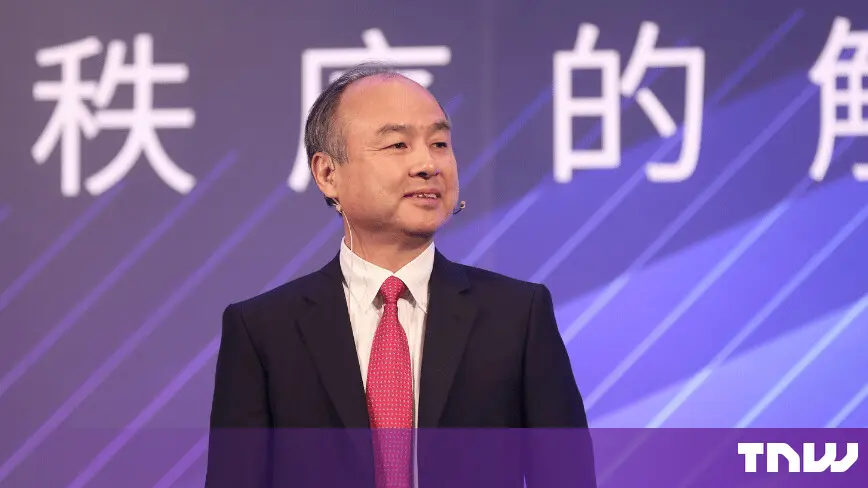
SoftBank's AI bet meets its accountants this week. When the Japanese group reports earnings, the headline profit will look healthy, but the real story is the mountain of funding commitments Masayoshi Son has stacked behind OpenAI. Analysts expect net profit of around ¥148bn, close to $940m, for the April-to-June quarter, flattered by the rising value of its OpenAI stake. The number investors will actually study is how Son intends to pay for what he has promised.
The scale of the promises
SoftBank has committed more than $60bn to OpenAI and related AI infrastructure. It is racing to meet a near-term tranche of roughly $22.5bn to OpenAI by the end of the year. That deadline looms over every other financial consideration. The commitment is not simply a portfolio allocation; it is a contractual obligation that requires liquid funds at a specific point. Missing it would trigger defaults and a crisis of confidence across SoftBank's entire capital structure.
This is not Son's first giant wager. He founded SoftBank in 1981 as a software distributor and turned it into a telecom and tech conglomerate. His early investment in Alibaba, which returned tens of billions of dollars, remains the archetype of his conviction-led strategy. But that bet was made when SoftBank had far less leverage and when the Chinese e-commerce market was still nascent. Today, the stakes are larger, the balance sheet is more stretched, and the timeline for returns is longer.
Debt obligations pile up
The bill arrives as debt matures. SoftBank faces about $30bn of obligations in the second half of 2026, including a $40bn bridging loan that runs to March 2027 and a $20bn margin loan secured against its Arm shares. These are not optional refinancings; they are maturities that must be addressed with cash or new borrowing. The company's ability to roll over this debt depends on the health of its asset base, which in turn depends on the very AI bet that is causing the financial strain.
One funding route has jammed. A plan to borrow against its OpenAI stake stalled as lenders grew wary of credit backed by a private company. SoftBank has already cut a related margin-loan target. This is a telling detail: if banks are reluctant to lend against the OpenAI stake, it suggests that the collateral is less liquid than the company's public statements imply. Private market valuations are notoriously volatile, and lenders prefer assets that can be sold quickly in a downturn. An OpenAI stake is not that.
The leverage is the crux
S&P Global put SoftBank's loan-to-value ratio at 33% in March, well above the 17% the company prefers to cite. The discrepancy arises from how debt and asset values are calculated. SoftBank excludes certain borrowings or uses a more generous measure of its holdings. S&P uses a more conservative methodology that captures the actual risk to creditors. The gap matters because a higher loan-to-value ratio means less cushion if asset prices fall.
Son is unmoved by the worry. He has called bubble talk absurd and predicts AI will cost $5tn a year by 2040. In his view, SoftBank's current borrowing is a down payment on a future that dwarfs any previous technology cycle. This is the same rhetoric that accompanied the Vision Funds, which raised over $100bn and invested in companies like WeWork and Uber. Some of those bets worked; many did not. The Vision Fund ultimately recorded billions in losses.
New bonds and a more elaborate stack
He has kept the financing coming. SoftBank lined up a new $60bn bond to keep the OpenAI bet funded, part of a leverage stack that grows more elaborate with each round. The bond issuance helps address near-term liquidity, but it also adds to the overall debt load. Servicing that debt requires either interest payments from cash flow or more asset sales. SoftBank has already sold parts of its stake in Arm and other companies, and further sales could dilute the very holdings that underpin the strategy.
SoftBank is no stranger to enormous bets. Its Vision Funds poured tens of billions into startups with famously mixed results, and the OpenAI wager is the largest single expression of Son's conviction yet. The difference is that OpenAI is not a portfolio of early-stage companies; it is one company with a concentrated exposure. That concentration cuts both ways. If OpenAI succeeds, SoftBank's gain is enormous. If OpenAI stumbles, there is no other asset outside of Arm that can absorb the shock.
Arm as the anchor
Its stake in the chip designer Arm has become the anchor for much of this. The prized asset is now pledged against the borrowing that funds the AI push, tying SoftBank's most valuable holding to its riskiest bet. Arm's chip designs are used in virtually every smartphone and an increasing number of data center servers, making it a bellwether for the AI infrastructure buildout. But even Arm's fortunes depend on the pace of AI spending. If that spending slows, Arm's stock would fall, triggering margin calls on the loans it secures.
The value of the prize is itself contested. OpenAI is reported to be chasing a $1tn IPO valuation, up from $852bn, while sceptics put its true worth closer to $300bn. The gap is not academic; it swings SoftBank's paper gains wildly. A $1tn valuation would make SoftBank's stake worth well over $100bn, providing ample collateral for its debts. A $300bn valuation would cut that paper value by more than half, leaving SoftBank vulnerable to margin calls and refinancing difficulties.
Mixed signals from the market
The Street is mostly still on board. Fifteen of twenty sell-side analysts kept buy ratings this month, betting that Son's access to capital and the OpenAI upside outweigh the strain on the balance sheet. Their optimism is rooted in SoftBank's history of pulling off large deals, as well as the continued momentum in AI investment. OpenAI's revenue has grown sharply in recent quarters, and its enterprise products are gaining traction. For these analysts, the risk is manageable because SoftBank has multiple levers to pull, including the sale of non-core assets and the issuance of hybrid securities.
The bears see a chain reaction. A drop in asset prices could tighten SoftBank's liquidity, and rising Chinese competition could squeeze OpenAI's margins and the chip demand the whole thesis rests on. Chinese AI labs have developed models that rival OpenAI's at lower cost, and some have argued that the era of massive AI training runs is ending. If the efficiency of AI models improves faster than expected, the need for new data centers and chips could plateau, undercutting the very infrastructure investments that SoftBank is funding.
History as a cautionary tale
There is history in the caution. SoftBank has ridden Son's convictions to spectacular wins and equally spectacular losses before. The sale of Alibaba shares in 2014 and the subsequent investment in ARM Holdings in 2016 were celebrated moves. But the Vision Fund's $16bn investment in WeWork ended in a bailout and a near-collapse. The losses that followed were not just financial; they damaged SoftBank's credibility with lenders and prompted an internal restructuring. The scale of the current bet leaves less room for the second outcome than any he has made.
There is a circularity critics keep pointing to. SoftBank borrows to fund OpenAI, whose rising value underpins those very loans, so a wobble in one leg of the structure quickly travels to the others. This is not a claim about fraud; it is an observation about financial mechanics. When an asset is used as collateral for the very debt that funds that asset, the loan-to-value ratio is sensitive to small changes in the asset's price. A 10% drop in OpenAI's valuation could trigger margin calls that force SoftBank to sell other holdings at inopportune times.
What the earnings call must deliver
That is why this earnings call is more than a scorecard. Investors want a credible plan for the year-end commitments, not just a profit line lifted by a mark-to-market gain on a stake that has not been sold. They will ask about the exact timing of the $22.5bn transfer to OpenAI, the status of the Arm-backed margin loan, and whether any additional asset sales are planned. They will also listen for any change in Son's language about leverage or his willingness to dilute existing shareholders.
Son has wagered the group's balance sheet on being right about AI, and about OpenAI in particular. The earnings will not settle that bet, but they will show how much rope he has left before the market asks him to prove it. If the company can demonstrate a clear path to funding its commitments without straining its credit metrics, the stock may rally. If the plan is vague or contingent on further borrowing, the concerns about leverage will only intensify.
Source: TNW | Business News