

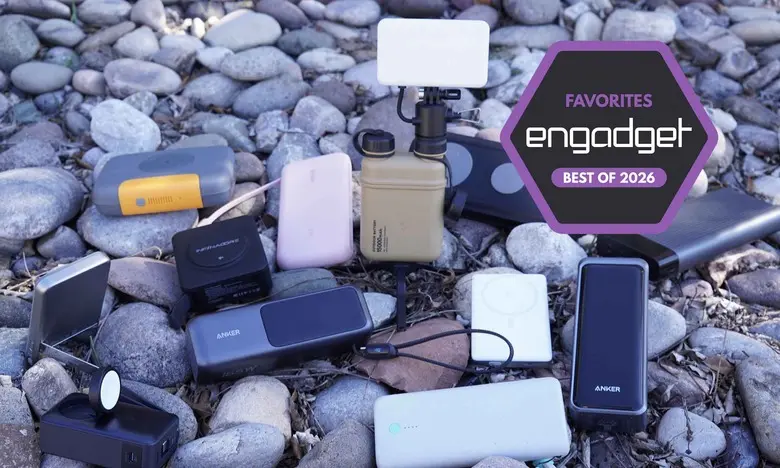
Key facts to remember
A power bank is effectively a lithium-ion battery with a USB port, and its capacity is measured in milliampere hours, or mAh. Small 5,000mAh models work well for emergency phone top-ups, while 10,000mAh packs can usually provide one full charge plus a little extra on modern smartphones. Medium units in the 20,000mAh range suit tablets and frequent travelers, and 25,000mAh or higher banks are best for people who also need to recharge a laptop away from power. Real-world efficiency matters: most power banks deliver only about 60 percent of their rated capacity to a phone, so a 10,000mAh unit will typically provide roughly 5,800mAh to a device. Wireless charging is also worth considering if you want magnetic compatibility with iPhones and newer Pixel phones, but wired charging remains the faster and more efficient method.
Anker MagGo Power Bank (10K): Best MagSafe power bank
Anker’s MagGo Power Bank was among the first Qi2-certified portable chargers, and Qi2 makes a meaningful difference in wireless speeds. This 10,000mAh magnetic battery charged an iPhone 15 from four percent to 70 percent in about one hour and eight minutes, then delivered enough remaining power for another two-thirds of a full phone charge. On a full run, it took 2 hours and 26 minutes to reach 100 percent, which is much faster than older magnetic packs.
The MagGo also has a sturdy kickstand, a 15W wireless output, a USB-C input/output port and a display that shows remaining battery percentage plus an estimate of time until full or empty. It weighs 8.82 ounces and measures 4.22 x 2.71 x 0.78 inches. The magnetic hold is strong enough that you can keep using your phone while it charges. Qi2 means iPhone MagSafe cases and magnetic accessories line up correctly, and newer Pixel handsets can also take advantage of magnetic wireless charging at 15W. It is more expensive than some rivals, but the combination of speed, display and stand makes it the best magnetic option for most people.
Anker Nano Battery (Foldable USB-C): Best Android companion
If you want the smallest possible emergency charger, the Anker Nano Battery (Foldable USB-C) is a clever pick. It has a 5,000mAh capacity, up to 22.5W output and a built-in USB-C connector that folds away when not in use, so you do not need to remember a cable. In testing, it brought a depleted Galaxy S23 Ultra up to 65 percent in about an hour. That is not huge, but it is enough to get past a long commute or an unexpected afternoon out.
The pack weighs only 3.5 ounces and is roughly the size of a lipstick case. There is also a USB-C port for recharging the battery or connecting other devices with a cable. Four LEDs indicate remaining charge. Because it is so small, this charger also works well with earbuds, tiny Bluetooth speakers and other pocket-sized gear. If you want more juice in a similarly thought-out design, Anker’s 30W Nano Power Bank has 10,000mAh and adds a display plus a handy built-in USB-C loop cable, but the smaller model remains the easiest to toss in a pocket.
Anker 10K Fusion: Best low-capacity power bank
The Anker 10K Fusion solves two common annoyances: it has both a built-in USB-C cable and foldable wall prongs. You still need to remember the battery itself, but you do not need a separate cable or wall adapter. The capacity is 10,000mAh and the maximum output is 30W, which is enough to trigger fast charging on many Android phones.
In tests, the 10K Fusion charged a Galaxy S23 from five percent to full in one hour and two minutes, and it showed the Android phone’s fast charging indicator. It delivered one full iPhone 15 charge from five percent in one hour and 53 minutes, with 45 percent available after just 20 minutes from empty. It can provide an estimated 1.86 iPhone 15 charges or 1.45 Galaxy S23 Ultra charges. The battery weighs 8.8 ounces and has a built-in display that gives a fairly accurate percentage readout. A second USB-C port allows simultaneous charging, and the corduroy-textured sides make it comfortable to hold. The only downside is that iPhone charging is not as quick as some other 10K packs, but the integrated prongs and cable make this a great travel companion.
Belkin BoostCharge 20K with Integrated Cable: Best medium-capacity option
Belkin’s BoostCharge 20K with Integrated Cable offers a 20,000mAh capacity, a built-in magnetic USB-C cable and a reasonable price. The maximum output is 30W, which is not the fastest available, but it is still practical: a Samsung Galaxy S24 Ultra went from near-dead to full in about one hour and 15 minutes, while an iPhone 15 climbed from five percent to 87 percent in just over an hour. The battery can provide between three and 3.5 full iPhone 15 charges or between 2.5 and three Galaxy S23 Ultra charges, which is strong for medium-capacity category.
The built-in cable is convenient and can be used for recharging the battery as well as powering a device. There are also two other ports: a USB-A output and a USB-C input/output. That means you can charge up to three devices at once, though speeds will drop when multiple gadgets are draining power at the same time. The unit lacks a percentage screen, but its four LED indicators are accurate enough. It comes in blue, pink, white and black; the matte finish resists smudges and wipes clean easily. It weighs 14 ounces, and while it is not the fastest charger available, the integrated cable, color choices and price make it a strong pick for daily use.
Nimble Champ Pro: Best medium-high capacity power bank
The Nimble Champ Pro is for people who want laptop-level speeds without stepping all the way up to a massive premium brick. It has a 20,000mAh capacity, a maximum output of 65W and two USB-C input/output ports. In testing, it recharged a Galaxy S23 Ultra from five percent to full in under an hour, faster than nearly every other battery at this size. It also delivered nearly three full charges to an iPhone and an Android phone, and it had enough power left to refill an iPad Air about 1.8 times.
The Nimble Champ Pro weighs 12.9 ounces and is made with 90 percent post-consumer recycled plastic. The company is a certified B-Corp, and the charger arrives in paper-based packaging with a prepaid bag for recycling old tech. The textured, marbled finish looks distinctive, and the compact shape makes it easy to slip into a laptop bag. Four small LED lights show remaining capacity, though in early testing they tended to underestimate how much charge was left. That is not a safety concern, but it can make you think the battery is closer to empty than it actually is. Charging speeds and build quality are excellent at this price.
BioLite Charge 100 Max: Best multi-device power bank
When you need to keep several devices alive at the same time, the BioLite Charge 100 Max is a strong choice. Its 25,000mAh battery has a total output of 120W, a wireless charging pad on top, three USB-C ports and one USB-A port. The wireless pad is compatible with MagSafe cases and delivers up to 15W, though the magnetic hold is not as strong as smaller dedicated magnetic batteries. Two of the USB-C ports can output as much as 100W, making it possible to recharge a phone and a MacBook at the same time.
In testing, the Charge 100 Max delivered roughly five iPhone 15 charges or four Galaxy S23 Ultra charges. It refilled an iPad Air more than twice and provided about three-quarters of a charge to a 16-inch MacBook Pro. Weight is 1.28 pounds, and the rounded, rubberized body is easy to grab. BioLite is a climate-neutral certified B-Corp, and the design stands out with yellow accents. The LED charge indicator is accurate, and the battery charges from the wall quickly. It is more expensive than some 25K rivals, but the port selection and wireless pad make it a genuinely useful multi-device travel companion.
Anker Laptop Power Bank with Built-In Cable: Best laptop power bank
The Anker Laptop Power Bank with Built-In Cable is exactly what its name suggests: a 25,000mAh battery with two attached USB-C cables, so you never have to search for the right cord. One cable is a retractable two-footer; the other is attached to the side of the unit and serves as a carrying loop. Both cords can send power to devices and receive power to recharge the bank itself. There is also an additional USB-C port and a USB-A port.
With a maximum output of 165W, this bank is speedy. It charged a Galaxy S23 Ultra from five percent to full in just 52 minutes and brought a 16-inch MacBook Pro from near-empty to 68 percent in 53 minutes. It can provide between four and five iPhone 15 charges and close to two iPad Air charges. The display shows remaining capacity, per-port output wattage and an estimated time to full when recharging. The matte silver body feels durable, and the screen is less exposed than on Anker’s previous premium Prime models. If you are looking for a high-capacity laptop charger that works right out of the bag, this is the one.
Anker Prime Power Bank 26K 300W: Best premium power bank
Anker’s top-of-the-line Prime Power Bank packs a huge 26,250mAh into a surprisingly slender frame. Its two USB-C ports can each deliver up to 140W, while a USB-A port adds 22.5W, for a combined system output of 300W. In testing, it handled almost every recharge task with ease, including filling a MacBook Pro faster than many smaller laptop banks. It delivered about five full iPhone 15 charges and roughly 4.3 Galaxy S23 Ultra charges. A connected smartphone also gains access to a companion app with detailed telemetry, but the built-in display shows the same information, including remaining capacity and battery temperature.
The optional charging base makes refilling effortless: set the battery down and it charges without cables. The base costs extra, which pushes the total price well above many competitors. But if you want a premium-looking, highly capable power bank with the fastest possible charging, the Anker Prime Power Bank is the current benchmark. Its wide, flat shape is more pocket-friendly than older 26K bricks, and the display gives you enough confidence to make the most of every milliampere hour.
Nestout 15,000mAh Outdoor Battery: Best power bank for adventures
Most portable chargers are not waterproof, and that is understandable—water and electronics are not a natural fit. The Nestout 15,000mAh Outdoor Battery, however, has an IP67 rating, meaning it can survive being submerged in about one meter of water for up to 30 minutes when the caps are tightly sealed. In real-world testing, it kept working normally after a five-minute dunk in a bucket of water. It also survived repeated drops from chest height onto a hard surface, so it is a good companion for camping, backpacking and general outdoor abuse.
The Nestout battery has a 15,000mAh capacity and a maximum output of 32W, which is not as fast as some indoor-oriented alternatives but plenty for phones and tablets. It provides nearly three full charges for an iPhone 11 and about 1.17 charges for an iPad Air. The package includes a very short USB-A cable, so most users will want to bring their own cord. Nestout also sells a snap-on work light, a compact tripod and a small solar panel, which make the system more versatile for off-grid trips. It is heavier than standard 10K models at 12.8 ounces, but the rugged shell and waterproof design make it the best choice for the outdoors.
Other power banks worth considering
Belkin’s Stage PowerGrip is a 9,300mAh battery with a wireless charging pad and a built-in cable, but it is also a Bluetooth camera shutter with a tripod mount. It is slower than the main picks, taking about two hours to charge an iPhone 16 from three to 98 percent, but it can hold a smartphone securely for handheld photography. Anker’s MagGo for Apple Watch adds a pop-up watch charger to a 10,000mAh battery, which is a lifesaver for Apple Watch owners who travel. HyperJuice’s 245W brick has a huge capacity and four USB-C ports, but it lacks USB-A and is priced close to more versatile options. EcoFlow’s Rapid magnetic power bank is attractive and Qi2-enabled, with a convenient kickstand and a small integrated cable, yet it did not beat Anker’s MagGo on charging speed. The Mophie Snap+ Powerstation Mini is also well made and compact, but its 5,000mAh capacity only gives a partial charge to modern flagship phones.
What to look for in a portable power bank
Battery type
All of the best portable chargers use lithium-ion cells. These provide a high energy density and do not suffer from the memory effect that affected older rechargeable battery technologies. They are not perfect, however: extreme heat can degrade lithium-ion cells over time, and fast charging generates heat. Modern phones and banks manage this with thermal shielding and software safeguards, but you should still avoid leaving a charger in a hot car.
Flying with portable chargers
Most power banks are rated below 100Wh, which is the current carry-on limit set by the TSA. You can take them onto a plane, but you cannot put them in checked luggage. Airline-specific rules might be even stricter; Southwest, for example, now asks flyers to keep power banks visible while they are charging a device. Check with your airline if you are carrying multiple batteries or a very large capacity pack.
Capacity and portability
Higher mAh numbers mean more energy storage, but also larger size and higher price. If you only want a phone charger, 5,000mAh to 10,000mAh is enough for most people. Frequent travelers should consider 20,000mAh for tablets and shared charging, while laptop users should look for 25,000mAh or more. Cables and wall prongs built into the battery reduce the number of accessories you have to pack, and a digital display makes it easier to know how much charge remains.
Wired and wireless charging
USB-C is the most versatile connection for modern phones, tablets and laptops. Check the wattage on each port: a 15W port is fine for phones, but a laptop needs 45W or higher. USB-A ports still appear on many banks and are useful for older accessories, but they deliver less power than USB-C. Qi2-certified banks bring 15W magnetic wireless charging, and compatible cases make alignment simple. Newer phones are beginning to support faster wireless standards, but wired charging still gives you the most efficient use of a power bank’s stored energy.
How portable chargers were tested
To find the best power banks, each candidate is tested with a representative set of devices. Phones are drained to zero or five percent and then charged until they are full or the power bank runs out. Larger units are also tested with iPads and MacBook Pros to see whether they can handle tablets and laptops. Charge time, number of full charges, port flexibility, durability and overall usability are all recorded. The current lineup includes iPhones from the 11 through 16 series, Galaxy S22 and S23 Ultra models, iPads, and 16-inch MacBook Pros, along with newer devices as they become available.
Power bank FAQ
What is the difference between a portable power bank and a portable charger?
The terms are essentially interchangeable. Portable battery, external battery pack and USB charger are just different names for a standalone lithium-ion battery with one or more output ports. Wall chargers are sometimes called USB chargers too, but they do not store energy; they only convert wall power. When choosing between a power bank and a wall charger, decide whether you need energy storage for use away from an outlet.
Does fast charging damage your phone battery?
Fast charging itself is generally safe because modern phone batteries and chargers have safeguards that limit heat. Heat is the real enemy of battery longevity, and faster charging can produce more heat. Phone makers include heat spreaders, software charging curves and temperature monitoring to keep the battery within a safe range. Occasional fast charging will not ruin your phone, but avoiding direct sunlight and high ambient temperatures will help your battery last longer over the long term.
Can you use a power bank for every device?
It depends on the size of the power bank and the charging system of your device. A 5,000mAh bank can handle a phone but will not make much progress on a laptop. A 20,000mAh bank can partially charge many ultraportable laptops, and a 25,000mAh or larger unit is more reliable for full laptop top-ups. Devices with USB-C, USB-A or wireless charging can use most power banks. If a device has a proprietary DC port or an AC plug, you need a specialist cable or a larger battery with AC output.
Source: Engadget News