
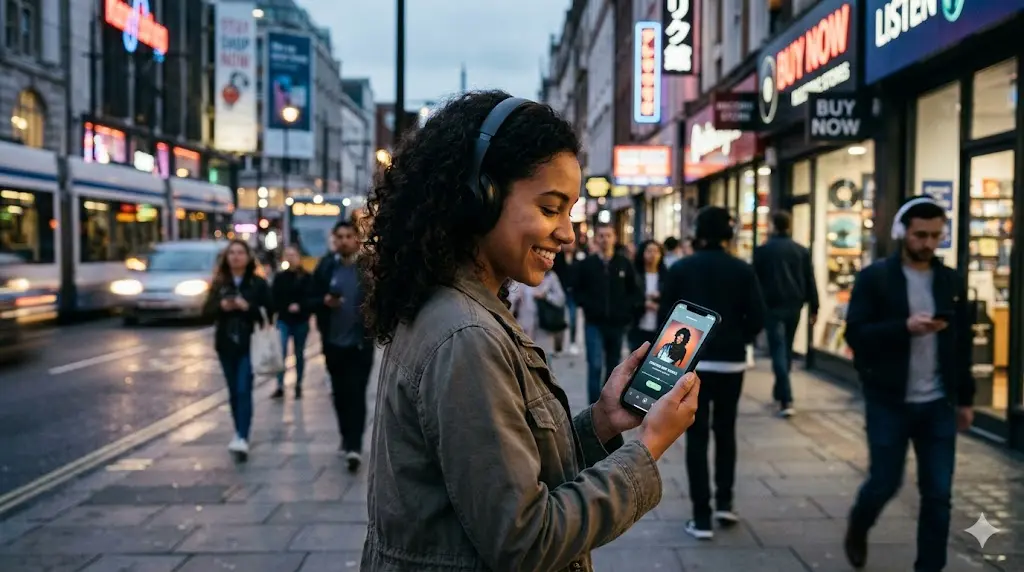
Music streaming has quietly reshaped the way people shop, discover brands, and even decide what feels trendy. From personalized playlists influencing fashion purchases to viral songs driving product sales overnight, streaming platforms now affect consumer behaviour far beyond entertainment. If you've noticed products selling out after appearing in a trending track or social media clip, you're already seeing this shift happen in real time.
Music streaming platforms influence consumer buying behaviour by shaping moods, trends, emotional connections, and digital discovery habits. Algorithms, viral playlists, and artist-driven culture now affect what consumers buy, trust, and share worldwide.
What Is Music Streaming and Why Does It Matter?
Music Streaming: A digital method that lets users listen to music instantly through internet-connected platforms without downloading files permanently.
A decade ago, people bought albums. Now they subscribe to streaming services that learn their habits, moods, and routines. That small shift changed more than the music industry. It changed advertising psychology.
Streaming platforms collect behavioural data constantly. They know what users listen to while working out, driving, relaxing, or shopping online. Brands realized something pretty quickly: music preferences often reveal spending patterns.
Here's the thing most people overlook. Consumers rarely separate entertainment from shopping anymore. Music influences emotion, and emotion drives purchasing decisions.
Research published through organizations like Statista and IFPI Global Music Report shows streaming subscriptions continue rising globally, especially among younger consumers who also dominate ecommerce spending.
I've seen brands spend thousands on polished advertising campaigns only to gain less traction than a single viral audio trend attached to user-generated content. That's not an exaggeration. Consumer attention has shifted.
Why Music Streaming Matters in 2026
By 2026, streaming isn't just entertainment infrastructure anymore. It's part of digital commerce.
Consumers now discover products through playlists, artist collaborations, livestream shopping events, and short-form content powered by streaming music. That changes buying behaviour in several ways.
Emotional Shopping Is Becoming More Common
People buy emotionally first and logically second. Music intensifies emotional states. A calm acoustic playlist creates a different shopping mindset than high-energy electronic music.
Retailers already use this offline. Grocery stores and luxury boutiques have carefully selected music because it changes customer pacing and spending. Streaming simply brought that strategy online at scale.
What surprises many marketers is how subtle the influence can be. Consumers usually don't realize music affected their choices.
Viral Audio Trends Drive Fast Purchases
One song on a trending video can suddenly boost:
Sneaker sales
Vintage fashion demand
Beauty product searches
Travel bookings
Food trends
A realistic example? A small skincare brand partnered with micro-creators using a nostalgic indie soundtrack. Within three weeks, their product searches increased sharply because viewers emotionally associated the music with authenticity and comfort.
That kind of behavioural connection would've been difficult to engineer ten years ago.
Consumers Trust Culture More Than Ads
Traditional ads feel filtered. Streaming culture feels personal.
When listeners see artists naturally using products, audiences respond differently. Fans often treat artist recommendations as lifestyle validation instead of advertising.
That's why brand partnerships with musicians now extend beyond headphones and beverages. Streaming culture affects technology, wellness, home decor, gaming, and even financial products.
How Music Streaming Is Changing Consumer Buying Behaviour Step by Step
1. Streaming Algorithms Shape Discovery
Recommendation engines push users toward specific moods, genres, and communities. Those communities often share fashion styles, products, and digital habits.
Someone listening to lo-fi study playlists may receive completely different product recommendations across platforms compared to someone streaming gym-focused hip-hop tracks daily.
Data ecosystems are more connected than most consumers realize.
2. Viral Songs Create Instant Demand
TikTok, Instagram Reels, and YouTube Shorts transformed songs into purchasing triggers.
A track becomes popular. Creators use it. Products appear in videos. Search demand spikes.
Sometimes consumers don't even remember the product name. They remember the feeling attached to the sound.
That's incredibly powerful marketing psychology.
3. Artists Become Lifestyle Influencers
Musicians aren't just performers anymore. They're brand ecosystems.
Fans copy artist behaviour because streaming platforms create constant exposure. A celebrity used to appear occasionally on television. Now listeners interact with curated artist identities every day.
That repeated exposure changes buying decisions naturally.
4. Personalized Audio Advertising Feels Less Aggressive
Streaming ads often target listeners based on mood, activity, or preference.
A podcast listener hearing an ad during a late-night relaxation playlist may react differently than someone hearing the same message during a workout mix.
Context matters more than volume now.
5. Subscription Culture Changes Spending Habits
Streaming normalized recurring payments. That's a massive shift.
Consumers became comfortable paying monthly for convenience and personalization. That mindset spread into:
Fashion subscriptions
Meal kits
Software tools
Fitness apps
Luxury memberships
In my experience, music streaming quietly trained consumers to accept subscription-based buying across industries.
The Counterintuitive Reality Most Brands Miss
Many companies assume louder campaigns create better results. Often the opposite happens.
Consumers increasingly respond to subtle cultural placement rather than direct selling. A product casually appearing in playlist culture may outperform heavily promoted advertising.
Let me be direct. People don't want to feel marketed to every second.
Streaming environments work because users enter them emotionally open. That changes how persuasion operates.
Brands trying too hard usually lose authenticity fast.
How Streaming Affects Different Industries Worldwide
Fashion and Apparel
Fashion trends move faster because streaming culture moves faster.
One artist wears retro jackets in a viral music video, and suddenly ecommerce searches explode globally. Smaller fashion brands now monitor playlist trends almost like stock traders monitor markets.
Streetwear companies especially benefit from music-driven identity culture.
Beauty and Cosmetics
Beauty brands increasingly partner with artists and creators connected to streaming communities.
Consumers associate music genres with aesthetics:
Indie playlists connect with minimalist beauty
Hyperpop connects with bold cosmetics
Jazz aesthetics influence luxury skincare branding
That emotional mapping affects purchase behaviour significantly.
Travel and Tourism
This one surprised many analysts.
Travel playlists influence destination interest. Tropical music increases searches for beach vacations. City-themed playlists boost urban travel inspiration.
I've personally noticed people building entire trips around music festivals or artist-related experiences. Tourism boards are paying attention now.
Food and Beverage
Restaurants and beverage companies use streaming partnerships to create lifestyle identity.
Consumers don't just buy drinks anymore. They buy cultural association.
A beverage featured during livestream concerts or playlist sponsorships often gains stronger emotional recall than traditional banner advertising.
Expert Tips: What Actually Works for Brands
Brands trying to use music streaming influence effectively should stop obsessing over massive celebrity campaigns first.
Smaller creator communities often drive stronger conversions because audiences trust them more.
Focus on Mood-Based Marketing
Instead of targeting only demographics, target emotional moments:
Focus playlists for productivity products
Relaxation sounds for wellness brands
Workout mixes for sports products
That approach feels more natural to consumers.
Build Cultural Relevance Slowly
Here's what most guides miss. Forced relevance kills trust immediately.
Consumers recognize fake trend participation within seconds. Brands that genuinely understand music communities perform better long term.
Use Audio Identity Consistently
Sound branding matters more now.
Short audio signatures, recognizable playlist aesthetics, and consistent sonic identity help consumers remember products subconsciously.
It sounds small. It isn't.
A Short Personal Observation About Streaming Culture
I think many businesses still underestimate how deeply streaming affects identity formation.
People don't just listen to music anymore. They build digital personalities around playlists, shared audio experiences, and recommendation algorithms.
That changes purchasing behaviour because identity-driven shopping is emotional, social, and ongoing.
Honestly, some companies are still marketing like it's 2014 while consumers behave completely differently in 2026.
Real-World Example: Small Brand Growth Through Streaming Culture
A startup fitness apparel company partnered with independent workout playlist curators instead of paying for expensive influencer campaigns.
The playlists gained traction on social media. Users associated the music style with motivation and performance. Apparel sales increased because the brand became emotionally tied to workout routines.
No massive advertising budget. Just strategic cultural positioning.
That's where consumer behaviour is moving.
Why Consumers Respond So Strongly to Music-Driven Marketing
Neurology plays a role here.
Music affects memory retention and emotional recall more effectively than static visuals alone. Consumers often remember how content made them feel before remembering product details.
Streaming platforms amplify that emotional repetition daily.
Repeated emotional exposure builds familiarity. Familiarity increases trust. Trust increases purchasing behaviour.
Simple idea. Huge commercial impact.
People Most Asked About How Music Streaming Is Changing Consumer Buying Behaviour
How does music streaming influence shopping decisions?
Streaming influences emotions, identity, and trend awareness. Consumers often associate songs, artists, or playlists with certain products and lifestyles, which affects purchasing choices subconsciously.
Why do brands partner with musicians now?
Musicians carry cultural influence and audience trust. Brands use artist partnerships because fans usually view them as authentic recommendations rather than direct advertising.
Can small businesses benefit from music streaming trends?
Absolutely. Smaller brands often succeed by connecting with niche playlist communities, creator ecosystems, or mood-based marketing instead of competing with massive advertising budgets.
Does streaming affect impulse buying?
Yes, probably more than many people realize. Viral songs and emotionally charged content can create immediate product demand, especially on social platforms linked to streaming culture.
What industries benefit most from music streaming influence?
Fashion, beauty, fitness, food, travel, and technology brands currently benefit the most because consumers strongly connect these purchases with lifestyle identity.
Are streaming algorithms changing consumer psychology?
To some extent, yes. Algorithms shape discovery habits and reinforce emotional preferences, which can influence shopping behaviour over time through repeated exposure.
Will music streaming continue affecting global ecommerce?
Most likely. Streaming platforms are becoming deeply integrated with creator economies, AI recommendations, social commerce, and digital advertising systems worldwide.
Final Thoughts on How Music Streaming Is Changing Consumer Buying Behaviour Worldwide
Music streaming changed more than listening habits. It reshaped consumer psychology, digital discovery, emotional branding, and online purchasing behaviour worldwide. Companies that understand how audio culture influences identity and emotion will probably outperform brands relying only on traditional advertising methods.
What makes this shift especially interesting is how invisible it feels to consumers. People think they're simply listening to music, but in many cases, they're also discovering trends, building preferences, and shaping future buying decisions without even noticing it.
Our network platforms help businesses strengthen brand visibility through press release distribution services and strategic digital marketing services designed to improve SEO ranking, organic traffic, and media coverage. Whether you're a startup, agency, or growing brand, these solutions support instant publishing, high authority backlinks, and wider audience reach that helps businesses scale faster in competitive markets.