

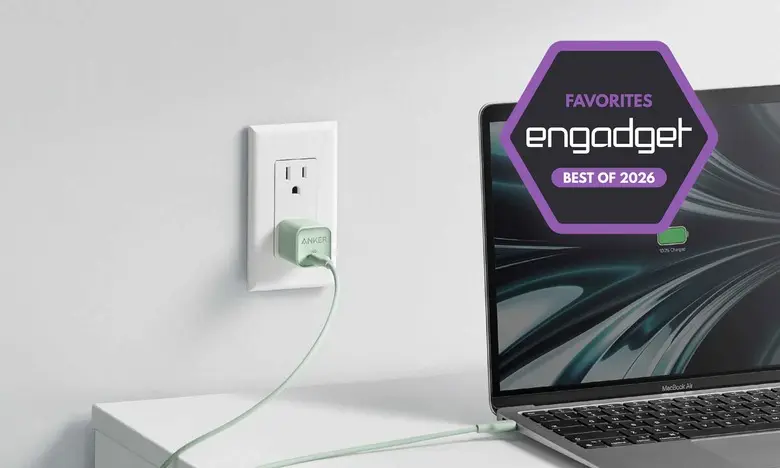
Fast chargers are no longer a nice-to-have accessory. With phones, tablets, laptops and wearables all competing for wall outlets, the right charger can determine whether you start your day with full batteries or a slow trickle of power. In 2026, many devices ship without a power brick, so buying a fast charger is now part of owning a modern gadget. The challenge is not simply finding the highest wattage; it is finding a charger that matches your hardware, fits your routine, and can charge multiple items safely without excessive heat.
Fast charging is not a single universal system. It can mean 20W for a phone, 45W for an Android flagship, 100W for a large laptop, or even more for specialty devices. Some brands use proprietary standards, such as OnePlus SuperVOOC, while many modern gadgets rely on USB Power Delivery (USB PD). That means the best fast charger for 2026 depends less on marketing labels and more on your device ecosystem and whether you plan to use one brick at home, at the office, or on the road.
Key facts at a glance
- Fast chargers work best when matched to the power requirements of your phone, tablet or laptop.
- Many new devices do not include chargers in the box, so a separate fast charger is essential.
- GaN chargers use gallium nitride instead of silicon, allowing smaller, cooler and more efficient adapters.
- Multi-port chargers can power several devices at once, but total wattage is shared across all ports.
- USB Power Delivery is the common open standard, but proprietary systems may deliver faster speeds only with their own chargers.
- Fast charging has a small effect on long-term battery health; modern safeguards limit strain and heat.
Why fast charging matters more than ever
The accessory market changed dramatically when manufacturers stopped including power adapters with smartphones and, in some cases, laptops. What used to be an everyday item found in a product box is now a separate purchase. That shift forced people to think about wattage, port types, cable quality and charging protocols in ways they rarely had to before.
At the same time, battery capacity has grown quickly. A fast charger is no longer just about speed; it is also about convenience. A 20W or 30W adapter can quickly revive a smartphone during a break, while a 65W or 100W GaN charger can power a laptop through a busy workday. If you travel often, a compact fast charger with three ports can replace several bulky power bricks, making it easier to keep every device charged with one item.
The role of USB-C also matters. With more devices using USB-C, the promise of one charger for everything is closer than ever. A multi-port fast charger can handle a phone, a pair of earbuds, a smartwatch, a camera, and even a laptop. However, having the right ports is only one part of the equation. The charger must also recognize the correct voltage and current for each connected device, and the cable you use must be able to carry that power reliably.
What to consider before buying a fast charger
Before you choose a fast charger, it helps to answer three questions: how many devices will you charge at once, how much power does each device need, and will you be traveling with the charger? These simple answers can narrow down the enormous range of options and prevent you from buying too much power or too little convenience.
Number of devices
If you only need to charge one phone each night, a compact single-port 20W or 30W charger is often the best choice. It takes up less space and costs less than a multi-port model. If you need to charge a phone, a laptop, and a pair of earbuds at the same time, a three-port GaN charger is more practical. Some multi-port chargers also include a USB-A port, which is useful for older cables or accessories such as a Lightning cable when you are away from your usual setup.
Multi-port chargers use dynamic power sharing. A 65W charger with two USB-C ports may deliver 45W to one port and 20W to the other, or 30W to both ports, depending on the design. If you plug in a laptop, the charger will usually reserve enough power for the high-power device and give the remaining wattage to secondary gadgets. That makes it essential to check how the charger distributes power between ports before you buy.
Power requirements
Every modern device has a maximum charging speed, and using a higher-wattage charger will not make that device charge faster than its limit. A phone that supports 30W charging will still charge at 30W even if it is plugged into a 200W brick. Conversely, using a charger that is too weak can cause slow charging while the device is in use. A laptop plugged into a 30W phone charger might lose battery slowly or fail to charge at all under heavy load.
For laptops, ultraportable models typically need between 45W and 65W, while larger notebooks require 90W or 100W. Powerful or gaming laptops can demand more than 140W, and some use barrel plugs instead of USB-C. That can make them incompatible with universal fast chargers unless they also support USB-C input. When a high-power laptop is connected to a lower-powered USB-C charger, it may charge slowly or simply run on battery while powering its components. This is not a defect; it is a power negotiation between the laptop and the charger.
Travel and size
For frequent travelers, size and weight can be just as important as raw speed. Older silicon chargers are heavier and hotter, but GaN technology has changed the market. GaN chargers can be 30 to 50 percent smaller and lighter than older models, which makes them much easier to slip into a backpack, a briefcase, or even a large pocket. Many compact GaN chargers now deliver 65W or 100W in a package that resembles a standard phone charger.
Travelers should also look for charging bricks with interchangeable plugs or support for international outlets. A charger with a foldable plug is easier to pack, while a model that supports 100V to 240V input will handle different power grids around the world. If you carry a battery pack or a power station, a small GaN charger can be a useful backup, especially when you need to recharge your accessories quickly before heading out again.
Charging standards and cables
Compatibility is a key part of fast charging. Many Android phones use USB Power Delivery, the same open standard adopted by most laptops and tablets. Apple devices also support USB PD, although some models may use other protocols for wireless charging. However, some phone makers use proprietary standards to reach extreme speeds. For example, the OnePlus 13&8217;s included SuperVOOC charger can send up to 100W to the phone. That is remarkably fast, but if you use a generic USB-PD charger, speeds top out at 45W. The phone will still charge quickly, but not at the maximum rate the brand advertises.
Your cable is just as important as your charger. A cheap or damaged cable can bottleneck power delivery and may even become hot during charging. For best results, use a high-quality USB-C to USB-C cable that supports the power level you need. Some older cables, including certain Lightning cables, only support lower wattages, so they should not be used for high-power laptops or fast-charging phones. Check the cable rating before relying on it for a 100W charger.
GaN: The technology that changed fast chargers
Gallium nitride, or GaN, has become a buzzword in chargers for good reason. Traditional chargers use silicon transistors, which are less efficient and generate more heat. GaN transistors can handle higher voltages and switch faster, so chargers can push more power through a smaller space while staying cool. This is why the best fast chargers for 2026 are often compact yet powerful.
GaN also improves safety. Because these chargers run cooler, there is less thermal stress on components and less wasted energy. The efficiency gains mean that a GaN charger can deliver 65W, 100W, or even higher output without the bulky heat sinks seen in older adapters. For anyone who has struggled to fit large chargers into a crowded power strip, GaN is a practical improvement that makes everyday charging easier.
Not all GaN chargers are the same, however. Power output, port configuration, and charging protocols vary from model to model. Some compact GaN chargers are optimized for phones and tablets, while others are designed for laptops with full USB PD support. The best approach is to choose a GaN charger with total output slightly higher than the largest single device you plan to charge. For most people, that means 65W to 100W is the sweet spot.
Best fast chargers for 2026 by category
After testing dozens of adapters in real-world situations, the best fast chargers for 2026 are defined by reliability, thermal performance, port flexibility, and value. A strong all-around model should feel sturdy, run cool under load, and negotiate power cleanly with a wide range of devices. The right choice can streamline how you power your daily tech.
Best for most people: 65W GaN wall charger with multiple ports
Al 65W GaN charger with two USB-C ports and one USB-A port is the easiest recommendation for most users. It has enough power to charge a phone and a tablet at the same time, and it can even handle many ultraportable laptops at reduced speed. The extra USB-A port adds compatibility with older cables and accessories without forcing you to carry a second charger. Compact 65W options are especially popular because they combine high performance with a small footprint.
Best for laptop users: 100W GaN multi-port charger
A 100W charger is a better match for larger laptops that need more power. Many 14-inch and 15-inch laptops can run on USB-C when paired with a 100W brick. Multi-port versions allow you to power the laptop and still have enough leftover output for a phone. Some newer 100W chargers use GaN technology and foldable plugs, making them travel-friendly despite their higher power output.
When choosing a 100W charger, look for power-sharing details. Some models output 100W only when one port is used. When multiple ports are active, the top port may drop to 65W or 70W. That is still fast, but it may not be enough for a very demanding laptop under heavy load. A charger with two identical high-power USB-C ports is more flexible if you regularly need to charge two large devices simultaneously.
Best for travel: compact GaN travel charger
For frequent travelers, the best fast charger is usually a light, pocket-friendly GaN model that can handle phone and laptop duties. Many compact models now deliver 65W from a design that is only slightly larger than a standard phone charger. Foldable prongs reduce bulk and prevent damage to other items in a bag. International travelers may want a charger with swappable plug heads or a world adapter so they can charge in multiple countries without carrying a heavy power brick.
Best for bedside use and light loads: 20W to 30W single-port charger
If you charge only a phone overnight or need a small backup for earbuds, a 20W or 30W single-port charger is affordable and easy to keep near a nightstand. These chargers work well with modern iPhones and most Android devices, and they are small enough to slide into a pocket. Some models include a USB-C port only, while others add a USB-A port for older accessories. The tradeoff is that they will not power a laptop, so they are best used as secondary chargers.
Fast charger FAQs
What is the difference between a fast charger and a regular charger?
There is no single accepted definition of fast charging. For phones, a charger that delivers more than 15W to 18W is usually considered fast, especially compared with the ancient 5W chargers that were once common. For laptops, fast charging generally refers to USB-C chargers that meet the power delivery needs of the computer, often 45W and above. Since devices now range from 5W accessories to 240W laptops, it is important to know how much power your specific device can accept before buying a charger.
Do fast chargers affect battery life?
Fast charging can have a small effect on battery health because it sends more electrical current into the battery and produces additional heat. Over time, heat and high voltage can accelerate battery degradation. That does not mean fast charging is dangerous. Modern phones, laptops, and chargers use temperature sensors and power-management protocols to keep the battery within safe limits. Using a compatible fast charger and a quality cable will minimize long-term impact. Even a slow charger will cause some natural battery wear over time, so the key is to use the proper equipment and avoid leaving devices in extremely hot environments while charging.
Is USB Power Delivery the same as fast charging?
USB Power Delivery is a standard protocol that allows compatible devices to negotiate higher voltages and currents over a USB-C connection. It is not a proprietary fast-charging method, but it is the most widely supported open standard for fast charging. Many smartphones, tablets, laptops, and accessories support USB PD, making it the safest general-purpose option. Some manufacturers add proprietary protocols on top of USB PD to unlock even higher speeds, but those speeds usually require the company&8217;s own charger and cable.
Can I use one fast charger for everything?
In many cases, yes. If you have carefully matched the charger output to your largest device, and if your devices support USB-C charging, one multi-port GaN charger can replace several single-purpose adapters. For example, a 65W charger can handle a phone, earbuds, and a small laptop at the same time, though the laptop might charge more slowly if other devices are also drawing power. A 100W charger offers more headroom and can power larger laptops while leaving enough capacity for other devices. The main exception is a gaming laptop or workstation that needs more than 140W or relies on a proprietary barrel plug.
Ultimately, the best fast chargers for 2026 combine enough wattage, the right ports, and genuinely compact construction. A thoughtful fast charger is more than just a power supply; it is a practical everyday tool that keeps your phone, laptop, and other accessories ready when you need them. Whether you choose a small single-port model or a powerful multi-port GaN charger, the most important thing is to know your devices and buy a charger that fits your charging habits.
Source: Engadget News